
The Adventures of Sherlock Holmes
Arthur Conan Doyle (1859–1930), 1892
★ 4.30 from 336.1k ratings on Goodreads
A detective who solves impossible crimes by noticing what everyone else looked past. Fifty-six stories of rooms, ruses and small, devastating deductions. Holmes’s quick, dry voice turns ordinary rooms into puzzles, with curiosity as the prevailing mood and a steady, witty pace.
Feels like curiosity and serenity. About morality.
Who it’s for
You may like it if you enjoy watching a sharp mind work through small clues and dry social comedy. Some Victorian phrasing and period assumptions can make the stories feel dated, and the detective’s manner is more cool than warm.
Why read it
The pleasure is in the noticing: small details gather into clear explanations, and the wit keeps even familiar mystery shapes lively.
Pages from the book
A thing this beautiful can only be the centre of trouble.
When the commissionaire had gone, Holmes took up the stone and held it against the light. “It’s a bonny thing,” said he. “Just see how it glints and sparkles. Of course it is a nucleus and focus of crime. Every good stone is. They are the devil’s pet baits. In the larger and older jewels every facet may stand for a bloody deed. This stone is not yet twenty years old. It was found in the banks of the Amoy River in southern China and is remarkable in having every characteristic of the carbuncle, save that it is blue in shade instead of ruby red. In spite of its youth, it has already a sinister history. There have been two murders, a vitriol-throwing, a suicide, and several robberies brought about for the sake of this forty-grain weight of crystallised charcoal. Your morning shave is telling on you: what a mismatched jaw reveals.
“My dear fellow, I know you well. I know the military neatness which characterises you. You shave every morning, and in this season you shave by the sunlight; but since your shaving is less and less complete as we get farther back on the left side, until it becomes positively slovenly as we get round the angle of the jaw, it is surely very clear that that side is less illuminated than the other. I could not imagine a man of your habits looking at himself in an equal light and being satisfied with such a result. I only quote this as a trivial example of observation and inference. Therein lies my métier, and it is just possible that it may be of some service in the investigation which lies before us. The look of a mind that has found something to hunt.
Sherlock Holmes was transformed when he was hot upon such a scent as this. Men who had only known the quiet thinker and logician of Baker Street would have failed to recognise him. His face flushed and darkened. His brows were drawn into two hard black lines, while his eyes shone out from beneath them with a steely glitter. His face was bent downward, his shoulders bowed, his lips compressed, and the veins stood out like whipcord in his long, sinewy neck. His nostrils seemed to dilate with a purely animal lust for the chase, and his mind was so absolutely concentrated upon the matter before him that a question or remark fell unheeded upon his ears, or, at the most, only provoked a quick, impatient snarl in reply. Arthur Conan Doyle.Conan Doyle, a trained doctor, invented Holmes partly as a teaching instrument; within a decade he grew to hate him and tried to end the series.
Books that feel like this

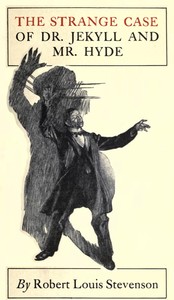
The strange case of Dr. Jekyll and Mr. Hyde
Robert Louis Stevenson, 1886
Also morality and curiosity.


Gulliver's Travels into Several Remote Nations of the World
Jonathan Swift, 1726
Also morality and curiosity.
More by Arthur Conan Doyle
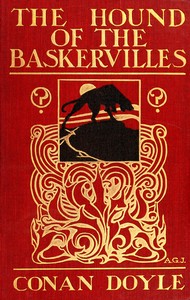
The Hound of the Baskervilles
Arthur Conan Doyle, 1902
A doctor, a cursed family and a great black hound on Dartmoor: Holmes and Watson test whether a legend can be murdered.
Where to get it
Some of these links earn us a small commission, at no cost to you. It keeps BookFeed free.
Questions readers ask
- Is The Adventures of Sherlock Holmes for me?
- You may like it if you enjoy watching a sharp mind work through small clues and dry social comedy. Some Victorian phrasing and period assumptions can make the stories feel dated, and the detective’s manner is more cool than warm.
- What is The Adventures of Sherlock Holmes like?
- Holmes’s quick, dry voice turns ordinary rooms into puzzles, with curiosity as the prevailing mood and a steady, witty pace. Feels like curiosity and serenity. About morality.
- What should I read after The Adventures of Sherlock Holmes?
- If you liked The Adventures of Sherlock Holmes, try Murder on the Orient Express (Agatha Christie), The Old Man in the Corner (Baroness Orczy) and Around the World in Eighty Days (Jules Verne).
A taste of the feed
A detective grades a crime by the nationality of the mind behind it.
I have the little idea, my friend, that this is a crime very carefully planned and staged. It is a far-sighted, long-headed crime. It is not — how shall I express it? — a Latin crime. It is a crime that shows traces of a cool, resourceful, deliberate brain — I think an Anglo-Saxon brain.
Murder on the Orient Express · Agatha Christie
What it costs to be the strangest person in the room.
The man in the corner readjusted his collar and necktie, which, during the narrative of this interesting mystery, had worked its way up his long, crane-like neck under his large flappy ears. His costume of checked tweed of a peculiarly loud pattern had tickled the fancy of some of the waitresses, who were standing gazing at him and giggling in one corner. This evidently made him nervous. He gazed up very meekly at Polly, looking for all the world like a bald-headed adjutant dressed for a holiday.
The Old Man in the Corner · Baroness Orczy
What a storm looks like to the one person aboard not frightened of it.
Phileas Fogg, with body erect and legs wide apart, standing like a sailor, gazed without staggering at the swelling waters. The young woman, who was seated aft, was profoundly affected as she looked out upon the ocean, darkening now with the twilight, on which she had ventured in so frail a vessel. Above her head rustled the white sails, which seemed like great white wings. The boat, carried forward by the wind, seemed to be flying in the air.
Around the World in Eighty Days · Jules Verne
Read pages from books like this, one at a time
Keep reading in the feed