BookFeed Ελληνικά

Books like Eugene Onegin

If Eugene Onegin stayed with you, these books share its feel. Each comes with a real page, so you can tell in a minute.

About Eugene Onegin · Alexander Pushkin

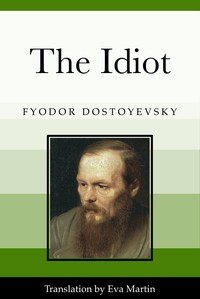
  1. 1.The Idiot

    Fyodor Dostoevsky, 1868

    A Christlike innocent lands in a Petersburg of money, vanity and feverish talk, and every room he enters begins to tilt.

    “He said that those five minutes seemed to him to be a most interminable period, an enormous wealth of time; he seemed to be living, in these minutes, so many lives that there was no need as yet to think of that last moment, so that he made several arrangements, dividing up the time into portions—one for saying farewell to his companions, two minutes for that; then a couple more for thinking over his own life and career and all about himself; and another minute for a last look around. He remembered having divided his time like this quite well. While saying goodbye to his friends he recollected asking one of them some very usual everyday question, and being much interested in the answer.
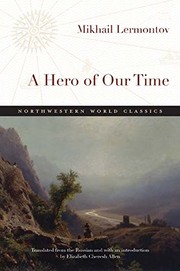
  2. 2.A Hero of Our Time

    Mikhail Lermontov, 1840

    A bored young officer drifts through the Caucasus, charming and wrecking the people he meets, in a novel that invented the modern antihero.

    The blind boy did not pick it up. Yanko took his seat in the boat; the wind was blowing from the shore; they hoisted the little sail and sped rapidly away. For a long time the white sail gleamed in the moonlight amid the dark waves. Still the blind boy remained seated upon the shore, and then I heard something which sounded like sobbing. The blind boy was, in fact, weeping, and for a long, long time his tears flowed... I grew heavy-hearted. For what reason should fate have thrown me into the peaceful circle of honourable smugglers? Like a stone cast into a smooth well, I had disturbed their quietude, and I barely escaped going to the bottom like a stone.
  3. 3.Anna Karenina

    Leo Tolstoy, 1878

    A society novel about a marriage coming apart and a landowner trying to build a meaningful life, full of dinner tables, fields, jealousy and philosophy.

    Anna said what came to her lips, and marveled, hearing herself, at her own capacity for lying. How simple and natural were her words, and how likely that she was simply sleepy! She felt herself clad in an impenetrable armor of falsehood. She felt that some unseen force had come to her aid and was supporting her.
  4. 4.Sense and Sensibility

    Jane Austen, 1811

    Two sisters, one who feels everything and one who shows nothing, discover what each kind of restraint costs and conceals.

    Such behaviour as this, so exactly the reverse of her own, appeared no more meritorious to Marianne, than her own had seemed faulty to her. The business of self-command she settled very easily:—with strong affections it was impossible, with calm ones it could have no merit. That her sister’s affections were calm, she dared not deny, though she blushed to acknowledge it; and of the strength of her own, she gave a very striking proof, by still loving and respecting that sister, in spite of this mortifying conviction.
  5. 5.The Importance of Being Earnest

    Oscar Wilde, 1895

    Two friends invent imaginary relatives to escape their obligations, and their inventions collide in one country house full of people who talk in epigrams.

    To lose one parent, Mr. Worthing, may be regarded as a misfortune; to lose both looks like carelessness. Who was your father? He was evidently a man of some wealth. Was he born in what the Radical papers call the purple of commerce, or did he rise from the ranks of the aristocracy?
  6. 6.The Lady with the Dog and Other Stories

    Anton Chekhov, 1899

    Quiet stories of doctors, bored lovers and tired idealists in which little happens and everything shifts: a whole life felt in twenty pages.

    At Oreanda they sat on a seat not far from the church, looked down at the sea, and were silent. Yalta was hardly visible through the morning mist; white clouds stood motionless on the mountain-tops. The leaves did not stir on the trees, grasshoppers chirruped, and the monotonous hollow sound of the sea rising up from below, spoke of the peace, of the eternal sleep awaiting us. So it must have sounded when there was no Yalta, no Oreanda here; so it sounds now, and it will sound as indifferently and monotonously when we are all no more. And in this constancy, in this complete indifference to the life and death of each of us, there lies hid, perhaps, a pledge of our eternal salvation, of the unceasing movement of life upon earth, of unceasing progress towards perfection.
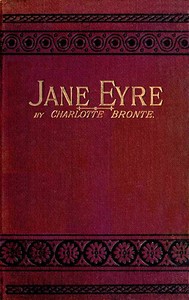
  7. 10.Jane Eyre

    Charlotte Brontë, 1847

    An orphan with no money, no beauty and a ferocious sense of her own worth takes a job at a strange house. A first-person voice that still feels startlingly direct.

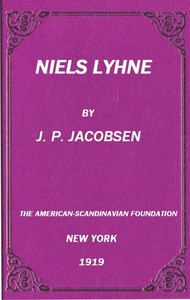
  8. 11.Niels Lyhne

    J. P. Jacobsen, 1880

    A young Dane tries to live without God, without illusions, and without turning his own life into literature—and keeps failing in ways that feel embarrassingly familiar.

  9. 12.Short Fiction

    Nikolai Gogol, 1831

    A clerk's nose walks out on him, a pig steals a lawsuit, devils complain of the cold: Gogol's short fiction is village farce and genuine dread in the same breath.

Read pages from books like this, one at a time

BookFeed is a feed of real passages from real books. It learns what moves you and finds your next book.

Open BookFeed

Free, no sign-up.