
Eugene Onegin
Alexander Pushkin (1799–1837), 1833
A young man is bored at exactly the moment a curious girl begins to fall in love with him. Pushkin's verse novel is about how boredom shapes verses, a response, and a life. A cool, witty voice carries you through ballrooms and country rooms at a measured, stanza-by-stanza pace.
Who it’s for
You may like it if you enjoy sly social comedy, love letters, and verse that keeps its distance while noticing everything. The formal, old-fashioned diction and stanzaic verse can make long stretches slow going, especially in translation.
Why read it
It gives you Pushkin's sharp eye for boredom, vanity, and shy feeling, in a form that rewards attention to its rhymes and turns.
Pages from the book
Some children are never quite at home inside their own family.
And so Tattiana was her name,Nor by her sister’s brilliancyNor by her beauty she becameThe cynosure of every eye.Shy, silent did the maid appearAs in the timid forest deer,Even beneath her parents’ roofStood as estranged from all aloof,Nearest and dearest knew not howTo fawn upon and love express;A child devoid of childishnessTo romp and play she ne’er would go:Oft staring through the window paneWould she in silence long remain. The friend you fell out with was once the person you told everything to.
Foes! Is it long since friendship rentAsunder was and hate prepared?Since leisure was together spent,Meals, secrets, occupations shared?Now, like hereditary foes,Malignant fury they disclose,As in some frenzied dream of fearThese friends cold-bloodedly draw nearMutual destruction to contrive.Cannot they amicably smileEre crimson stains their hands defile,Depart in peace and friendly live?But fashionable hatred’s flameTrembles at artificial shame. Two days of meadows, and then the meadows stop existing.
For two whole days it seemed a changeTo wander through the meadows still,The cool dark oaken grove to range,To listen to the rippling rill.But on the third of grove and meadHe took no more the slightest heed;They made him feel inclined to doze;And the conviction soon arose,Ennui can in the country dwellThough without palaces and streets,Cards, balls, routs, poetry or fêtes;On him spleen mounted sentinelAnd like his shadow dogged his life,Or better—like a faithful wife. Alexander Pushkin.Pushkin published Eugene Onegin in serial chapters over seven years, and the last chapter he bundled in a dedication to a friend - the first print run sold out slowly; he was better known as the author of a crop of biting, cynical epigrams, which got him thrown out of the capital.
Books that feel like this
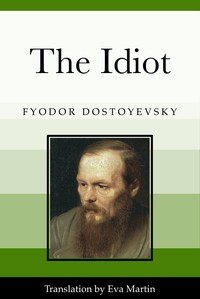
The Idiot
Fyodor Dostoevsky, 1868
A Christlike innocent lands in a Petersburg of money, vanity and feverish talk, and every room he enters begins to tilt.
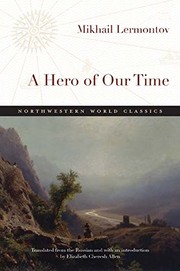
A Hero of Our Time
Mikhail Lermontov, 1840
A bored young officer drifts through the Caucasus, charming and wrecking the people he meets, in a novel that invented the modern antihero.
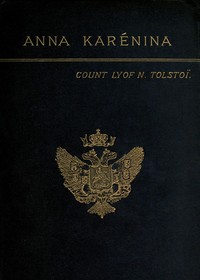
Anna Karenina
Leo Tolstoy, 1878
A society novel about a marriage coming apart and a landowner trying to build a meaningful life, full of dinner tables, fields, jealousy and philosophy.
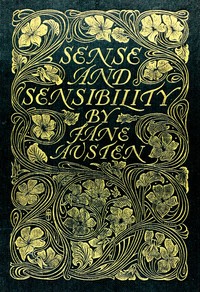
Sense and Sensibility
Jane Austen, 1811
Two sisters, one who feels everything and one who shows nothing, discover what each kind of restraint costs and conceals.
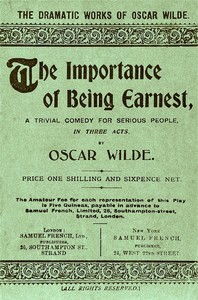
The Importance of Being Earnest
Oscar Wilde, 1895
Two friends invent imaginary relatives to escape their obligations, and their inventions collide in one country house full of people who talk in epigrams.
The Lady with the Dog and Other Stories
Anton Chekhov, 1899
Quiet stories of doctors, bored lovers and tired idealists in which little happens and everything shifts: a whole life felt in twenty pages.
Where to get it
Some of these links earn us a small commission, at no cost to you. It keeps BookFeed free.
Questions readers ask
- Is Eugene Onegin for me?
- You may like it if you enjoy sly social comedy, love letters, and verse that keeps its distance while noticing everything. The formal, old-fashioned diction and stanzaic verse can make long stretches slow going, especially in translation.
- What is Eugene Onegin like?
- A cool, witty voice carries you through ballrooms and country rooms at a measured, stanza-by-stanza pace.
- What should I read after Eugene Onegin?
- If you liked Eugene Onegin, try The Idiot (Fyodor Dostoevsky), A Hero of Our Time (Mikhail Lermontov) and Anna Karenina (Leo Tolstoy).
A taste of the feed
The strange calm that arrives when a lie comes out perfectly.
Anna said what came to her lips, and marveled, hearing herself, at her own capacity for lying. How simple and natural were her words, and how likely that she was simply sleepy! She felt herself clad in an impenetrable armor of falsehood. She felt that some unseen force had come to her aid and was supporting her.
Anna Karenina · Leo Tolstoy
Marianne decides that a calm heart deserves no credit for staying calm.
Such behaviour as this, so exactly the reverse of her own, appeared no more meritorious to Marianne, than her own had seemed faulty to her. The business of self-command she settled very easily:—with strong affections it was impossible, with calm ones it could have no merit. That her sister’s affections were calm, she dared not deny, though she blushed to acknowledge it; and of the strength of her own, she gave a very striking proof, by still loving and respecting that sister, in spite of this mortifying conviction.
Sense and Sensibility · Jane Austen
How the upper classes turn a bereavement into a background check.
To lose one parent, Mr. Worthing, may be regarded as a misfortune; to lose both looks like carelessness. Who was your father? He was evidently a man of some wealth. Was he born in what the Radical papers call the purple of commerce, or did he rise from the ranks of the aristocracy?
The Importance of Being Earnest · Oscar Wilde
Read pages from books like this, one at a time
Keep reading in the feed