
The Idiot
Fyodor Dostoevsky (1821–1881), 1868
★ 4.21 from 235.1k ratings on Goodreads
A Christlike innocent lands in a Petersburg of money, vanity and feverish talk, and every room he enters begins to tilt. A feverish, talky Petersburg novel where social comedy and philosophical argument keep sliding into dread and sudden tenderness.
Feels like dread. About faith and madness.
Who it’s for
You may like it if you enjoy long, argumentative novels of character and moral pressure, with rooms full of half-unhinged conversation. Be ready for a demanding nineteenth-century Russian novel: dense, digressive talk and stretches of acute embarrassment rather than a tidy plot.
Why read it
It gives you Dostoevsky's unsettling blend of satire and faith, and a central figure whose innocence exposes everyone around him.
Pages from the book
What a condemned man does with five minutes, divided like small change.
“He said that those five minutes seemed to him to be a most interminable period, an enormous wealth of time; he seemed to be living, in these minutes, so many lives that there was no need as yet to think of that last moment, so that he made several arrangements, dividing up the time into portions—one for saying farewell to his companions, two minutes for that; then a couple more for thinking over his own life and career and all about himself; and another minute for a last look around. He remembered having divided his time like this quite well. While saying goodbye to his friends he recollected asking one of them some very usual everyday question, and being much interested in the answer. What a seizure looks like from outside, and why witnesses never forget it.
As is well known, these fits occur instantaneously. The face, especially the eyes, become terribly disfigured, convulsions seize the limbs, a terrible cry breaks from the sufferer, a wail from which everything human seems to be blotted out, so that it is impossible to believe that the man who has just fallen is the same who emitted the dreadful cry. It seems more as though some other being, inside the stricken one, had cried. Many people have borne witness to this impression; and many cannot behold an epileptic fit without a feeling of mysterious terror and dread. A dying man explains why he needs one petty revenge before paradise.
“Having now shown you that I am not quite such a fool as I look, and that I have to be fished for with a rod and line for a good long while before I am caught, I will proceed to explain why I specially wished to make your brother look a fool. That my motive power is hate, I do not attempt to conceal. I have felt that before dying (and I am dying, however much fatter I may appear to you), I must absolutely make a fool of, at least, one of that class of men which has dogged me all my life, which I hate so cordially, and which is so prominently represented by your much esteemed brother. I should not enjoy paradise nearly so much without having done this first. Fyodor Dostoevsky.Dostoevsky wrote The Idiot abroad, in Geneva, Florence and Milan, while deeply in debt and grieving the death of his infant daughter.
Books that feel like this
Anna Karenina
Leo Tolstoy, 1878
A society novel about a marriage coming apart and a landowner trying to build a meaningful life, full of dinner tables, fields, jealousy and philosophy.


More by Fyodor Dostoevsky
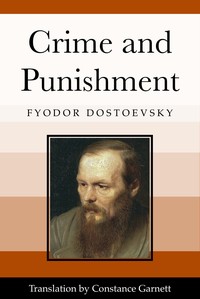
Crime and Punishment
Fyodor Dostoevsky, 1866
A broke student in St. Petersburg tests a theory that some people are above the law, and discovers the cost is not legal but psychological.

The Brothers Karamazov
Fyodor Dostoevsky, 1880
A father is murdered and his sons—sensual, intellectual, spiritual—argue over guilt, God, and whether anyone can love another person.
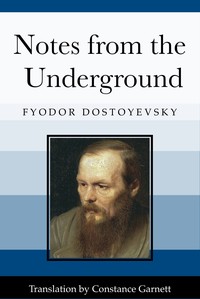
Notes from Underground
Fyodor Dostoevsky, 1864
A furious, funny, self-lacerating monologue from a Petersburg clerk who argues that freedom begins where reason and self-interest end.
Where to get it
Some of these links earn us a small commission, at no cost to you. It keeps BookFeed free.
Questions readers ask
- Is The Idiot for me?
- You may like it if you enjoy long, argumentative novels of character and moral pressure, with rooms full of half-unhinged conversation. Be ready for a demanding nineteenth-century Russian novel: dense, digressive talk and stretches of acute embarrassment rather than a tidy plot.
- What is The Idiot like?
- A feverish, talky Petersburg novel where social comedy and philosophical argument keep sliding into dread and sudden tenderness. Feels like dread. About faith and madness.
- What should I read after The Idiot?
- If you liked The Idiot, try Anna Karenina (Leo Tolstoy), The Divine Comedy (Dante Alighieri) and Moby Dick (Herman Melville).
A taste of the feed
The strange calm that arrives when a lie comes out perfectly.
Anna said what came to her lips, and marveled, hearing herself, at her own capacity for lying. How simple and natural were her words, and how likely that she was simply sleepy! She felt herself clad in an impenetrable armor of falsehood. She felt that some unseen force had come to her aid and was supporting her.
Anna Karenina · Leo Tolstoy
The moment a poet admits that language has finally run out.
Whereat to turn mine eyes on Beatrice My seeing nothing and my love constrained me. If what has hitherto been said of her Were all concluded in a single praise, Scant would it be to serve the present turn. Not only does the beauty I beheld Transcend ourselves, but truly I believe Its Maker only may enjoy it all. Vanquished do I confess me by this passage More than by problem of his theme was ever O’ercome the comic or the tragic poet; For as the sun the sight that trembles most, Even so the memory of that sweet smile My mind depriveth of its very self.
The Divine Comedy · Dante Alighieri
The calm island inside you, and the ocean waiting around it.
Consider all this; and then turn to this green, gentle, and most docile earth; consider them both, the sea and the land; and do you not find a strange analogy to something in yourself? For as this appalling ocean surrounds the verdant land, so in the soul of man there lies one insular Tahiti, full of peace and joy, but encompassed by all the horrors of the half known life. God keep thee! Push not off from that isle, thou canst never return!
Moby Dick · Herman Melville
Read pages from books like this, one at a time
Keep reading in the feed