BookFeed Ελληνικά

Books like Dialogues

If Dialogues stayed with you, these share its feel: morality, curiosity and identity. Each comes with a real page, so you can tell in a minute.

About Dialogues · Plato

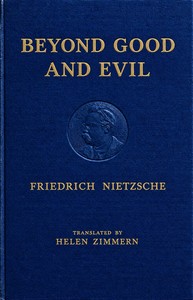
  1. 1.Beyond Good and Evil

    Friedrich Nietzsche, 1886

    Also curiosity and morality. A sharp-tongued tour of the habits of mind we take for granted: why philosophers lie to themselves, what our morals hide, and what it takes to think without flattering yourself.

    Nobody will very readily regard a doctrine as true merely because it makes people happy or virtuous—excepting, perhaps, the amiable “Idealists,” who are enthusiastic about the good, true, and beautiful, and let all kinds of motley, coarse, and good-natured desirabilities swim about promiscuously in their pond. Happiness and virtue are no arguments. It is willingly forgotten, however, even on the part of thoughtful minds, that to make unhappy and to make bad are just as little counter-arguments. A thing could be TRUE, although it were in the highest degree injurious and dangerous; indeed, the fundamental constitution of existence might be such that one succumbed by a full knowledge of it—so that the strength of a mind might be measured by the amount of “truth” it could endure—or to speak more plainly, by the extent to which it REQUIRED truth attenuated, veiled, sweetened, damped, and falsified.
  2. 2.The Counterfeiters

    André Gide, 1925

    Also identity and curiosity. A novel about a novelist writing a novel, and a group of young people trying on love, faith and false identities.

    Owing to an accidental discovery I happened to make this afternoon, I have become aware that I must cease to regard you as my father. This is an immense relief to me. Realizing as I do how little affection I feel for you, I have for a long time past been thinking myself an unnatural son; I prefer knowing I am not your son at all.
  3. 3.The Essays or Counsels, Civil and Moral

    Francis Bacon, 1597

    Also curiosity and morality. Short, dense essays on revenge, friendship, wealth, ambition and fear, written like a clever advisor's notes. Each page packs a lifetime of worldly observation into a few sharp sentences.

    For as for the first wrong, it doth but offend the law; but the revenge of that wrong, putteth the law out of office. Certainly, in taking revenge, a man is but even with his enemy; but in passing it over, he is superior; for it is a prince’s part to pardon. And Solomon, I am sure, saith, It is the glory of a man, to pass by an offence. That which is past is gone, and irrevocable; and wise men have enough to do, with things present and to come; therefore they do but trifle with themselves, that labor in past matters. There is no man doth a wrong, for the wrong’s sake; but thereby to purchase himself profit, or pleasure, or honor, or the like. Therefore why should I be angry with a man, for loving himself better than me?
  4. 4.Essays of Michel de Montaigne

    Michel de Montaigne, 1580

    Also curiosity and identity. A sixteenth-century nobleman examines friendship, death, custom and his own kidney stones, using himself as the evidence. It reads like a long, clever conversation with a frank friend.

    ‘Tis wonderful from how many idle beginnings and frivolous causes such famous impressions commonly, proceed. This it is that obstructs information; for whilst we seek out causes and solid and weighty ends, worthy of so great a name, we lose the true ones; they escape our sight by their littleness. And, in truth, a very prudent, diligent, and subtle inquisition is required in such searches, indifferent, and not prepossessed. To this very hour, all these miracles and strange events have concealed themselves from me: I have never seen greater monster or miracle in the world than myself: one grows familiar with all strange things by time and custom, but the more I frequent and the better I know myself, the more does my own deformity astonish me, the less I understand myself.
  5. 5.The Prince

    Niccolò Machiavelli, 1532

    Also curiosity and unease. A short, cool manual on how power is won and kept, written by a man who watched it up close. Its blunt realism still unsettles, and it still explains how leaders behave.

    A prince, therefore, being compelled knowingly to adopt the beast, ought to choose the fox and the lion; because the lion cannot defend himself against snares and the fox cannot defend himself against wolves. Therefore, it is necessary to be a fox to discover the snares and a lion to terrify the wolves. Those who rely simply on the lion do not understand what they are about. Therefore a wise lord cannot, nor ought he to, keep faith when such observance may be turned against him, and when the reasons that caused him to pledge it exist no longer. If men were entirely good this precept would not hold, but because they are bad, and will not keep faith with you, you too are not bound to observe it with them. Nor will there ever be wanting to a prince legitimate reasons to excuse this non-observance.
  6. 6.A Hero of Our Time

    Mikhail Lermontov, 1840

    Also morality and curiosity. A bored young officer drifts through the Caucasus, charming and wrecking the people he meets, in a novel that invented the modern antihero.

    The blind boy did not pick it up. Yanko took his seat in the boat; the wind was blowing from the shore; they hoisted the little sail and sped rapidly away. For a long time the white sail gleamed in the moonlight amid the dark waves. Still the blind boy remained seated upon the shore, and then I heard something which sounded like sobbing. The blind boy was, in fact, weeping, and for a long, long time his tears flowed... I grew heavy-hearted. For what reason should fate have thrown me into the peaceful circle of honourable smugglers? Like a stone cast into a smooth well, I had disturbed their quietude, and I barely escaped going to the bottom like a stone.
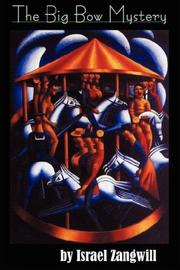
  7. 10.The Big Bow Mystery

    Israel Zangwill, 1899

    Also curiosity and morality. A satirical yet sharp debut in detective fiction that challenges assumptions about logic, genius, and the nature of truth. A whimsical and cerebral dive into the English mysteries.

Read pages from books like this, one at a time

BookFeed is a feed of real passages from real books. It learns what moves you and finds your next book.

Open BookFeed

Free, no sign-up.