BookFeed Ελληνικά

Books like Beyond Good and Evil

If Beyond Good and Evil stayed with you, these share its feel: curiosity, morality and defiance. Each comes with a real page, so you can tell in a minute.

About Beyond Good and Evil · Friedrich Nietzsche

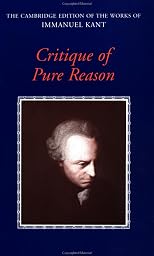
  1. 1.Kritik der reinen Vernunft

    Immanuel Kant, 1781

    Also curiosity and power. A map of what the mind can know, written in the confident, stormy prose of the Enlightenment, and still a bracing account of reason's limits.

    We have seen, therefore, that I am not allowed even to *assume*, for the sake of the necessary practical use of my reason *God, freedom, immortality*, unless at the same time *I deprive* speculative reason of its pretensions to transcendent insights. Reason, namely, in order to arrive at these, must employ principles which extend only to objects of possible experience, and which, if in spite of this they are applied also to what cannot be an object of experience, actually always change this into an appearance, thus rendering all practical *expansion* of pure reason impossible. Hence I had to suspend *knowledge* in order to make room for *belief*. For the dogmatism of metaphysics without a preceding critique of pure reason, is the source of all that disbelief which opposes morality and which is always very dogmatic.
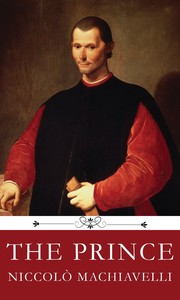
  2. 2.The Prince

    Niccolò Machiavelli, 1532

    Also power and curiosity. A short, cool manual on how power is won and kept, written by a man who watched it up close. Its blunt realism still unsettles, and it still explains how leaders behave.

    A prince, therefore, being compelled knowingly to adopt the beast, ought to choose the fox and the lion; because the lion cannot defend himself against snares and the fox cannot defend himself against wolves. Therefore, it is necessary to be a fox to discover the snares and a lion to terrify the wolves. Those who rely simply on the lion do not understand what they are about. Therefore a wise lord cannot, nor ought he to, keep faith when such observance may be turned against him, and when the reasons that caused him to pledge it exist no longer. If men were entirely good this precept would not hold, but because they are bad, and will not keep faith with you, you too are not bound to observe it with them. Nor will there ever be wanting to a prince legitimate reasons to excuse this non-observance.
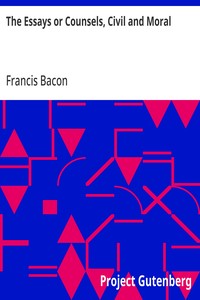
  3. 3.The Essays or Counsels, Civil and Moral

    Francis Bacon, 1597

    Also curiosity and morality. Short, dense essays on revenge, friendship, wealth, ambition and fear, written like a clever advisor's notes. Each page packs a lifetime of worldly observation into a few sharp sentences.

    For as for the first wrong, it doth but offend the law; but the revenge of that wrong, putteth the law out of office. Certainly, in taking revenge, a man is but even with his enemy; but in passing it over, he is superior; for it is a prince’s part to pardon. And Solomon, I am sure, saith, It is the glory of a man, to pass by an offence. That which is past is gone, and irrevocable; and wise men have enough to do, with things present and to come; therefore they do but trifle with themselves, that labor in past matters. There is no man doth a wrong, for the wrong’s sake; but thereby to purchase himself profit, or pleasure, or honor, or the like. Therefore why should I be angry with a man, for loving himself better than me?
  4. 4.Dialogues

    Plato, -347

    Also morality and curiosity. A deep dive into the questions that define civilization: what is justice, what is wisdom, and what happens to the soul after death.

    Book VII. And now I will describe in a figure the enlightenment or unenlightenment of our nature:—Imagine human beings living in an underground den which is open towards the light; they have been there from childhood, having their necks and legs chained, and can only see into the den. At a distance there is a fire, and between the fire and the prisoners a raised way, and a low wall is built along the way, like the screen over which marionette players show their puppets. Behind the wall appear moving figures, who hold in their hands various works of art, and among them images of men and animals, wood and stone, and some of the passersby are talking and others silent. “A strange parable,” he said, “and strange captives.”
  5. 5.Essays of Michel de Montaigne

    Michel de Montaigne, 1580

    Also curiosity and identity. A sixteenth-century nobleman examines friendship, death, custom and his own kidney stones, using himself as the evidence. It reads like a long, clever conversation with a frank friend.

    ‘Tis wonderful from how many idle beginnings and frivolous causes such famous impressions commonly, proceed. This it is that obstructs information; for whilst we seek out causes and solid and weighty ends, worthy of so great a name, we lose the true ones; they escape our sight by their littleness. And, in truth, a very prudent, diligent, and subtle inquisition is required in such searches, indifferent, and not prepossessed. To this very hour, all these miracles and strange events have concealed themselves from me: I have never seen greater monster or miracle in the world than myself: one grows familiar with all strange things by time and custom, but the more I frequent and the better I know myself, the more does my own deformity astonish me, the less I understand myself.
  6. 6.The Art of War

    Sun Tzu, -500

    Also curiosity. A 2,500-year-old manual for conflict, written for generals and read by anyone who has to hold a position, win an argument, or know when to walk away.

    Sun Tzǔ said: In the practical art of war, the best thing of all is to take the enemy’s country whole and intact; to shatter and destroy it is not so good. So, too, it is better to capture an army entire than to destroy it, to capture a regiment, a detachment or a company entire than to destroy them.
  7. 10.Decision Points

    George W. Bush, 2010

    Also power and curiosity. An unflinching look at the highest levels of power, grappling with financial collapse, foreign wars, and the relentless weight of public expectation.

  8. 11.Analects

    Confucius

    Also morality and power. A collection of small, sharp conversations on how to live with other people, mostly remembered because they refuse to be simple rules.

Read pages from books like this, one at a time

BookFeed is a feed of real passages from real books. It learns what moves you and finds your next book.

Open BookFeed

Free, no sign-up.