
A Negro Explorer at the North Pole
Matthew Henson (1866–1955), 1912
★ 3.80 from 207 ratings on Goodreads
A Black explorer's own account of the polar campaigns: hauling sledges, living as an Inuit among Inuit, and pushing north with Peary. The voice is plain and observant, with awe and dry wit breaking through the hard, cold grind of the journey.
Feels like awe and wonder. About adventure and memory.
Who it’s for
You may like it if you enjoy first-person expedition accounts, Arctic survival detail, and a plain, observant voice. Be prepared for long stretches of sledge hauling and weather, and for language and attitudes of its 1912 moment.
Why read it
It gives you the polar campaigns from the man who hauled the sledges and lived among Inuit, a firsthand view that later fame often pushed aside.
Pages from the book
The kind of weather that makes shelter feel like a rumour.
Naturally there were frequent storms and intense cold, and in regard to the storms of the Arctic regions of North Greenland and Grant Land, the only word I can use to describe them is “terrible,” in the fullest meaning it conveys. The effect of such storms of wind and snow, or rain, is abject physical terror, due to the realization of perfect helplessness. I have seen rocks a hundred and a hundred and fifty pounds in weight picked up by the storm and blown for distances of ninety or a hundred feet to the edge of a precipice, and there of their own momentum go hurtling through space to fall in crashing fragments at the base. Imagine the effect of such a rainfall of death-dealing boulders on the feelings of a little group of three or four, who have sought the base of the cliff for shelter. The view from the last inhabited place before nothing.
I climbed to the highest pinnacle of the cape and in the gathering daylight gazed out over the ice-covered ocean to get an idea of its condition. At my back lay the land of sadness, just below me the little village of snow-houses, the northernmost city on the earth (Commander Peary give it the name Crane City), and, stretching wide and far to the northward, the irresistible influence that beckoned us on; broken ice, a sinister chaos, through which we would have to work our way. Dark and heavy clouds along the horizon gave indication of open water, and it was easy to see that the rough and heavy shore-ice would make no jokes for us to appreciate. Learning a language is easy; being adopted by its speakers is not.
Naturally the impressions formed on my first visit to the Land of Ice and Snow were the most lasting, but in the coming years I was to learn more and more that such a life was no picnic, and to realize what primitive life meant. I was to live with a people who, the scientists stated, represented the earliest form of human life, living in what is known as the Stone Age, and I was to revert to that stage of life by leaps and bounds, and to emerge from it by the same sudden means. Many and many a time, for periods covering more than twelve months, I have been to all intents an Eskimo, with Eskimos for companions, speaking their language, dressing in the same kind of clothes, living in the same kind of dens, eating the same food, enjoying their pleasures, and frequently sharing their griefs. Matthew Henson.Congress awarded Henson a gold medal in 1944, decades after the expedition, when most of its fame had long since settled on Peary.
Books that feel like this
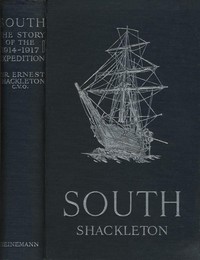

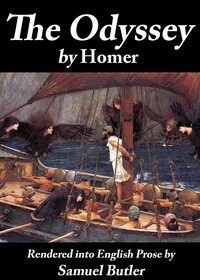
The Odyssey Rendered into English prose for the use of those who cannot read the original
Homer, -750
Also adventure and wonder.

Where to get it
Some of these links earn us a small commission, at no cost to you. It keeps BookFeed free.
Questions readers ask
- Is A Negro Explorer at the North Pole for me?
- You may like it if you enjoy first-person expedition accounts, Arctic survival detail, and a plain, observant voice. Be prepared for long stretches of sledge hauling and weather, and for language and attitudes of its 1912 moment.
- What is A Negro Explorer at the North Pole like?
- The voice is plain and observant, with awe and dry wit breaking through the hard, cold grind of the journey. Feels like awe and wonder. About adventure and memory.
- What should I read after A Negro Explorer at the North Pole?
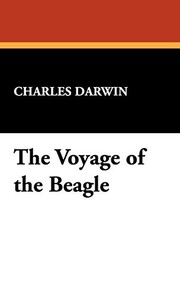
- If you liked A Negro Explorer at the North Pole, try South (Ernest Shackleton), Twenty Thousand Leagues under the Sea (Jules Verne) and The Voyage of the Beagle (Charles Darwin).
A taste of the feed
The night the ocean itself began to give off light.
While sailing a little south of the Plata on one very dark night, the sea presented a wonderful and most beautiful spectacle. There was a fresh breeze, and every part of the surface, which during the day is seen as foam, now glowed with a pale light. The vessel drove before her bows two billows of liquid phosphorus, and in her wake she was followed by a milky train. As far as the eye reached, the crest of every wave was bright, and the sky above the horizon, from the reflected glare of these livid flames, was not so utterly obscure as over the vault of the heavens.
The Voyage of the Beagle · Charles Darwin
Reaching for someone you love and closing your arms on air.
“Then I tried to find some way of embracing my poor mother’s ghost. Thrice I sprang towards her and tried to clasp her in my arms, but each time she flitted from my embrace as it were a dream or phantom, and being touched to the quick I said to her, ‘Mother, why do you not stay still when I would embrace you? If we could throw our arms around one another we might find sad comfort in the sharing of our sorrows even in the house of Hades; does Proserpine want to lay a still further load of grief upon me by mocking me with a phantom only?’
The Odyssey Rendered into English prose for the use of those who cannot read the original · Homer
A mother unpicks generations of needlework so her daughter can pass unnoticed.
All that winter the household was busy getting me ready for school. The pathos of these preparations I did not realize; nor, I think, did any of us. Mother spent evening after evening bending her stately head over wonderful embroidered garments, ripping out, stitch by stitch, the exquisite work of hands folded in rest generations ago. Then Ishi would dye the silk and make it into plain garments suitable for my school life.
A Daughter of the Samurai · Etsu Inagaki Sugimoto
Read pages from books like this, one at a time
Keep reading in the feed