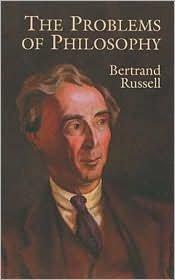
The Problems of Philosophy
Bertrand Russell, 1912
A short, clear tour of the questions underneath everything: whether the table is really there, why the sun should rise tomorrow, what we can know. Written for readers with no philosophy background.
 BookFeed Ελληνικά
1872–1970
Russell won the 1950 Nobel Prize in Literature, and he was jailed in 1918 for a pacifist article, writing his Introduction to Mathematical Philosophy in Brixton prison.
Feels like curiosity, wonder and freedom.
What it would be to look at the world without wanting anything.
Everything, in contemplation, that is personal or private, everything that depends upon habit, self-interest, or desire, distorts the object, and hence impairs the union which the intellect seeks. By thus making a barrier between subject and object, such personal and private things become a prison to the intellect. The free intellect will see as God might see, without a here and now, without hopes and fears, without the trammels of customary beliefs and traditional prejudices, calmly, dispassionately, in the sole and exclusive desire of knowledge—knowledge as impersonal, as purely contemplative, as it is possible for man to attain. Bertrand Russell, 1912
A short, clear tour of the questions underneath everything: whether the table is really there, why the sun should rise tomorrow, what we can know. Written for readers with no philosophy background.
Read pages from books like this, one at a time
BookFeed is a feed of real passages from real books. It learns what moves you and finds your next book.
Open BookFeedFree, no sign-up.