
The Portent
George MacDonald (1824–1905), 1864
★ 3.93 from 234 ratings on Goodreads
A Highland schoolmaster is drawn into the sleepwalking life of a mysterious lady and a legend of a horse with a clanking shoe. A dreamlike Highland tale that moves with quiet gothic unease, lyrical tenderness, and a current of longing beneath its strange, watchful mood.
Feels like unease, longing and tenderness. About love, madness and faith.
Who it’s for
You may like it if you enjoy Victorian gothic atmosphere, dream logic, and stories where love and unease sit close together. The 1864 prose is ornate and unhurried, so the sleepwalking scenes ask for patience with old-fashioned sentences.
Why read it
It gives you a short, eerie glimpse of MacDonald's gothic imagination, with a legend, a sleepwalker, and a Highland setting that linger after the page.
Pages from the book
What if calling someone to you in the night were a kind of trespass?
I heard no sound of approach: the closet-door folded back, and in glided, open-eyed, but sightless pale as death, and clad in white, ghostly-pure and saintlike, the Lady Alice. I shuddered from head to foot at what I had done. She was more terrible to me in that moment than any pale-eyed ghost could have been. For had I not exercised a kind of necromantic art, and roused without awaking the slumbering dead? She passed me, walking round the table at which I was seated, went to the couch, laid herself down with a maidenly care, turned a little on one side, with her face towards me, and gradually closed her eyes. In something deeper than sleep she lay, and yet not in death. I rose, and once more knelt beside her, but dared not touch her. In what far realms of life might the lovely soul be straying! Love that keeps working long after it expects anything back.
“Tire me, my child!” she said, with sudden energy. “Did I not carry you in my bosom, till I loved you more than the darling I had lost? Do I not think about you and your fortunes, till, sitting there, you are no nearer to me than when a thousand miles away? You do not know my love to you, Duncan. I have lived upon it when, I daresay, you did not care whether I was alive or dead. But that was all one to my love. When you leave me now, I shall not care much. My thoughts will only return to their old ways. I think the sight of the eyes is sometimes an intrusion between the heart and its love.” A room so full of coloured moonlight it seems to have its own weather.
The corridor was night itself, with a dim, bluish-grey light from the windows, sufficing to mark their own spaces. I stole through it, and, without erring once, went straight to the haunted chamber. The door stood half open. I entered, and was bewildered by the dim, mysterious, dreamy loveliness upon which I gazed. The moon shone full upon the windows, and a thousand coloured lights and shadows crossed and intertwined upon the walls and floor, all so soft, and mingling, and undefined, that the brain was filled as with a flickering dance of ghostly rainbows. But I had little time to think of these; for out of the only dark corner in the room came a white figure, flitting across the chaos of lights, bedewed, besprinkled, bespattered, as she passed, with their multitudinous colours. I was speechless, motionless, with something far beyond joy. George MacDonald.A Scottish minister and fantasist, MacDonald was an acknowledged influence on C.S. Lewis and Tolkien and a friend of Lewis Carroll.
Books that feel like this


Goblin Market, The Prince's Progress, and Other Poems
Christina Rossetti, 1862
Also longing and love.
Where to get it
Some of these links earn us a small commission, at no cost to you. It keeps BookFeed free.
Questions readers ask
- Is The Portent for me?
- You may like it if you enjoy Victorian gothic atmosphere, dream logic, and stories where love and unease sit close together. The 1864 prose is ornate and unhurried, so the sleepwalking scenes ask for patience with old-fashioned sentences.
- What is The Portent like?
- A dreamlike Highland tale that moves with quiet gothic unease, lyrical tenderness, and a current of longing beneath its strange, watchful mood. Feels like unease, longing and tenderness. About love, madness and faith.
- What should I read after The Portent?
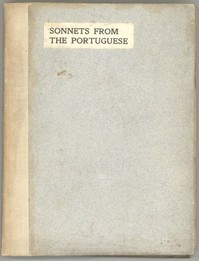
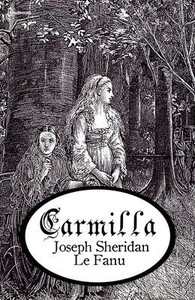
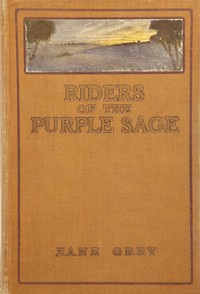
- If you liked The Portent, try Sonnets from the Portuguese (Elizabeth Barrett Browning), Carmilla (Joseph Sheridan Le Fanu) and The gardener (Rabindranath Tagore).
A taste of the feed
What it costs to hand someone the ashes of your grief.
I lift my heavy heart up solemnly, As once Electra her sepulchral urn, And, looking in thine eyes, I overturn The ashes at thy feet. Behold and see What a great heap of grief lay hid in me, And how the red wild sparkles dimly burn Through the ashen greyness. If thy foot in scorn Could tread them out to darkness utterly, It might be well perhaps. But if instead Thou wait beside me for the wind to blow The grey dust up—those laurels on thine head, O my Beloved, will not shield thee so, That none of all the fires shall scorch and shred The hair beneath. Stand further off then! Go.
Sonnets from the Portuguese · Elizabeth Barrett Browning
A wind that carries every love story ever told.
Always it brought softly to him strange, sweet tidings of far-off things. It blew from a place that was old and whispered of youth. It blew down the grooves of time. It brought a story of the passing hours. It breathed low of fighting men and praying women. It sang clearly the song of love. That ever was the burden of its tidings—youth in the shady woods, waders through the wet meadows, boy and girl at the hedgerow stile, bathers in the booming surf, sweet, idle hours on grassy, windy hills, long strolls down moonlit lanes—everywhere in far-off lands, fingers locked and bursting hearts and longing lips—from all the world tidings of unquenchable love.
Riders of the Purple Sage · Zane Grey
The heaviest thing you will ever have to carry is yourself.
God strengthen me to bear myself; That heaviest weight of all to bear, Inalienable weight of care. All others are outside myself, I lock my door and bar them out The turmoil, tedium, gad-about. I lock my door upon myself, And bar them out; but who shall wall Self from myself, most loathed of all? If I could once lay down myself, And start self-purged upon the race That all must run! Death runs apace.
Goblin Market, The Prince's Progress, and Other Poems · Christina Rossetti
Read pages from books like this, one at a time
Keep reading in the feed