
The Last Man
Mary Wollstonecraft Shelley (1797–1851), 1826
★ 3.39 from 7.5k ratings on Goodreads
A twenty-first-century plague empties the earth, and the last survivor writes down everyone he has lost. Read it for grief, not gadgets. A slow, lyrical drift through grief and solitude, with dread pressing in and almost no relief.
Feels like melancholy, grief and dread. About death, solitude and love.
Who it’s for
You may like it if you want a nineteenth-century novel that treats catastrophe as an occasion for mourning rather than action. Be warned that the grief is unrelenting and the 1826 prose can feel ornate and slow.
Why read it
It gives you Shelley thinking seriously about loss and isolation, and a plague story more interested in mourning than in machinery.
Pages from the book
Joy arriving at the worst possible time, and refusing to be inappropriate.
By degrees, our whole party surmounting the steep, joined us, not one among them, but gave visible tokens of admiration, surpassing any before experienced. One cried, “God reveals his heaven to us; we may die blessed.” Another and another, with broken exclamations, and extravagant phrases, endeavoured to express the intoxicating effect of this wonder of nature. So we remained awhile, lightened of the pressing burthen of fate, forgetful of death, into whose night we were about to plunge; no longer reflecting that our eyes now and for ever were and would be the only ones which might perceive the divine magnificence of this terrestrial exhibition. An enthusiastic transport, akin to happiness, burst, like a sudden ray from the sun, on our darkened life. Precious attribute of woe-worn humanity! that can snatch extatic emotion, even from under the very share and harrow, that ruthlessly ploughs up and lays waste every hope. Ringing doorbells in a city where no one is left to answer.
For three days I wandered to and fro in this melancholy town. I passed whole hours in going from house to house, listening whether I could detect some lurking sign of human existence. Sometimes I rang at a bell; it tinkled through the vaulted rooms, and silence succeeded to the sound. I called myself hopeless, yet still I hoped; and still disappointment ushered in the hours, intruding the cold, sharp steel which first pierced me, into the aching festering wound. I fed like a wild beast, which seizes its food only when stung by intolerable hunger. I did not change my garb, or seek the shelter of a roof, during all those days. Burning heats, nervous irritation, a ceaseless, but confused flow of thought, sleepless nights, and days instinct with a frenzy of agitation, possessed me during that time. Looking at a world map and finding no country you could run to.
I spread the whole earth out as a map before me. On no one spot of its surface could I put my finger and say, here is safety. In the south, the disease, virulent and immedicable, had nearly annihilated the race of man; storm and inundation, poisonous winds and blights, filled up the measure of suffering. In the north it was worse—the lesser population gradually declined, and famine and plague kept watch on the survivors, who, helpless and feeble, were ready to fall an easy prey into their hands. Mary Wollstonecraft Shelley.The Last Man appeared anonymously in 1826 and many readers assumed it was Byron's; Shelley wrote it in the years after her husband and Byron had both drowned in Italy.
Books that feel like this


Where to get it
Some of these links earn us a small commission, at no cost to you. It keeps BookFeed free.
Questions readers ask
- Is The Last Man for me?
- You may like it if you want a nineteenth-century novel that treats catastrophe as an occasion for mourning rather than action. Be warned that the grief is unrelenting and the 1826 prose can feel ornate and slow.
- What is The Last Man like?
- A slow, lyrical drift through grief and solitude, with dread pressing in and almost no relief. Feels like melancholy, grief and dread. About death, solitude and love.
- What should I read after The Last Man?
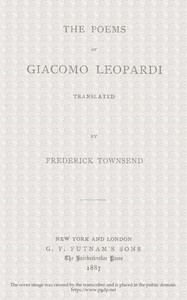
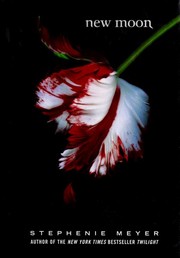
- If you liked The Last Man, try The Poems of Giacomo Leopardi (Giacomo Leopardi), Toilers of the Sea (Victor Hugo) and New Moon (Stephenie Meyer).
A taste of the feed
The ultimate cessation of feeling is presented as the final relief from life’s burden.
Nor wilt thou rest forever, weary heart. The last illusion is destroyed, That I eternal thought. Destroyed! I feel all hope and all desire depart, For life and its deceitful joys. Forever rest! Enough! Thy throbbings cease! Naught can requite thy miseries; Nor is earth worthy of thy sighs. Life is a bitter, weary load, The world a slough. And now, repose! Despair no more, but find in Death The only boon Fate on our race bestows!
The Poems of Giacomo Leopardi · Giacomo Leopardi
The slow arithmetic by which longing turns into a habit.
The year advanced; the time came when the trellises were heavy with roses, and haunted by the butterflies. By little and little, he had come to conceal himself for hours behind her wall, motionless and silent, seen by no one, and holding his breath as Déruchette passed in and out of her garden. Men grow accustomed to poison by degrees.
Toilers of the Sea · Victor Hugo
Grief keeps its own clock, and it does not keep good time.
Time passes. Even when it seems impossible. Even when each tick of the second hand aches like the pulse of blood behind a bruise. It passes unevenly, in strange lurches and dragging lulls, but pass it does. Even for me.
New Moon · Stephenie Meyer
Read pages from books like this, one at a time
Keep reading in the feed