
The Four Million
O. Henry (1862–1910), 1906
★ 4.03 from 935 ratings on Goodreads
Twenty-five brisk stories of shopgirls, drifters, clerks and cops in 1900s Manhattan, each ending on a turn you half see coming and still feel. Wry and tender, and good in small bites. Wry, brisk city stories with a warm eye for clerks and drifters, and endings that turn just enough to sting or soften.
Feels like humor, tenderness and melancholy. About society, love and solitude.
Who it’s for
You may like it if you enjoy short, humorous sketches of ordinary city people and don't mind a neat twist. A few endings lean on coincidence, and the 1900s slang and social details can take a moment to settle.
Why read it
It offers quick, humane glimpses of Manhattan lives and a closing turn that can make you smile or wince, without a long commitment.
Pages from the book
A church hymn reaches a man who thought he had forgotten everything.
The moon was above, lustrous and serene; vehicles and pedestrians were few; sparrows twittered sleepily in the eaves—for a little while the scene might have been a country churchyard. And the anthem that the organist played cemented Soapy to the iron fence, for he had known it well in the days when his life contained such things as mothers and roses and ambitions and friends and immaculate thoughts and collars. The difference between chasing a prize and simply walking into the unknown.
True adventurers have never been plentiful. They who are set down in print as such have been mostly business men with newly invented methods. They have been out after the things they wanted—golden fleeces, holy grails, lady loves, treasure, crowns and fame. The true adventurer goes forth aimless and uncalculating to meet and greet unknown fate. A fine example was the Prodigal Son—when he started back home. What you would trade all your success to hold for one more hour.
Dear kind fairy, please cut out those orders for money and 40 H. P. touring cars and fame and a new growth of hair and the presidency of the boat club. Instead of any of them turn backward—oh, turn backward and give us just a teeny-weeny bit of our wedding trip over again. Just an hour, dear fairy, so we can remember how the grass and poplar trees looked, and the bow of those bonnet strings tied beneath her chin—even if it was the hatpins that did the work. Can’t do it? Very well; hurry up with that touring car and the oil stock, then. O. Henry.Born William Sydney Porter, he began writing his stories while serving a sentence for embezzlement in the Ohio Penitentiary, and took the pen name O. Henry once he was out.
Books that feel like this
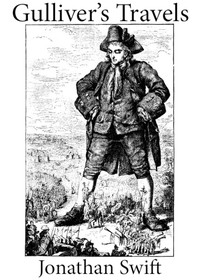
Gulliver's Travels into Several Remote Nations of the World
Jonathan Swift, 1726
Also humor and society.
Where to get it
Some of these links earn us a small commission, at no cost to you. It keeps BookFeed free.
Questions readers ask
- Is The Four Million for me?
- You may like it if you enjoy short, humorous sketches of ordinary city people and don't mind a neat twist. A few endings lean on coincidence, and the 1900s slang and social details can take a moment to settle.
- What is The Four Million like?
- Wry, brisk city stories with a warm eye for clerks and drifters, and endings that turn just enough to sting or soften. Feels like humor, tenderness and melancholy. About society, love and solitude.
- What should I read after The Four Million?
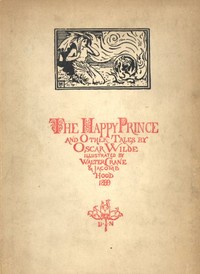
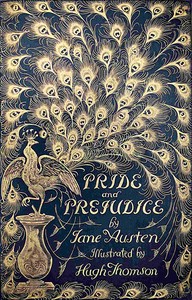
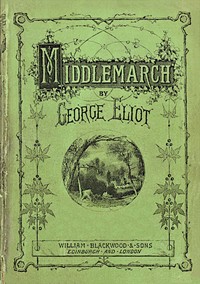
- If you liked The Four Million, try The Happy Prince, and Other Tales (Oscar Wilde), Pride and Prejudice (Jane Austen) and Middlemarch (George Eliot).
A taste of the feed
A man reframes his self-interest as an act of atonement.
Having now a good house and a very sufficient income, he intended to marry; and in seeking a reconciliation with the Longbourn family he had a wife in view, as he meant to choose one of the daughters, if he found them as handsome and amiable as they were represented by common report. This was his plan of amends—of atonement—for inheriting their father’s estate; and he thought it an excellent one, full of eligibility and suitableness, and excessively generous and disinterested on his own part.
Pride and Prejudice · Jane Austen
How hard it is to believe that other people are as real as you are.
We are all of us born in moral stupidity, taking the world as an udder to feed our supreme selves: Dorothea had early begun to emerge from that stupidity, but yet it had been easier to her to imagine how she would devote herself to Mr. Casaubon, and become wise and strong in his strength and wisdom, than to conceive with that distinctness which is no longer reflection but feeling—an idea wrought back to the directness of sense, like the solidity of objects—that he had an equivalent centre of self, whence the lights and shadows must always fall with a certain difference.
Middlemarch · George Eliot
How to describe a massacre as though reviewing a parade.
There was never anything so gallant, so spruce, so brilliant, and so well disposed as the two armies. Trumpets, fifes, hautboys, drums, and cannon made music such as Hell itself had never heard. The cannons first of all laid flat about six thousand men on each side; the muskets swept away from this best of worlds nine or ten thousand ruffians who infested its surface. The bayonet was also a sufficient reason for the death of several thousands. The whole might amount to thirty thousand souls. Candide, who trembled like a philosopher, hid himself as well as he could during this heroic butchery.
Candide · Voltaire
Read pages from books like this, one at a time
Keep reading in the feed