
The Duel
Anton Chekhov (1860–1904), 1891
★ 3.96 from 4.8k ratings on Goodreads
A clever, idle Russian runs off with another man's wife, brings her to a hot coast town, and slowly discovers that the problem has travelled with him. The story moves at a patient, lyrical pace, with a drowsy coastal atmosphere and a dry, wondering voice that keeps its distance from the hero.
Feels like wonder and serenity. About time.
Who it’s for
You may like it if you enjoy Chekhov's patient, lyrical stories about ordinary people and their self-deceptions. The hero is vain and self-justifying, and the early pages move slowly, so readers wanting quick sympathy or action may struggle.
Why read it
It gives you Chekhov's dry, humane attention to a man making excuses, set against a hot coast and a slow sea; the story asks how much we can blame on circumstance.
Pages from the book
What the sea sounds like if you count the seconds between the waves.
When he got out of town, he began to see both the road and his stick. Here and there in the black sky there were dark cloudy patches, and soon a star peeped out and timidly blinked its one eye. The deacon walked along the high rocky coast and did not see the sea; it was slumbering below, and its unseen waves broke languidly and heavily on the shore, as though sighing “Ouf!” and how slowly! One wave broke—the deacon had time to count eight steps; then another broke, and six steps; later a third. As before, nothing could be seen, and in the darkness one could hear the languid, drowsy drone of the sea. One could hear the infinitely faraway, inconceivable time when God moved above chaos. What is left of a man once you strip away his excuses.
Laevsky is by no means a complex organism. Here is his moral skeleton: in the morning, slippers, a bathe, and coffee; then till dinnertime, slippers, a constitutional, and conversation; at two o’clock slippers, dinner, and wine; at five o’clock a bathe, tea and wine, then Vint and lying; at ten o’clock supper and wine; and after midnight sleep and la femme. His existence is confined within this narrow programme like an egg within its shell. A train, a debt, and a lie he’s saving for later.
Every time he thought of his future he would not let his thoughts have full rein. He would get into the train and set off, and thereby the problem of his life would be solved, and he did not let his thoughts go farther. Like a faraway dim light in the fields, the thought sometimes flickered in his mind that in one of the side-streets of Petersburg, in the remote future, he would have to have recourse to a tiny lie in order to get rid of Nadyezhda Fyodorovna and pay his debts; he would tell a lie only once, and then a completely new life would begin. And that was right: at the price of a small lie he would win so much truth. Anton Chekhov.Chekhov's own grandfather bought his family out of serfdom in 1841, so he knew from the inside the gentlemen who blamed their age for their failings.
Books that feel like this

More by Anton Chekhov
The Lady with the Dog and Other Stories
Anton Chekhov, 1899
Quiet stories of doctors, bored lovers and tired idealists in which little happens and everything shifts: a whole life felt in twenty pages.
The Darling and Other Stories
Anton Chekhov, 1899
Chekhov's men and women, loving badly and well: a widow who pours herself into whoever needs her, a liar in Italy, a student's silent mistress.
Where to get it
Some of these links earn us a small commission, at no cost to you. It keeps BookFeed free.
Questions readers ask
- Is The Duel for me?
- You may like it if you enjoy Chekhov's patient, lyrical stories about ordinary people and their self-deceptions. The hero is vain and self-justifying, and the early pages move slowly, so readers wanting quick sympathy or action may struggle.
- What is The Duel like?
- The story moves at a patient, lyrical pace, with a drowsy coastal atmosphere and a dry, wondering voice that keeps its distance from the hero. Feels like wonder and serenity. About time.
- What should I read after The Duel?
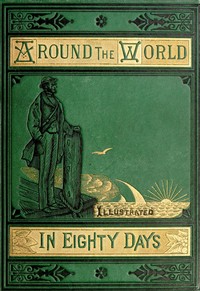
- If you liked The Duel, try Around the World in Eighty Days (Jules Verne), Short Fiction (Thomas Hardy) and Poetry (Henry van Dyke Jr.).
A taste of the feed
What a storm looks like to the one person aboard not frightened of it.
Phileas Fogg, with body erect and legs wide apart, standing like a sailor, gazed without staggering at the swelling waters. The young woman, who was seated aft, was profoundly affected as she looked out upon the ocean, darkening now with the twilight, on which she had ventured in so frail a vessel. Above her head rustled the white sails, which seemed like great white wings. The boat, carried forward by the wind, seemed to be flying in the air.
Around the World in Eighty Days · Jules Verne
A lifetime of milking, written into a woman's forehead.
Her monotonous milking at the dairy was resumed, and followed for many long years, till her form became bent, and her once abundant dark hair white and worn away at the forehead—perhaps by long pressure against the cows. Here, sometimes, those who knew her experiences would stand and observe her, and wonder what sombre thoughts were beating inside that impassive, wrinkled brow, to the rhythm of the alternating milk-streams.
Short Fiction · Thomas Hardy
A sailor's love for the sea has fear in it; landsmen never understand.
We men hat go down for a livin’ in ships to the sea— We love it a different way from you poets that ’bide on the land. We are fond of it, sure! But, you take it as comin’ from me, There’s a fear and a hate in our love that a landsman can’t understand. Oh, who could help likin’ the salty smell, and the blue Of the waves that are lazily breathin’ as if they dreamed in the sun? She’s a Sleepin’ Beauty, the sea—but you can’t tell what she’ll do; And the seamen never trust her—they know too well what she’s done!
Poetry · Henry van Dyke Jr.
Read pages from books like this, one at a time
Keep reading in the feed