
Foundation
Isaac Asimov, 1951
Science fiction HistoryFantasyContemporary fiction
A mathematician arrives on the capital planet of a galactic empire and finds that history itself can be predicted—and is running out. A cool, talky sweep across centuries, with moments of awe at scale and a steady undertow of dread about what history will bring.
Feels like awe and dread. About power, time and freedom.
Who it’s for
You may like it if you enjoy big-picture science fiction about empires, prediction, and political maneuvering rather than close character drama. The stories were written in the 1940s and jump across long spans of time, so some stretches can feel distant and talky.
Why read it
It gives you a vast, idea-driven story about how civilizations rise and fall, and why one person's math might matter against the drift of history.
A page from the book
What it feels like to wait for a whole planet to appear.
What Gaal was waiting for after the disappointment of the Jump was that first sight of Trantor. He haunted the View-room. The steel shutter-lids were rolled back at announced times and he was always there, watching the hard brilliance of the stars, enjoying the incredible hazy swarm of a star cluster, like a giant conglomeration of fireflies caught in mid-motion and stilled forever. At one time there was the cold, blue-white smoke of a gaseous nebula within five light years of the ship, spreading over the window like distant milk, filling the room with an icy tinge, and disappearing out of sight two hours later, after another Jump. Isaac Asimov.Asimov wrote the Foundation stories for Astounding Science-Fiction after reading Edward Gibbon’s Decline and Fall of the Roman Empire on the subway.
Books that feel like this
More by Isaac Asimov
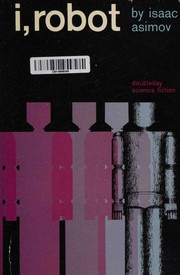
I, Robot
Isaac Asimov, 1950
Nine linked stories in which robots obey the Three Laws perfectly and still cause trouble, because the humans around them do not.
Where to get it
Some of these links earn us a small commission, at no cost to you. It keeps BookFeed free.
Questions readers ask
- Is Foundation for me?
- You may like it if you enjoy big-picture science fiction about empires, prediction, and political maneuvering rather than close character drama. The stories were written in the 1940s and jump across long spans of time, so some stretches can feel distant and talky.
- What is Foundation like?
- A cool, talky sweep across centuries, with moments of awe at scale and a steady undertow of dread about what history will bring. Feels like awe and dread. About power, time and freedom.
- What should I read after Foundation?
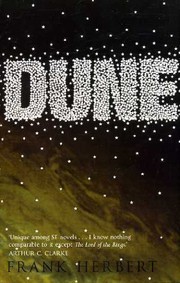
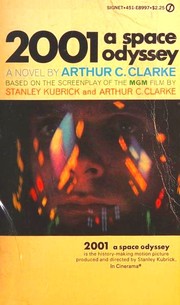
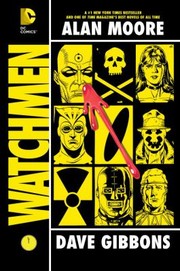
- If you liked Foundation, try Dune (Frank Herbert), 2001 (Arthur C. Clarke) and Watchmen (Alan Moore).
A taste of the feed
What to say to yourself when fear arrives and will not leave.
I must not fear. Fear is the mind-killer. Fear is the little-death that brings total obliteration. I will face my fear. I will permit it to pass over me and through me. And when it has gone past I will turn the inner eye to see its path. Where the fear has gone there will be nothing. Only I will remain.
Dune · Frank Herbert
The one thing no one can prepare for is the ordinary.
He was prepared, he thought, for any wonder. The only thing he had never expected was the utterly commonplace.
2001 · Arthur C. Clarke
The oldest trick in politics: invent a monster, then volunteer to kill it.
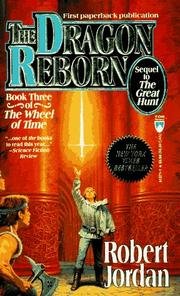
Do you know how to unite the people behind you, Child Carridin? The quickest way? Loose a lion - a rabid lion - in the streets. And when panic grips the people, once it has turned their bowels to water, calmly tell them you will deal with it. Then you kill it, and order them to hang the carcass up where everyone can see. Before they have time to think, you give another order, and it will be obeyed. And if you continue to give orders, they will continue to obey, for you will be the one who saved them, and who better to lead?
The Dragon Reborn · Robert Jordan
Read pages from books like this, one at a time
Keep reading in the feed