
I, Robot
Isaac Asimov, 1950
★ 4.21 from 392.7k ratings on Goodreads
Nine linked stories in which robots obey the Three Laws perfectly and still cause trouble, because the humans around them do not. A calm, witty set of puzzle stories that turns unease about machines into intellectual pleasure, with a brisk mid-century voice.
Feels like curiosity, unease and awe. About art, morality and society.
Who it’s for
You may enjoy this if you like thought experiments about rules, logic and responsibility, told through linked episodes. Some of the linked tales repeat the same problem-solving pattern, and the lone female scientist is treated in a dated, sexist way.
Why read it
It gives you clean, memorable thought experiments about machines and moral responsibility, and Asimov's Three Laws remain a sharp tool for thinking about today's automated systems.
A page from the book
The strange comfort of learning that no one was ever in charge.
“But you are telling me, Susan, that the ‘Society for Humanity’ is right; and that Mankind has lost its own say in its future.”“It never had any, really. It was always at the mercy of economic and sociological forces it did not understand—at the whims of climate, and the fortunes of war. Now the Machines understand them; and no one can stop them, since the Machines will deal with them as they are dealing with the Society,—having, as they do, the greatest of weapons at their disposal, the absolute control of our economy.”“How horrible!”“Perhaps how wonderful! Think, that for all time, all conflicts are finally evitable. Only the Machines, from now on, are inevitable!” What readers say
Readers find the stories intellectually stimulating and often entertaining, especially the ethical puzzles around the Three Laws, though some find the linked tales repetitive, technical, or dated; a few flag the treatment of the sole female scientist as sexist.
Isaac Asimov.Asimov coined the word 'robotics' in 1942 and set down the Three Laws that same year; he called the old fear of machines the 'Frankenstein complex.'
Books that feel like this

More by Isaac Asimov
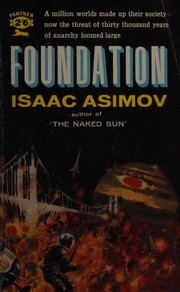
Foundation
Isaac Asimov, 1951
A mathematician arrives on the capital planet of a galactic empire and finds that history itself can be predicted—and is running out.
Where to get it
Some of these links earn us a small commission, at no cost to you. It keeps BookFeed free.
Questions readers ask
- Is I, Robot for me?
- You may enjoy this if you like thought experiments about rules, logic and responsibility, told through linked episodes. Some of the linked tales repeat the same problem-solving pattern, and the lone female scientist is treated in a dated, sexist way.
- What is I, Robot like?
- A calm, witty set of puzzle stories that turns unease about machines into intellectual pleasure, with a brisk mid-century voice. Feels like curiosity, unease and awe. About art, morality and society.
- What should I read after I, Robot?
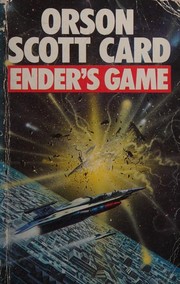
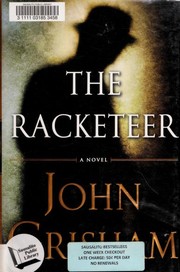
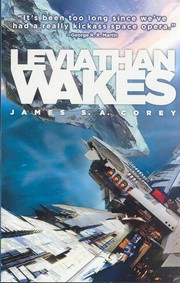
- If you liked I, Robot, try Ender's Game (Orson Scott Card), The Racketeer (John Grisham) and Leviathan Wakes (James S.A. Corey).
A taste of the feed
What if understanding someone is the first step toward destroying them?
“In the moment when I truly understand my enemy, understand him well enough to defeat him, then in that very moment I also love him. I think it’s impossible to really understand somebody, what they want, what they believe, and not love them the way they love themselves. And then, in that very moment when I love them... I destroy them. -” “You beat them.” For a moment she was not afraid of his understanding. “No, you don’t understand. I destroy them. I make it impossible for them to ever hurt me again. I grind them and grind them until they don’t exist.”
Ender's Game · Orson Scott Card
What is lost when nothing is allowed to stand between wanting and having.
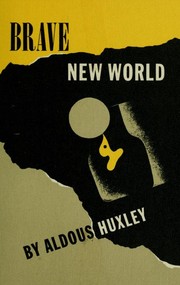
Impulse arrested spills over, and the flood is feeling, the flood is passion, the flood is even madness: it depends on the force of the current, the height and strength of the barrier. The unchecked stream flows smoothly down its appointed channels into a calm well-being. (The embryo is hungry; day in, day out, the blood-surrogate pump unceasingly turns its eight hundred revolutions a minute. The decanted infant howls; at once a nurse appears with a bottle of external secretion. Feeling lurks in that interval of time between desire and its consummation. Shorten that interval, break down all those old unnecessary barriers.
Brave New World · Aldous Huxley
The horror of a cold corpse, delivered in the most sterile, official tone.
ONEThe bodies were discovered at eight forty-five on the morning of Wednesday 18 September by Miss Emily Wharton, a sixty-five-year-old spinster of the parish of St. Matthew’s in Paddington, London, and Darren Wilkes, aged ten, of no particular parish as far as he knew or cared. This unlikely pair of companions had left Miss Wharton’s flat in Crowhurst Gardens just before half past eight to walk the half-mile stretch of the Grand Union Canal to St. Matthew’s Church.
A Taste for Death · P. D. James
Read pages from books like this, one at a time
Keep reading in the feed