Night
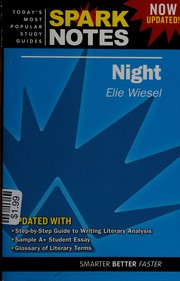
Elie Wiesel, 1956
A teenage Talmud student watches his town become a ghetto, then a sealed cattle car, and asks what prayer is for when the world goes silent.
 BookFeed Ελληνικά
A page that shows it
What the night sky becomes when the fire is inside you.
NIGHT. No one was praying for the night to pass quickly. The stars were but sparks of the immense conflagration that was consuming us. Were this conflagration to be extinguished one day, nothing would be left in the sky but extinct stars and unseeing eyes. Elie Wiesel, 1956
A teenage Talmud student watches his town become a ghetto, then a sealed cattle car, and asks what prayer is for when the world goes silent.
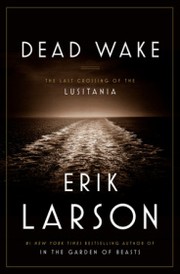
Erik Larson, 2015
The Lusitania's last crossing, braided from passenger diaries, Cunard records, and the U-boat commander's log—a narrative history with a ticking clock.
Yuval Noah Harari, 2011
A historian retells the whole human story as one argument: that we conquered the world by learning to believe in things that aren't there.
Erik Larson, 2003
Two stories braid through the 1893 Chicago World's Fair: the architects who built a white city and the charming doctor who moved through its shadows.
Daniel James Brown, 2013
The Depression-era sons of loggers and farmers row against Ivy League privilege—and Hitler's Berlin—in a story about endurance, class and what a boat can teach.
Martha Hall Kelly, 2016
A New York socialite, a Polish teenager, and a German doctor are bound by wartime choices in this novel of courage and its aftermath.
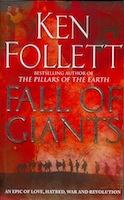
Ken Follett, 2010
Five families, a Welsh mining boy, and the First World War: a historical saga about ordinary people caught in the machinery of empire.
John Green, 2025
John Green traces tuberculosis from sanatoriums to modern cures, asking why a disease we can treat still kills millions—and what our failure says about us.
Yuval Noah Harari, 2016
Harari turns from the history of Homo sapiens to its next century: algorithms, data and the godlike powers we are about to invent.
Don Watson, 2021
A compact history of the United States told through the tension between its founding ideals and the lives shaped—and divided—by them.
Γιώργος Μαργαρώνης, 2024
A curious walking tour of Kypseli that asks who the people behind its street names were—and what a city chooses to remember.
A ship can hide its lights but not its silhouette.
With all but a few lights extinguished and all shades pulled and curtains drawn, the great liner slid forward through the sea, at times in fog, at times under a lacework of stars. But even in darkness, in moonlight and mist, the ship stood out. At one o’clock in the morning, Friday, May 7, the officers of a New York–bound vessel spotted the Lusitania and recognized it immediately as it passed some two miles off. “You could see the shape of the four funnels,” said the captain, Thomas M. Taylor; “she was the only ship with four funnels.”Dead Wake · Erik Larson
The thing you can't live without was once optional.
One of history’s few iron laws is that luxuries tend to become necessities and to spawn new obligations. Once people get used to a certain luxury, they take it for granted. Then they begin to count on it. Finally, they reach a point where they can’t live without it.Sapiens · Yuval Noah Harari
What kind of man steps off a train into smoke and feels at home?
And in Chicago a young handsome doctor stepped from a train, his surgical valise in hand. He entered a world of clamor, smoke, and steam, refulgent with the scents of murdered cattle and pigs. He found it to his liking.The Devil in the White City · Erik Larson
Read pages from books like this, one at a time
Keep reading in the feedRead pages from books like this, one at a time
BookFeed is a feed of real passages from real books. It learns what moves you and finds your next book.
Open BookFeedFree, no sign-up.