
Essays
Ralph Waldo Emerson (1803–1882), 1841
★ 4.16 from 466 ratings on Goodreads
Twelve essays that argue with your habits of mind: trust your own thinking, distrust conformity, and read the world as a mind would. Every page contains a sentence you'll want to underline. Emerson's prose moves in aphoristic bursts, earnest and defiant, asking you to think alongside it rather than follow a story.
Feels like defiance, wonder and hope. About identity, freedom and society.
Who it’s for
You may like it if you enjoy being prodded into your own opinions and don't mind essays that think in leaps. The lecture-born sentences can be abstract and knotty, so some pages reward slow re-reading rather than a quick skim.
Why read it
Read it when you want language that sharpens your own thinking about conformity and self-reliance, in sentences compact enough to carry away.
Pages from the book
Writing a page and later wondering who wrote it.
Our moods do not believe in each other. To-day I am full of thoughts and can write what I please. I see no reason why I should not have the same thought, the same power of expression, to-morrow. What I write, whilst I write it, seems the most natural thing in the world; but yesterday I saw a dreary vacuity in this direction in which now I see so much; and a month hence, I doubt not, I shall wonder who he was that wrote so many continuous pages. Alas for this infirm faith, this will not strenuous, this vast ebb of a vast flow! I am God in nature; I am a weed by the wall. Cross an ocean and discover who has been packed in your luggage.
Travelling is a fool’s paradise. Our first journeys discover to us the indifference of places. At home I dream that at Naples, at Rome, I can be intoxicated with beauty and lose my sadness. I pack my trunk, embrace my friends, embark on the sea and at last wake up in Naples, and there beside me is the stern fact, the sad self, unrelenting, identical, that I fled from. I seek the Vatican and the palaces. I affect to be intoxicated with sights and suggestions, but I am not intoxicated. My giant goes with me wherever I go. The quiet bargain by which a society buys your obedience.
Society everywhere is in conspiracy against the manhood of every one of its members. Society is a joint-stock company, in which the members agree, for the better securing of his bread to each shareholder, to surrender the liberty and culture of the eater. The virtue in most request is conformity. Self-reliance is its aversion. It loves not realities and creators, but names and customs. Ralph Waldo Emerson.Emerson resigned his Unitarian pulpit in 1832 over doubts about administering communion, then made his living as a travelling lecturer. Many of his essays began as lectures.
Books that feel like this




Where to get it
Some of these links earn us a small commission, at no cost to you. It keeps BookFeed free.
Questions readers ask
- Is Essays for me?
- You may like it if you enjoy being prodded into your own opinions and don't mind essays that think in leaps. The lecture-born sentences can be abstract and knotty, so some pages reward slow re-reading rather than a quick skim.
- What is Essays like?
- Emerson's prose moves in aphoristic bursts, earnest and defiant, asking you to think alongside it rather than follow a story. Feels like defiance, wonder and hope. About identity, freedom and society.
- What should I read after Essays?
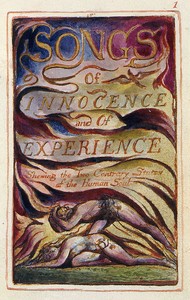
- If you liked Essays, try Walden, and On The Duty Of Civil Disobedience (Henry David Thoreau), Songs of Innocence and of Experience (William Blake) and Notes from Underground (Fyodor Dostoevsky).
A taste of the feed
Can the maker of the gentlest creature also have made the fiercest?
What the hammer? what the chain? In what furnace was thy brain? What the anvil? what dread grasp Dare its deadly terrors clasp? When the stars threw down their spears, And watered heaven with their tears, Did He smile His work to see? Did He who made the lamb make thee? Tiger, tiger, burning bright In the forests of the night, What immortal hand or eye Dare frame thy fearful symmetry?
Songs of Innocence and of Experience · William Blake
The injury that lasts longer than a blow: being looked through.
I was standing by the billiard-table and in my ignorance blocking up the way, and he wanted to pass; he took me by the shoulders and without a word—without a warning or explanation—moved me from where I was standing to another spot and passed by as though he had not noticed me. I could have forgiven blows, but I could not forgive his having moved me without noticing me.
Notes from Underground · Fyodor Dostoevsky
What if the terror was never in the thing itself?
Men are disturbed not by things, but by the views which they take of things. Thus death is nothing terrible, else it would have appeared so to Socrates. But the terror consists in our notion of death, that it is terrible. When, therefore, we are hindered or disturbed, or grieved, let us never impute it to others, but to ourselves—that is, to our own views. It is the action of an uninstructed person to reproach others for his own misfortunes; of one entering upon instruction, to reproach himself; and one perfectly instructed, to reproach neither others nor himself.
The Enchiridion · Epictetus
Read pages from books like this, one at a time
Keep reading in the feed