BookFeed Ελληνικά

Books like The Turn of the Screw

If The Turn of the Screw stayed with you, these share its feel: dread, society and unease. Each comes with a real page, so you can tell in a minute.

About The Turn of the Screw · Henry James

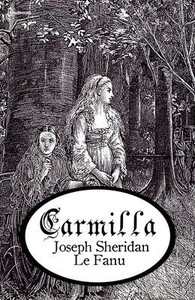
  1. 1.Carmilla

    Joseph Sheridan Le Fanu, 1872

    Also dread and unease. A lonely girl in a castle falls for a beautiful guest who arrives by night—a vampire story told through desire, dread and ambiguity.

    Sometimes after an hour of apathy, my strange and beautiful companion would take my hand and hold it with a fond pressure, renewed again and again; blushing softly, gazing in my face with languid and burning eyes, and breathing so fast that her dress rose and fell with the tumultuous respiration. It was like the ardor of a lover; it embarrassed me; it was hateful and yet over-powering; and with gloating eyes she drew me to her, and her hot lips traveled along my cheek in kisses; and she would whisper, almost in sobs, “You are mine, you shall be mine, you and I are one for ever.” Then she had thrown herself back in her chair, with her small hands over her eyes, leaving me trembling.
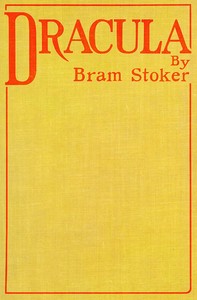
  2. 2.Dracula

    Bram Stoker, 1897

    Also dread and death. A solicitor's business trip, a seaside storm and a doctor's case notes, told through diaries, letters and telegrams so that dread reads like found evidence.

    What I saw was the Count’s head coming out from the window. I did not see the face, but I knew the man by the neck and the movement of his back and arms. In any case I could not mistake the hands which I had had so many opportunities of studying. I was at first interested and somewhat amused, for it is wonderful how small a matter will interest and amuse a man when he is a prisoner. But my very feelings changed to repulsion and terror when I saw the whole man slowly emerge from the window and begin to crawl down the castle wall over that dreadful abyss, face down with his cloak spreading out around him like great wings. At first I could not believe my eyes.
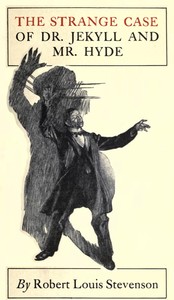
  3. 3.The strange case of Dr. Jekyll and Mr. Hyde

    Robert Louis Stevenson, 1886

    Also dread and unease. A short, fast Victorian mystery that works as a thriller and as a sharp study of respectability, appetite and the parts of ourselves we prefer to keep out of sight.

    And it chanced that the direction of my scientific studies, which led wholly towards the mystic and the transcendental, reacted and shed a strong light on this consciousness of the perennial war among my members. With every day, and from both sides of my intelligence, the moral and the intellectual, I thus drew steadily nearer to that truth, by whose partial discovery I have been doomed to such a dreadful shipwreck: that man is not truly one, but truly two. I say two, because the state of my own knowledge does not pass beyond that point. Others will follow, others will outstrip me on the same lines; and I hazard the guess that man will be ultimately known for a mere polity of multifarious, incongruous and independent denizens. I, for my part, from the nature of my life, advanced infallibly in one direction and in one direction only.
  4. 4.The Castle of Otranto

    Horace Walpole, 1764

    Also dread and unease. A castle, an enormous helmet fallen from nowhere, and a tyrant with a guilty bloodline: the 1764 novel that invented gothic fiction and is still genuinely strange, funny and frightening.

    Manfred, though persuaded, like his wife, that the vision had been no work of fancy, recovered a little from the tempest of mind into which so many strange events had thrown him. Ashamed, too, of his inhuman treatment of a Princess who returned every injury with new marks of tenderness and duty, he felt returning love forcing itself into his eyes; but not less ashamed of feeling remorse towards one against whom he was inwardly meditating a yet more bitter outrage, he curbed the yearnings of his heart, and did not dare to lean even towards pity. The next transition of his soul was to exquisite villainy.
  5. 5.Uncle Silas

    Sheridan Le Fanu, 1864

    Also dread and unease. A nervous heiress is sent to live with her mysterious uncle in a decaying mansion, where charm and menace wear the same face.

    Why did I remain silent and motionless while such an outrage was being committed? If, instead of being a very nervous girl, preoccupied with an undefinable terror of that wicked woman, I had possessed courage and presence of mind, I dare say I might have given an alarm, and escaped from the room without the slightest risk. But so it was; I could no more stir than the bird who, cowering under its ivy, sees the white owl sailing back and forward under its predatory cruise.
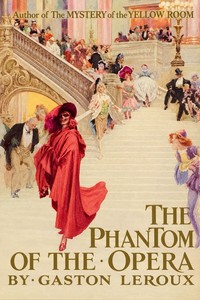
  6. 6.The Phantom of the Opera

    Gaston Leroux, 1910

    Also dread. A masked figure haunts the Paris Opera, secretly tutoring a young singer — a gothic thriller about genius, ugliness, and what love demands.

    After the deceptions and illusions of the torture-chamber, the precision of the details of that quiet little middle-class room seemed to have been invented for the express purpose of puzzling the mind of the mortal rash enough to stray into that abode of living nightmare. The wooden bedstead, the waxed mahogany chairs, the chest of drawers, those brasses, the little square antimacassars carefully placed on the backs of the chairs, the clock on the mantelpiece and the harmless-looking ebony caskets at either end, lastly, the whatnot filled with shells, with red pin-cushions, with mother-of-pearl boats and an enormous ostrich-egg, the whole discreetly lighted by a shaded lamp standing on a small round table: this collection of ugly, peaceable, reasonable furniture, AT THE BOTTOM OF THE OPERA CELLARS, bewildered the imagination more than all the late fantastic happenings.
  7. 7.Ghost Stories

    E. F. Benson, 1912

    Also dread and unease. English ghosts by a bishop's son who wrote them with a civilised smile: haunted bedrooms, village rites, and a dead man fretting through his own séance.

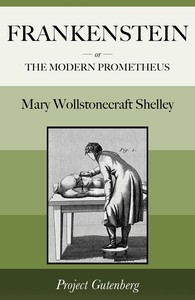
  8. 8.Frankenstein

    Mary Shelley, 1818

    Also dread. A young scientist makes life and then cannot face what he has made. Told in nested voices, it asks who owes what to whom, and why ambition so often ends in solitude.

Read pages from books like this, one at a time

BookFeed is a feed of real passages from real books. It learns what moves you and finds your next book.

Open BookFeed

Free, no sign-up.