BookFeed Ελληνικά

Books like The Enchiridion

If The Enchiridion stayed with you, these share its feel: freedom, serenity and morality. Each comes with a real page, so you can tell in a minute.

About The Enchiridion · Epictetus

  1. 1.Meditations

    Marcus Aurelius, 180

    Also serenity and morality. A Roman emperor's private notebook, written on campaign. Short, blunt reminders to himself about anger, death and other people's opinions, which read like advice addressed to you.

    ‘They kill me, they cut my flesh; they persecute my person with curses.’ What then? May not thy mind for all this continue pure, prudent, temperate, just? As a fountain of sweet and clear water, though she be cursed by some stander by, yet do her springs nevertheless still run as sweet and clear as before; yea though either dirt or dung be thrown in, yet is it no sooner thrown, than dispersed, and she cleared. She cannot be dyed or infected by it. What then must I do, that I may have within myself an overflowing fountain, and not a well? Beget thyself by continual pains and endeavours to true liberty with charity, and true simplicity and modesty.
  2. 2.Moral Letters to Lucilius

    Seneca, 65

    Also morality and death. A Roman statesman at the end of his life writes to a friend about wanting less, fearing death less, and spending the hours he actually has.

    Pray, let us see to it, my dear Lucilius, that our lives, like jewels of great price, be noteworthy not because of their width but because of their weight. Let us measure them by their performance, not by their duration. Would you know wherein lies the difference between this hardy man who, despising Fortune, has served through every campaign of life and has attained to life’s Supreme Good, and that other person over whose head many years have passed? The former exists even after his death; the latter has died even before he was dead.
  3. 3.Walden, and On The Duty Of Civil Disobedience

    Henry David Thoreau, 1854

    Also freedom and serenity. A two-year experiment in living cheaply beside a pond, written as a running argument with your own busyness, your possessions, and the life you assumed you had to lead.

    Why should we be in such desperate haste to succeed, and in such desperate enterprises? If a man does not keep pace with his companions, perhaps it is because he hears a different drummer. Let him step to the music which he hears, however measured or far away. It is not important that he should mature as soon as an apple-tree or an oak. Shall he turn his spring into summer? If the condition of things which we were made for is not yet, what were any reality which we can substitute? We will not be shipwrecked on a vain reality. Shall we with pains erect a heaven of blue glass over ourselves, though when it is done we shall be sure to gaze still at the true ethereal heaven far above, as if the former were not?
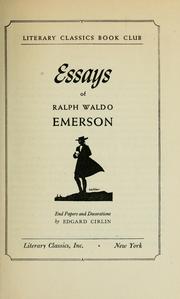
  4. 4.Essays

    Ralph Waldo Emerson, 1841

    Also defiance and freedom. Twelve essays that argue with your habits of mind: trust your own thinking, distrust conformity, and read the world as a mind would. Every page contains a sentence you'll want to underline.

    Our moods do not believe in each other. To-day I am full of thoughts and can write what I please. I see no reason why I should not have the same thought, the same power of expression, to-morrow. What I write, whilst I write it, seems the most natural thing in the world; but yesterday I saw a dreary vacuity in this direction in which now I see so much; and a month hence, I doubt not, I shall wonder who he was that wrote so many continuous pages. Alas for this infirm faith, this will not strenuous, this vast ebb of a vast flow! I am God in nature; I am a weed by the wall.
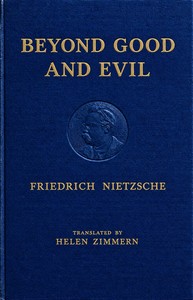
  5. 5.Beyond Good and Evil

    Friedrich Nietzsche, 1886

    Also morality and defiance. A sharp-tongued tour of the habits of mind we take for granted: why philosophers lie to themselves, what our morals hide, and what it takes to think without flattering yourself.

    Nobody will very readily regard a doctrine as true merely because it makes people happy or virtuous—excepting, perhaps, the amiable “Idealists,” who are enthusiastic about the good, true, and beautiful, and let all kinds of motley, coarse, and good-natured desirabilities swim about promiscuously in their pond. Happiness and virtue are no arguments. It is willingly forgotten, however, even on the part of thoughtful minds, that to make unhappy and to make bad are just as little counter-arguments. A thing could be TRUE, although it were in the highest degree injurious and dangerous; indeed, the fundamental constitution of existence might be such that one succumbed by a full knowledge of it—so that the strength of a mind might be measured by the amount of “truth” it could endure—or to speak more plainly, by the extent to which it REQUIRED truth attenuated, veiled, sweetened, damped, and falsified.
  6. 6.Tusculan Disputations

    Cicero, -45

    Also morality and death. Out of power, Cicero argues himself out of the fear of death and grief — five afternoons of Roman argument at its wittiest and most consoling.

    But because there is nothing beyond old age, we call that long. All these things are said to be long or short, according to the proportion of time they were given us for. Artistotle says there is a kind of insect near the river Hypanis, which runs from a certain part of Europe into the Pontus, whose life consists but of one day. Those that die at the eighth hour die in full age; those who die when the sun sets are very old, especially when the days are at the longest. Compare our longest life with eternity, and we shall be found almost as short-lived as those little animals.
  7. 10.Dialogues

    Plato, -347

    Also morality. A deep dive into the questions that define civilization: what is justice, what is wisdom, and what happens to the soul after death.

Read pages from books like this, one at a time

BookFeed is a feed of real passages from real books. It learns what moves you and finds your next book.

Open BookFeed

Free, no sign-up.