BookFeed Ελληνικά

Books like The Book of Tea

If The Book of Tea stayed with you, these share its feel: wonder and art. Each comes with a real page, so you can tell in a minute.

About The Book of Tea · Kakuzo Okakura

  1. 1.Kusamakura

    Natsume Sōseki, 1906

    Also wonder and art. A painter escapes to a mountain inn to see the world as art, and finds a village, a strange woman, and a war that will not stay outside the frame.

    My old host volunteered in his nephew’s place to let me understand that the youth was destined to leave for Manchuria in a day or two. I had thought that there was only feathered songsters to listen to, only flowers to see fall, only hot spring to warble forth in this dreamy land of poetry in a mountain bosom, in peaceful Spring. Alas, the living world had come crossing the sea and mountain and oozing into this home of a forgotten tribe, and the time may come when a small fraction of blood making a crimson sea of bleak Manchuria may flow from this youth’s arteries. This very youth is sitting next to an artist who sees nothing worth seeing in human life but dreaming. He sits so near that the artist may hear his heart throb.
  2. 2.A Daughter of the Samurai

    Etsu Inagaki Sugimoto, 1925

    Also wonder. A samurai's daughter is raised for one world — brushwork, bowing, an arranged marriage — then sent to Cincinnati. A memoir of translating yourself, line by line.

    All that winter the household was busy getting me ready for school. The pathos of these preparations I did not realize; nor, I think, did any of us. Mother spent evening after evening bending her stately head over wonderful embroidered garments, ripping out, stitch by stitch, the exquisite work of hands folded in rest generations ago. Then Ishi would dye the silk and make it into plain garments suitable for my school life.
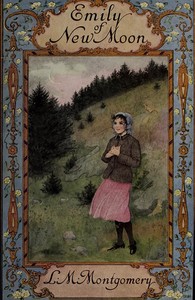
  3. 3.Emily of New Moon

    L. M. Montgomery, 1923

    Also art and wonder. An orphan with a stub of pencil and an unshakeable inner life is sent to live with stern relatives on Prince Edward Island, and starts writing them all down.

    Off to the right, on the crest of a steep little hill, covered with young birches and firs, was a house that puzzled and intrigued Emily. It was grey and weatherworn, but it didn’t look old. It had never been finished; the roof was shingled but the sides were not, and the windows were boarded over. Why had it never been finished? And it was meant to be such a pretty little house—a house you could love—a house where there would be nice chairs and cozy fires and bookcases and lovely, fat, purry cats and unexpected corners; then and there she named it the Disappointed House, and many an hour thereafter did she spend finishing that house, furnishing it as it should be furnished, and inventing the proper people and animals to live in it.
  4. 4.Ulysses

    James Joyce, 1922

    Also art and wonder. One Dublin day in 1904, followed through two men's minds — an ad-canvasser and a young writer — with every joke, smell and stray thought left in.

    Their dog ambled about a bank of dwindling sand, trotting, sniffing on all sides. Looking for something lost in a past life. Suddenly he made off like a bounding hare, ears flung back, chasing the shadow of a lowskimming gull. The man’s shrieked whistle struck his limp ears. He turned, bounded back, came nearer, trotted on twinkling shanks. On a field tenney a buck, trippant, proper, unattired. At the lacefringe of the tide he halted with stiff forehoofs, seawardpointed ears. His snout lifted barked at the wavenoise, herds of seamorse. They serpented towards his feet, curling, unfurling many crests, every ninth, breaking, plashing, from far, from farther out, waves and waves.
  5. 5.Kitchen Confidential

    Anthony Bourdain, 2000

    Also wonder. A chef's memoir of the restaurant underworld: late nights, bad behavior, raw oysters, and the strange brotherhood of the line.

    So who the hell, exactly, are these guys, the boys and girls in the trenches? You might get the impression from the specifics of my less than stellar career that all line cooks are wacked-out moral degenerates, dope fiends, refugees, a thuggish assortment of drunks, sneak thieves, sluts and psychopaths. You wouldn’t be too far off base. The business, as respected three-star chef Scott Bryan explains it, attracts ‘fringe elements’, people for whom something in their lives has gone terribly wrong. Maybe they didn’t make it through high school, maybe they’re running away from something-be it an ex-wife, a rotten family history, trouble with the law, a squalid Third World backwater with no opportunity for advancement. Or maybe, like me, they just like it here.
    Excerpt from Kitchen Confidential, Anthony Bourdain 2000. Quoted for discovery. Source Rights & removals
  6. 6.Persuasion

    Jane Austen, 1817

    Also wonder and art. A woman of twenty-seven meets again the man she was talked out of marrying, and begins to wonder whether prudence was ever a virtue.

    They had no conversation together, no intercourse but what the commonest civility required. Once so much to each other! Now nothing! There had been a time, when of all the large party now filling the drawing-room at Uppercross, they would have found it most difficult to cease to speak to one another. With the exception, perhaps, of Admiral and Mrs. Croft, who seemed particularly attached and happy (Anne could allow no other exception even among the married couples), there could have been no two hearts so open, no tastes so similar, no feelings so in unison, no countenances so beloved. Now they were as strangers; nay, worse than strangers, for they could never become acquainted. It was a perpetual estrangement.
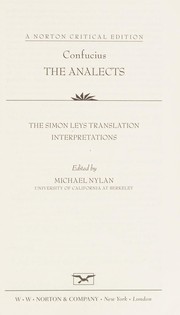
  7. 10.Analects

    Confucius

    Also wonder. A collection of small, sharp conversations on how to live with other people, mostly remembered because they refuse to be simple rules.

Read pages from books like this, one at a time

BookFeed is a feed of real passages from real books. It learns what moves you and finds your next book.

Open BookFeed

Free, no sign-up.