BookFeed Ελληνικά

Books like Dubliners

If Dubliners stayed with you, these share its feel: melancholy, society and solitude. Each comes with a real page, so you can tell in a minute.

About Dubliners · James Joyce

  1. 1.Spoon River Anthology

    Edgar Lee Masters, 1884

    Also melancholy and society. A compilation of epitaph-style monologues that reveal the dark, often absurd truth beneath small-town Victorian propriety.

    I grew spiritually fat living off the souls of men.If I saw a soul that was strongI wounded its pride and devoured its strength.The shelters of friendship knew my cunning,For where I could steal a friend I did so.And wherever I could enlarge my powerBy undermining ambition, I did so,Thus to make smooth my own.And to triumph over other souls,Just to assert and prove my superior strength,Was with me a delight,The keen exhilaration of soul gymnastics.Devouring souls, I should have lived forever.

  2. 2.Agnes Grey

    Anne Brontë, 1847

    Also melancholy and solitude. A clergyman's daughter with no money takes a post as a governess and learns how little the world allows a woman who must earn her own bread.

    But, if those thoughts brought delight, it was a painful, troubled pleasure, too near akin to anguish; and one that did me more injury than I was aware of. It was an indulgence that a person of more wisdom or more experience would doubtless have denied herself. And yet, how dreary to turn my eyes from the contemplation of that bright object and force them to dwell on the dull, grey, desolate prospect around: the joyless, hopeless, solitary path that lay before me. It was wrong to be so joyless, so desponding; I should have made God my friend, and to do His will the pleasure and the business of my life; but faith was weak, and passion was too strong.
  3. 3.Mrs. Dalloway

    Virginia Woolf, 1925

    Also melancholy. One June day in London, a society wife prepares a party while a shell-shocked veteran sits in the park. A novel written the way a mind actually moves.

    She would not say of anyone in the world now that they were this or were that. She felt very young; at the same time unspeakably aged. She sliced like a knife through everything; at the same time was outside, looking on. She had a perpetual sense, as she watched the taxi cabs, of being out, out, far out to sea and alone; she always had the feeling that it was very, very dangerous to live even one day.
  4. 4.The Lady with the Dog and Other Stories

    Anton Chekhov, 1899

    Also melancholy and longing. Quiet stories of doctors, bored lovers and tired idealists in which little happens and everything shifts: a whole life felt in twenty pages.

    At Oreanda they sat on a seat not far from the church, looked down at the sea, and were silent. Yalta was hardly visible through the morning mist; white clouds stood motionless on the mountain-tops. The leaves did not stir on the trees, grasshoppers chirruped, and the monotonous hollow sound of the sea rising up from below, spoke of the peace, of the eternal sleep awaiting us. So it must have sounded when there was no Yalta, no Oreanda here; so it sounds now, and it will sound as indifferently and monotonously when we are all no more. And in this constancy, in this complete indifference to the life and death of each of us, there lies hid, perhaps, a pledge of our eternal salvation, of the unceasing movement of life upon earth, of unceasing progress towards perfection.
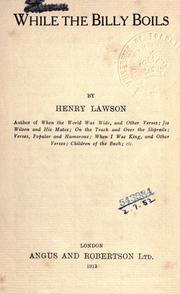
  5. 5.While the Billy Boils

    Henry Lawson, 1896

    Also melancholy and solitude. Bush swagmen, drovers’ wives and city larrikins: Lawson’s short fictions of hard luck, dry humour and stubborn mateship in colonial Australia.

    We talked about grubbing and fencing and digging and droving and shearing—all about the bush—and it all came back to me as we talked. “I can see it all now,” he said once, in an abstracted tone, seeming to fix his helpless eyes on the wall opposite. But he didn’t see the dirty blind wall, nor the dingy window, nor the skimpy little bed, nor the greasy washstand; he saw the dark blue ridges in the sunlight, the grassy sidings and flats, the creek with clumps of sheoak here and there, the course of the willow-fringed river below, the distant peaks and ranges fading away into a lighter azure, the granite ridge in the middle distance, and the rocky rises, the stringy-bark and the apple-tree flats, the scrubs, and the sunlit plains—and all. I could see it, too—plainer than ever I did.
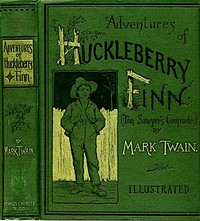
  6. 6.The Adventures of Huckleberry Finn

    Mark Twain, 1884

    Also society and melancholy. A runaway boy and an enslaved man drift a raft down the Mississippi, and a child's plain talk quietly dismantles everything the adults around him believe.

    This second night we run between seven and eight hours, with a current that was making over four mile an hour. We catched fish and talked, and we took a swim now and then to keep off sleepiness. It was kind of solemn, drifting down the big, still river, laying on our backs looking up at the stars, and we didn’t ever feel like talking loud, and it warn’t often that we laughed—only a little kind of a low chuckle. We had mighty good weather as a general thing, and nothing ever happened to us at all—that night, nor the next, nor the next.
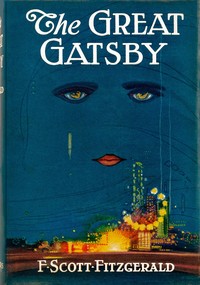
  7. 8.The Great Gatsby

    F. Scott Fitzgerald, 1925

    Also longing and melancholy. A short, dazzling novel about a summer of parties on Long Island and the man who throws them for one reason. Every sentence is built to be reread, and the ending is hard to shake.

  8. 12.Short Fiction

    Saki, 1904

    Also society and unease. Edwardian England seen from the side: a talking cat, a private childhood god, and a socialist who enjoys her money. Saki’s wit is a scalpel with a smile.

Read pages from books like this, one at a time

BookFeed is a feed of real passages from real books. It learns what moves you and finds your next book.

Open BookFeed

Free, no sign-up.