
Convenience Store Woman
Sayaka Murata, 2016
Contemporary fiction Literary fiction
A woman who has worked in a convenience store for eighteen years finds its manual clearer than society's unwritten rules. A flat, precise voice carries a quiet melancholy, making identity and social rules feel strange inside everyday store routines.
Feels like melancholy. About identity and society.
Who it’s for
You may like it if you enjoy quiet literary fiction about work, belonging, and the pressure to seem normal. The narrator's flat, matter-of-fact voice and the constant social judgment can make the book feel bleak and emotionally distant.
Why read it
It offers a sharp, unsentimental look at how ordinary routines can hold a life together, and at what society asks of anyone who doesn't fit.
A page from the book
What if being 'cured' meant being erased?
The normal world has no room for exceptions and always quietly eliminates foreign objects. Anyone who is lacking is disposed of.So that’s why I need to be cured. Unless I’m cured, normal people will expurgate me. Finally I understood why my family had tried so hard to fix me. Sayaka Murata.Murata worked part-time at a convenience store for eighteen years, and the novel's store details come from that daily routine.
Books that feel like this
Where to get it
Some of these links earn us a small commission, at no cost to you. It keeps BookFeed free.
Questions readers ask
- Is Convenience Store Woman for me?
- You may like it if you enjoy quiet literary fiction about work, belonging, and the pressure to seem normal. The narrator's flat, matter-of-fact voice and the constant social judgment can make the book feel bleak and emotionally distant.
- What is Convenience Store Woman like?
- A flat, precise voice carries a quiet melancholy, making identity and social rules feel strange inside everyday store routines. Feels like melancholy. About identity and society.
- What should I read after Convenience Store Woman?
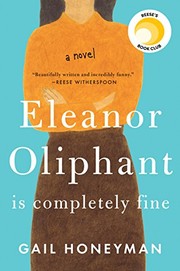
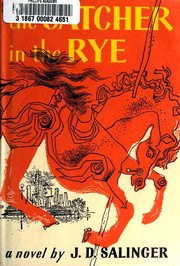
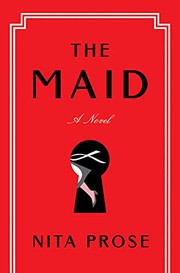
- If you liked Convenience Store Woman, try Eleanor Oliphant Is Completely Fine (Gail Honeyman), The Catcher in the Rye (J. D. Salinger) and The Maid (Nita Prose).
A taste of the feed
When a flat stops being a home and becomes a place no one enters.
No one’s been in my flat this year apart from service professionals; I’ve not voluntarily invited another human being across the threshold, except to read the meter. You’d think that would be impossible, wouldn’t you? It’s true, though. I do exist, don’t I? It often feels as if I’m not here, that I’m a figment of my own imagination. There are days when I feel so lightly connected to the earth that the threads that tether me to the planet are gossamer thin, spun sugar. A strong gust of wind could dislodge me completely, and I’d lift off and blow away, like one of those seeds in a dandelion clock.
Eleanor Oliphant Is Completely Fine · Gail Honeyman
The only job that feels worth doing, and why it can't be real.
Anyway, I keep picturing all these little kids playing some game in this big field of rye and all. Thousands of little kids, and nobody’s around — nobody big, I mean — except me. And I’m standing on the edge of some crazy cliff. What I have to do, I have to catch everybody if they start to go over the cliff — I mean if they’re running and they don’t look where they’re going I have to come out from somewhere and catch them. That’s all I’d do all day. I’d just be the catcher in the rye, and all. I know it’s crazy, but that’s the only thing I’d really like to be. I know it’s crazy.
The Catcher in the Rye · J. D. Salinger
The terrifying possibility that destruction can birth a terrible new beauty.
They’ll pull your life apart and stick it back together with vomit and shit, but it’ll still be more beautiful than you ever thought possible.
The It Girl · Ruth Ware
Read pages from books like this, one at a time
Keep reading in the feed