
Uncle Tom's Cabin
Harriet Beecher Stowe (1811–1896), 1852
A bestseller that turned a national argument into faces, voices and kitchens—and still asks who pays for the comfort of others. A gothic, grief-soaked story that moves through kitchens and households with a preacher's urgency and a slow, earnest voice.
Feels like grief. About society.
Who it’s for
You may like it if you want a nineteenth-century novel that puts a political argument into domestic scenes and moral confrontations. Be warned that its 1852 diction, sentimental speeches and direct appeals to the reader can feel slow and preachy.
Why read it
It shows how a national argument looked from inside kitchens and consciences, and why sentimental storytelling can make abstract cruelty hard to ignore.
Pages from the book
A father's grief, put beside every other parent's, without apology.
Here he turned to the rough trundle bed full of little woolly heads, and broke fairly down. He leaned over the back of the chair, and covered his face with his large hands. Sobs, heavy, hoarse and loud, shook the chair, and great tears fell through his fingers on the floor; just such tears, sir, as you dropped into the coffin where lay your first-born son; such tears, woman, as you shed when you heard the cries of your dying babe. For, sir, he was a man,—and you are but another man. Slavery reduced to its plain arithmetic: one man spends, another works.
“You seem to wonder; but if you will get me fairly at it, I’ll make a clean breast of it. This cursed business, accursed of God and man, what is it? Strip it of all its ornament, run it down to the root and nucleus of the whole, and what is it? Why, because my brother Quashy is ignorant and weak, and I am intelligent and strong,—because I know how, and can do it,—therefore, I may steal all he has, keep it, and give him only such and so much as suits my fancy. Whatever is too hard, too dirty, too disagreeable, for me, I may set Quashy to doing. Because I don’t like work, Quashy shall work. Because the sun burns me, Quashy shall stay in the sun. Quashy shall earn the money, and I will spend it. How we survive years that should have been unbearable.
Life passes, with us all, a day at a time; so it passed with our friend Tom, till two years were gone. Though parted from all his soul held dear, and though often yearning for what lay beyond, still was he never positively and consciously miserable; for, so well is the harp of human feeling strung, that nothing but a crash that breaks every string can wholly mar its harmony; and, on looking back to seasons which in review appear to us as those of deprivation and trial, we can remember that each hour, as it glided, brought its diversions and alleviations, so that, though not happy wholly, we were not, either, wholly miserable. Harriet Beecher Stowe.Uncle Tom’s Cabin first appeared as a serial in the abolitionist National Era in 1851, before being published as a book in 1852.
Books that feel like this



Where to get it
Some of these links earn us a small commission, at no cost to you. It keeps BookFeed free.
Questions readers ask
- Is Uncle Tom's Cabin for me?
- You may like it if you want a nineteenth-century novel that puts a political argument into domestic scenes and moral confrontations. Be warned that its 1852 diction, sentimental speeches and direct appeals to the reader can feel slow and preachy.
- What is Uncle Tom's Cabin like?
- A gothic, grief-soaked story that moves through kitchens and households with a preacher's urgency and a slow, earnest voice. Feels like grief. About society.
- What should I read after Uncle Tom's Cabin?
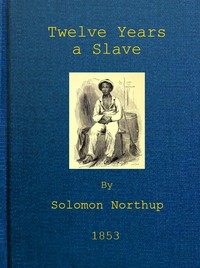
- If you liked Uncle Tom's Cabin, try Twelve Years a Slave (Solomon Northup), Iola Leroy (Frances Ellen Watkins Harper) and Clotel (William Wells Brown).
A taste of the feed
In the very shadow of the Capitol, freedom is put up for sale.
The building to which the yard was attached, was two stories high, fronting on one of the public streets of Washington. Its outside presented only the appearance of a quiet private residence. A stranger looking at it, would never have dreamed of its execrable uses. Strange as it may seem, within plain sight of this same house, looking down from its commanding height upon it, was the Capitol. The voices of patriotic representatives boasting of freedom and equality, and the rattling of the poor slave’s chains, almost commingled. A slave pen within the very shadow of the Capitol!
Twelve Years a Slave · Solomon Northup
She is being offered a palace, and she is thinking about a voice.
When the war is over I intend to search the country for my mother. Doctor, were you to give me a palace-like home, with velvet carpets to hush my tread, and magnificence to surround my way, I should miss her voice amid all other tones, her presence amid every scene. Oh, you do not know how hungry my heart is for my mother! Were I to marry you I would carry an aching heart into your home and dim its brightness. I have resolved never to marry until I have found my mother. The hope of finding her has colored all my life since I regained my freedom. It has helped sustain me in the hour of fearful trial.
Iola Leroy · Frances Ellen Watkins Harper
The moment when the boundaries between sight, sound, and emotion collapse.
Tess was conscious of neither time nor space. The exaltation which she had described as being producible at will by gazing at a star came now without any determination of hers; she undulated upon the thin notes of the second-hand harp, and their harmonies passed like breezes through her, bringing tears into her eyes. The floating pollen seemed to be his notes made visible, and the dampness of the garden the weeping of the garden’s sensibility. Though near nightfall, the rank-smelling weed-flowers glowed as if they would not close for intentness, and the waves of colour mixed with the waves of sound.
Tess of the d'Urbervilles · Thomas Hardy
Read pages from books like this, one at a time
Keep reading in the feed