
Clotel
William Wells Brown (1814–1884), 1853
★ 3.62 from 2.5k ratings on Goodreads
The first novel by an African American, a slave narrative that follows the daughters of Thomas Jefferson as they are sold, separated, and hunted across the American South. The voice is plain and resolute, moving through grief and defiance at a steady, documentary pace, with moments of biting social observation.
Feels like defiance, grief and curiosity. About freedom, society and memory.
Who it’s for
You may like it if you want a direct nineteenth-century abolitionist narrative and are interested in how early Black fiction took shape. Its 1853 prose can feel archaic and openly didactic, and the auction and pursuit scenes deal bluntly with slavery’s violence and family separation.
Why read it
It gives you a founding text of African American fiction, written by a formerly enslaved author and first published in London, where the story’s anger and witness still come through clearly.
Pages from the book
The price of a woman's virtue, rising bid by bid.
“Ah; gentlemen, that is something like. This paper also states that she is very intelligent.” “Eight hundred.” “She is a devoted Christian, and perfectly trustworthy.” “Nine hundred.” “Nine fifty.” “Ten.” “Eleven.” “Twelve hundred.” Here the sale came to a dead stand. The auctioneer stopped, looked around, and began in a rough manner to relate some anecdotes relative to the sale of slaves, which, he said, had come under his own observation. At this juncture the scene was indeed strange. Laughing, joking, swearing, smoking, spitting, and talking kept up a continual hum and noise amongst the crowd; while the slave-girl stood with tears in her eyes, at one time looking towards her mother and sister, and at another towards the young man whom she hoped would become her purchaser. “The chastity of this girl is pure; she has never been from under her mother’s care; she is a virtuous creature.” Two ships cross the Atlantic in the same year, heading for opposite shores.
What is she? She is freighted with the elements of unmixed evil. Hark! hear those rattling chains, hear that cry of despair and wail of anguish, as they die away in the unpitying distance. Listen to those shocking oaths, the crack of that flesh-cutting whip. Ah! it is the first cargo of slaves on their way to Jamestown, Virginia. Behold the Mayflower anchored at Plymouth Rock, the slave-ship in James River. Each a parent, one of the prosperous, labour-honouring, law-sustaining institutions of the North; the other the mother of slavery, idleness, lynch-law, ignorance, unpaid labour, poverty, and duelling, despotism, the ceaseless swing of the whip, and the peculiar institutions of the South. These ships are the representation of good and evil in the New World, even to our day. When shall one of those parallel lines come to an end? His master read freedom aloud; he asks why it stopped at slavery.
I have heard my master read in the Declaration of Independence ‘that all men are created free and equal,’ and this caused me to inquire of myself why I was a slave. I also heard him talking with some of his visitors about the war with England, and he said, all wars and fightings for freedom were just and right. If so, in what am I wrong? The grievances of which your fathers complained, and which caused the Revolutionary War, were trifling in comparison with the wrongs and sufferings of those who were engaged in the late revolt. Your fathers were never slaves, ours are; your fathers were never bought and sold like cattle, never shut out from the light of knowledge and religion, never subjected to the lash of brutal taskmasters. William Wells Brown.Brown was born into slavery in Kentucky, escaped in 1834, and became a celebrated abolitionist lecturer in America and Britain. Clotel was first published in London, not the US.
Books that feel like this




Where to get it
Some of these links earn us a small commission, at no cost to you. It keeps BookFeed free.
Questions readers ask
- Is Clotel for me?
- You may like it if you want a direct nineteenth-century abolitionist narrative and are interested in how early Black fiction took shape. Its 1853 prose can feel archaic and openly didactic, and the auction and pursuit scenes deal bluntly with slavery’s violence and family separation.
- What is Clotel like?
- The voice is plain and resolute, moving through grief and defiance at a steady, documentary pace, with moments of biting social observation. Feels like defiance, grief and curiosity. About freedom, society and memory.
- What should I read after Clotel?
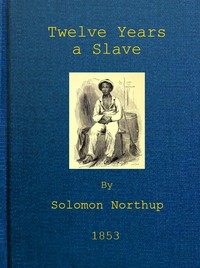
- If you liked Clotel, try Iola Leroy (Frances Ellen Watkins Harper), Twelve Years a Slave (Solomon Northup) and Contending Forces (Pauline E. Hopkins).
A taste of the feed
She is being offered a palace, and she is thinking about a voice.
When the war is over I intend to search the country for my mother. Doctor, were you to give me a palace-like home, with velvet carpets to hush my tread, and magnificence to surround my way, I should miss her voice amid all other tones, her presence amid every scene. Oh, you do not know how hungry my heart is for my mother! Were I to marry you I would carry an aching heart into your home and dim its brightness. I have resolved never to marry until I have found my mother. The hope of finding her has colored all my life since I regained my freedom. It has helped sustain me in the hour of fearful trial.
Iola Leroy · Frances Ellen Watkins Harper
In the very shadow of the Capitol, freedom is put up for sale.
The building to which the yard was attached, was two stories high, fronting on one of the public streets of Washington. Its outside presented only the appearance of a quiet private residence. A stranger looking at it, would never have dreamed of its execrable uses. Strange as it may seem, within plain sight of this same house, looking down from its commanding height upon it, was the Capitol. The voices of patriotic representatives boasting of freedom and equality, and the rattling of the poor slave’s chains, almost commingled. A slave pen within the very shadow of the Capitol!
Twelve Years a Slave · Solomon Northup
The irony of seeking justice while perpetuating deep systemic violence.
“Lynching was instituted to crush the manhood of the enfranchised black. Rape is the crime which appeals most strongly to the heart, of the home life. Merciful God! Irony of ironies! The men who created the mulatto race, who recruit its ranks year after year by the very means which they invoked lynch law to suppress, bewailing the sorrows of violated womanhood!
Contending Forces · Pauline E. Hopkins
Read pages from books like this, one at a time
Keep reading in the feed