
Iola Leroy
Frances Ellen Watkins Harper (1825–1911), 1892
★ 3.55 from 1.9k ratings on Goodreads
A Civil War novel that follows a fair-skinned enslaved woman and her brother as emancipation forces them to decide what race, family and freedom will mean. A steady, plainspoken Victorian novel of family and freedom, with hopeful resolve threaded through grief and long stretches of earnest conversation.
Feels like hope and grief. About society, freedom and family.
Who it’s for
You may like it if you enjoy nineteenth-century fiction that mixes a family search with debates about race, duty and freedom. Be prepared for dated, often speech-heavy prose and a slow middle, since much of the story advances through earnest conversation.
Why read it
It gives you a close view of how emancipation reshapes kinship and identity, and why choosing freedom could be both personal and political.
Pages from the book
She is being offered a palace, and she is thinking about a voice.
When the war is over I intend to search the country for my mother. Doctor, were you to give me a palace-like home, with velvet carpets to hush my tread, and magnificence to surround my way, I should miss her voice amid all other tones, her presence amid every scene. Oh, you do not know how hungry my heart is for my mother! Were I to marry you I would carry an aching heart into your home and dim its brightness. I have resolved never to marry until I have found my mother. The hope of finding her has colored all my life since I regained my freedom. It has helped sustain me in the hour of fearful trial. Two women in the same trouble, and one door that opens.
One day she found an outcast colored girl, whom she wished to rescue. She took her to an asylum for fallen women and made an application for her, but was refused. Colored girls were not received there. Soon after mamma found among the colored people an outcast white girl. Mamma’s sympathies, unfettered by class distinction, were aroused in her behalf, and, in company with two white ladies, she went with the girl to that same refuge. For her the door was freely opened and admittance readily granted. It was as if two women were sinking in the quicksands, and on the solid land stood other women with lifelines in their hands, seeing the deadly sands slowly creeping up around the hapless victims. To one they readily threw the lines of deliverance, but for the other there was not one strand of salvation. The difference between what a man says about his lot and what he wants.
When the army was afar off, he had appeared to be lighthearted and content with his lot. If asked if he desired his freedom, he would have answered, very naively, that he was eating his white bread and believed in letting well enough alone; he had no intention of jumping from the frying-pan into the fire. But in the depths of his soul the love of freedom was an all-absorbing passion; only danger had taught him caution. He had heard of terrible vengeance being heaped upon the heads of some who had sought their freedom and failed in the attempt. Robert knew that he might abandon hope if he incurred the wrath of men whose overthrow was only a question of time. Frances Ellen Watkins Harper.Born free in Baltimore and orphaned at three, Harper supported herself by lecturing and writing — one of the first Black women in America to do so.
Books that feel like this



Where to get it
Some of these links earn us a small commission, at no cost to you. It keeps BookFeed free.
Questions readers ask
- Is Iola Leroy for me?
- You may like it if you enjoy nineteenth-century fiction that mixes a family search with debates about race, duty and freedom. Be prepared for dated, often speech-heavy prose and a slow middle, since much of the story advances through earnest conversation.
- What is Iola Leroy like?
- A steady, plainspoken Victorian novel of family and freedom, with hopeful resolve threaded through grief and long stretches of earnest conversation. Feels like hope and grief. About society, freedom and family.
- What should I read after Iola Leroy?
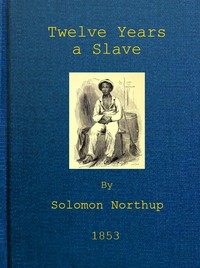
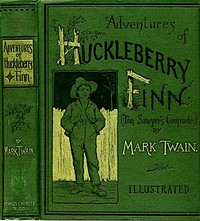
- If you liked Iola Leroy, try Clotel (William Wells Brown), Twelve Years a Slave (Solomon Northup) and The Adventures of Huckleberry Finn (Mark Twain).
A taste of the feed
In the very shadow of the Capitol, freedom is put up for sale.
The building to which the yard was attached, was two stories high, fronting on one of the public streets of Washington. Its outside presented only the appearance of a quiet private residence. A stranger looking at it, would never have dreamed of its execrable uses. Strange as it may seem, within plain sight of this same house, looking down from its commanding height upon it, was the Capitol. The voices of patriotic representatives boasting of freedom and equality, and the rattling of the poor slave’s chains, almost commingled. A slave pen within the very shadow of the Capitol!
Twelve Years a Slave · Solomon Northup
What silence feels like when it isn't loneliness.
This second night we run between seven and eight hours, with a current that was making over four mile an hour. We catched fish and talked, and we took a swim now and then to keep off sleepiness. It was kind of solemn, drifting down the big, still river, laying on our backs looking up at the stars, and we didn’t ever feel like talking loud, and it warn’t often that we laughed—only a little kind of a low chuckle. We had mighty good weather as a general thing, and nothing ever happened to us at all—that night, nor the next, nor the next.
The Adventures of Huckleberry Finn · Mark Twain
The moment a weight you had stopped noticing finally comes off your back.
So I saw in my dream, that just as Christian came up with the cross, his burden loosed from off his shoulders, and fell from off his back, and began to tumble, and so continued to do, till it came to the mouth of the sepulchre, where it fell in, and I saw it no more.
The Pilgrim’s Progress · John Bunyan
Read pages from books like this, one at a time
Keep reading in the feed