
The Pilgrim’s Progress
John Bunyan (1628–1688), 1678
★ 4.08 from 166.2k ratings on Goodreads
A tinker in a Bedford jail dreams a man running from his own conscience, through a monster, a fair and a river — the strangest, most gripping allegory in English. A plain, urgent dream-vision, by turns hopeful and heavy, with the pace of a man fleeing and the company of strangers met on the road.
Feels like hope and dread. About faith, freedom and society.
Who it’s for
You may like it if you enjoy allegory, sermon-like plainness and a journey story that keeps moving through odd places and people. The seventeenth-century prose and the names that spell out their meanings can make it slow going for readers who want modern, transparent language.
Why read it
It gives you a vivid picture of faith as a dangerous road, told with the directness of a preacher who knew trouble firsthand.
Pages from the book
The moment a weight you had stopped noticing finally comes off your back.
So I saw in my dream, that just as Christian came up with the cross, his burden loosed from off his shoulders, and fell from off his back, and began to tumble, and so continued to do, till it came to the mouth of the sepulchre, where it fell in, and I saw it no more. Some people are tuned by sorrow and can play nothing else afterwards.
There are two sorts of reasons for it: One is, the wise God will have it so; some must pipe, and some must weep. Now Mr. Fearing was one that played upon this bass; he and his fellows sound the sackbut, whose notes are more doleful than the notes of other music are; though, indeed, some say the bass is the ground of music. And, for my part, I care not at all for that profession that begins not in heaviness of mind. The first string that the musician usually touches is the bass, when he intends to put all in tune. God also plays upon this string first, when he sets the soul in tune for Himself. Only here was the imperfection of Mr. Fearing, he could play upon no other music but this, till towards his latter end. A man explains, reasonably, why his religion should never cost him anything.
Why, they, after their headstrong manner, conclude that it is duty to rush on their journey all weathers; and I am for waiting for wind and tide. They are for hazarding all for God at a clap; and I am for taking all advantages to secure my life and estate. They are for holding their notions, though all other men are against them; but I am for religion in what, and so far as the times, and my safety, will bear it. They are for religion when in rags and contempt; but I am for him when he walks in his golden slippers, in the sunshine, and with applause. John Bunyan.Bunyan left school around fourteen to work as a tinker, fought on the Parliamentary side in the civil war, and preached to crowds of hundreds with almost no formal education.
Books that feel like this




Where to get it
Some of these links earn us a small commission, at no cost to you. It keeps BookFeed free.
Questions readers ask
- Is The Pilgrim’s Progress for me?
- You may like it if you enjoy allegory, sermon-like plainness and a journey story that keeps moving through odd places and people. The seventeenth-century prose and the names that spell out their meanings can make it slow going for readers who want modern, transparent language.
- What is The Pilgrim’s Progress like?
- A plain, urgent dream-vision, by turns hopeful and heavy, with the pace of a man fleeing and the company of strangers met on the road. Feels like hope and dread. About faith, freedom and society.
- What should I read after The Pilgrim’s Progress?
- If you liked The Pilgrim’s Progress, try The Divine Comedy (Dante Alighieri), Iola Leroy (Frances Ellen Watkins Harper) and John Brown’s Body (Stephen Vincent Benét).
A taste of the feed
The moment a poet admits that language has finally run out.
Whereat to turn mine eyes on Beatrice My seeing nothing and my love constrained me. If what has hitherto been said of her Were all concluded in a single praise, Scant would it be to serve the present turn. Not only does the beauty I beheld Transcend ourselves, but truly I believe Its Maker only may enjoy it all. Vanquished do I confess me by this passage More than by problem of his theme was ever O’ercome the comic or the tragic poet; For as the sun the sight that trembles most, Even so the memory of that sweet smile My mind depriveth of its very self.
The Divine Comedy · Dante Alighieri
She is being offered a palace, and she is thinking about a voice.
When the war is over I intend to search the country for my mother. Doctor, were you to give me a palace-like home, with velvet carpets to hush my tread, and magnificence to surround my way, I should miss her voice amid all other tones, her presence amid every scene. Oh, you do not know how hungry my heart is for my mother! Were I to marry you I would carry an aching heart into your home and dim its brightness. I have resolved never to marry until I have found my mother. The hope of finding her has colored all my life since I regained my freedom. It has helped sustain me in the hour of fearful trial.
Iola Leroy · Frances Ellen Watkins Harper
What silence feels like when it isn't loneliness.
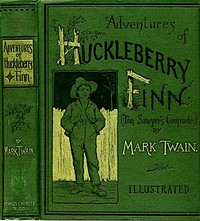
This second night we run between seven and eight hours, with a current that was making over four mile an hour. We catched fish and talked, and we took a swim now and then to keep off sleepiness. It was kind of solemn, drifting down the big, still river, laying on our backs looking up at the stars, and we didn’t ever feel like talking loud, and it warn’t often that we laughed—only a little kind of a low chuckle. We had mighty good weather as a general thing, and nothing ever happened to us at all—that night, nor the next, nor the next.
The Adventures of Huckleberry Finn · Mark Twain
Read pages from books like this, one at a time
Keep reading in the feed