
Ghost Stories of an Antiquary
M. R. James (1862–1936), 1928
Cambridge scholars and country clergymen blunder into things better left buried, told in the driest, most exact English—and it still frightens. The dread builds quietly through exact, dry prose and ordinary settings, with flashes of dry wit between the shocks.
Feels like dread and unease. About death, memory and war.
Who it’s for
You may like it if you enjoy old-fashioned ghost stories where scholars and clergymen encounter uncanny things in quiet places. The prose is deliberate and old-fashioned, and some stories take their time before the supernatural arrives.
Why read it
It offers restrained, expertly paced horror for when you want atmosphere and suggestion rather than gore, from a writer who knew how to make silence feel threatening.
Pages from the book
The worst part isn't the teeth—it's the intelligence in the eyes.
He flew out of his chair with deadly, inconceivable terror clutching at his heart. The shape, whose left hand rested on the table, was rising to a standing posture behind his seat, its right hand crooked above his scalp. There was black and tattered drapery about it; the coarse hair covered it as in the drawing. The lower jaw was thin—what can I call it?—shallow, like a beast’s; teeth showed behind the black lips; there was no nose; the eyes, of a fiery yellow, against which the pupils showed black and intense, and the exulting hate and thirst to destroy life which shone there, were the most horrifying features in the whole vision. There was intelligence of a kind in them—intelligence beyond that of a beast, below that of a man. Whistle once and it answers. The mistake is whistling twice.
The feelings which this horror stirred in Dennistoun were the intensest physical fear and the most profound mental loathing. What did he do? What could he do? He has never been quite certain what words he said, but he knows that he spoke, that he grasped blindly at the silver crucifix, that he was conscious of a movement towards him on the part of the demon, and that he screamed with the voice of an animal in hideous pain. An old print that redraws itself, one terrible frame at a time.
There was the house, as before, under the waning moon and the drifting clouds. The window that had been open was shut, and the figure was once more on the lawn: but not this time crawling cautiously on hands and knees. Now it was erect and stepping swiftly, with long strides, towards the front of the picture. The moon was behind it, and the black drapery hung down over its face so that only hints of that could be seen, and what was visible made the spectators profoundly thankful that they could see no more than a white dome-like forehead and a few straggling hairs. The head was bent down, and the arms were tightly clasped over an object which could be dimly seen and identified as a child, whether dead or living it was not possible to say. M. R. James.M. R. James catalogued medieval manuscripts at Cambridge and Eton, and wrote his ghost stories to be read aloud on Christmas Eve to a small circle of friends.
Books that feel like this

Where to get it
Some of these links earn us a small commission, at no cost to you. It keeps BookFeed free.
Questions readers ask
- Is Ghost Stories of an Antiquary for me?
- You may like it if you enjoy old-fashioned ghost stories where scholars and clergymen encounter uncanny things in quiet places. The prose is deliberate and old-fashioned, and some stories take their time before the supernatural arrives.
- What is Ghost Stories of an Antiquary like?
- The dread builds quietly through exact, dry prose and ordinary settings, with flashes of dry wit between the shocks. Feels like dread and unease. About death, memory and war.
- What should I read after Ghost Stories of an Antiquary?
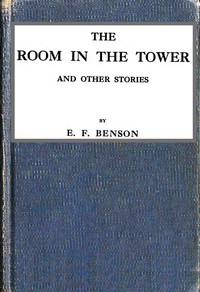
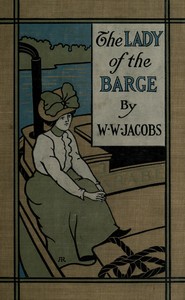
- If you liked Ghost Stories of an Antiquary, try Ghost Stories (E. F. Benson), Uncle Silas (Sheridan Le Fanu) and The Lady of the Barge (W. W. Jacobs).
A taste of the feed
Some people hold a wounded bird the way a hungry person holds a plate.
It was clear that the kindest thing to do would be to put the bird out of its pain, but when I suggested that, she took a step back from me, and covered it with her other hand. Her eyes gleamed, her mouth smiled, and I saw the tip of her tongue swiftly pass over her lips as if licking them.
Ghost Stories · E. F. Benson
What fear does to the body before the mind can decide.
Why did I remain silent and motionless while such an outrage was being committed? If, instead of being a very nervous girl, preoccupied with an undefinable terror of that wicked woman, I had possessed courage and presence of mind, I dare say I might have given an alarm, and escaped from the room without the slightest risk. But so it was; I could no more stir than the bird who, cowering under its ivy, sees the white owl sailing back and forward under its predatory cruise.
Uncle Silas · Sheridan Le Fanu
A house after a death keeps the shape of the people who left it.
Long before anybody else was astir he arose and stole softly downstairs. The sunlight was stealing in at every crevice, and flashing in long streaks across the darkened rooms. The dining-room into which he looked struck chill and cheerless in the dark yellow light which came through the lowered blinds. He remembered that it had the same appearance when his father lay dead in the house; now, as then, everything seemed ghastly and unreal; the very chairs standing as their occupants had left them the night before seemed to be indulging in some dark communication of ideas.
The Lady of the Barge · W. W. Jacobs
Read pages from books like this, one at a time
Keep reading in the feed