
Moving the Mountain
Charlotte Perkins Gilman (1860–1935), 1911
★ 3.19 from 524 ratings on Goodreads
A man returns after thirty years to an America that has quietly abolished poverty and remade the family, and must learn to see his own world as strange. A calm, talky utopian tour, seen through a bewildered man's eyes as old certainties are patiently explained away.
Who it’s for
You may like it if you enjoy thought experiments about social reform and don't mind a story built from conversation and explanation. The 1911 prose and long speeches about remade institutions can feel dated and slow.
Why read it
It gives you a concrete picture of how work, money and family might be reorganized, and asks what you would keep from the old world.
Pages from the book
The hand that keeps you tethered to a world that no longer exists.
We were in our steamer chairs, most people dozing after their midday meal. She reached over and took my hand in hers, and held it tight. It was marvelously comforting, this one live visible link between what was forever past and this uncertain future. But for her, even those old, old days might have flickered and seemed doubtful—I should have felt like one swimming under water and not knowing, which way was up. She gave me solid ground underfoot at any rate. Whatever her place might be in this new world, she had talked to me only of the old one. The most radical change was not in the streets but in the mind.
“The thing that has happened,” said she, slowly, “is just this. The world has come alive. We are doing in a pleasant, practical way, all the things which we could have done, at any time before—only we never thought so. The real change is this: we have changed our minds. This happened very soon after you left. Ah! that was a time! To think that you should have missed it!” She gave my hand another sympathetic squeeze and went on. “After that it was only a question of time, of how soon we could do things. And we’ve been doing them ever since, faster and faster.” Why we shrug at a thousand tons of soot but rage at a single bag.
“Yes; don’t you notice that ever since you began to study our advance, what puzzles you most is not the visible details about you, but a changed spirit in people? Thirty years ago, if you showed a man that someone had dumped a ton of soot in his front yard he would have been furious, and had the man arrested and punished. If you showed him that numbers of men were dumping thousands of tons of soot all over his city every year, he would have neither felt nor acted. It’s the other way, now.” Charlotte Perkins Gilman.Charlotte Perkins Gilman was the niece of Harriet Beecher Stowe, and wrote the feminist classic "The Yellow Wallpaper" after a physician prescribed her the rest cure.
Books that feel like this
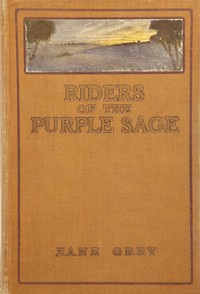
Riders of the Purple Sage
Zane Grey, 1912
A Utah rancher, a gunman with a hidden grief, and a valley of purple sage: the Western that taught the genre how to feel like a myth.
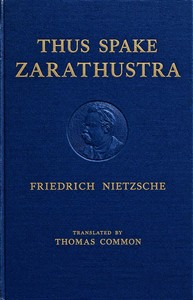
Thus Spake Zarathustra
Friedrich Nietzsche, 1883
A prophet comes down from the mountain to tell you your values were borrowed, your comfort is a cage, and you could become something else.
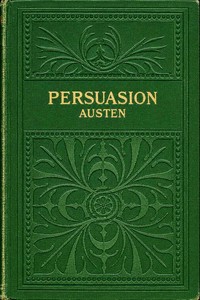
Persuasion
Jane Austen, 1817
A woman of twenty-seven meets again the man she was talked out of marrying, and begins to wonder whether prudence was ever a virtue.
The Land of Little Rain
Mary Austin, 1903
Field notes from the California desert — yuccas, buzzards, lone prospectors, Paiute basket makers — seen with a poet's eye and a resident's patience.
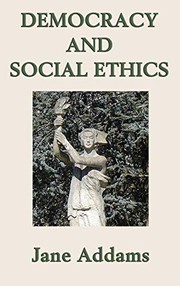
Democracy and Social Ethics
Jane Addams, 1902
Chicago's ward bosses delivered coal and funeral carriages while reformers delivered lectures. Addams asks what democracy actually requires of people who mean well.
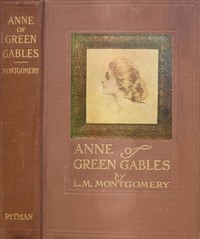
Anne of Green Gables
L. M. Montgomery, 1908
A vibrant, deeply imaginative coming-of-age story woven through the lush landscape of rural Canada.
More by Charlotte Perkins Gilman

The Yellow Wallpaper
Charlotte Perkins Gilman, 1892
A woman on enforced rest in a rented house starts reading the wallpaper like a text. Short enough for one sitting, and unsettling for a long time afterwards.
Where to get it
Some of these links earn us a small commission, at no cost to you. It keeps BookFeed free.
Questions readers ask
- Is Moving the Mountain for me?
- You may like it if you enjoy thought experiments about social reform and don't mind a story built from conversation and explanation. The 1911 prose and long speeches about remade institutions can feel dated and slow.
- What is Moving the Mountain like?
- A calm, talky utopian tour, seen through a bewildered man's eyes as old certainties are patiently explained away.
- What should I read after Moving the Mountain?
- If you liked Moving the Mountain, try Riders of the Purple Sage (Zane Grey), Thus Spake Zarathustra (Friedrich Nietzsche) and Persuasion (Jane Austen).
A taste of the feed
A wind that carries every love story ever told.
Always it brought softly to him strange, sweet tidings of far-off things. It blew from a place that was old and whispered of youth. It blew down the grooves of time. It brought a story of the passing hours. It breathed low of fighting men and praying women. It sang clearly the song of love. That ever was the burden of its tidings—youth in the shady woods, waders through the wet meadows, boy and girl at the hedgerow stile, bathers in the booming surf, sweet, idle hours on grassy, windy hills, long strolls down moonlit lanes—everywhere in far-off lands, fingers locked and bursting hearts and longing lips—from all the world tidings of unquenchable love.
Riders of the Purple Sage · Zane Grey
The hour when the world admits how deep it is.
O man! Take heed! What saith deep midnight’s voice indeed? “I slept my sleep—, “From deepest dream I’ve woke, and plead:— “The world is deep, “And deeper than the day could read. “Deep is its woe—, “Joy—deeper still than grief can be: “Woe saith: Hence! Go! “But joys all want eternity—, “—Want deep, profound eternity!”
Thus Spake Zarathustra · Friedrich Nietzsche
The particular loneliness of a room shared with someone you once loved.
They had no conversation together, no intercourse but what the commonest civility required. Once so much to each other! Now nothing! There had been a time, when of all the large party now filling the drawing-room at Uppercross, they would have found it most difficult to cease to speak to one another. With the exception, perhaps, of Admiral and Mrs. Croft, who seemed particularly attached and happy (Anne could allow no other exception even among the married couples), there could have been no two hearts so open, no tastes so similar, no feelings so in unison, no countenances so beloved. Now they were as strangers; nay, worse than strangers, for they could never become acquainted. It was a perpetual estrangement.
Persuasion · Jane Austen
Read pages from books like this, one at a time
Keep reading in the feed