
Crossing the Threshold of Hope
John Paul II, 1994
★ 4.24 from 4.9k ratings on Goodreads
A pope answers the questions people actually ask about suffering, hope, evil and faith, in a direct book-length interview rather than a formal encyclical. A book-length interview with a pope reads like direct theological conversation: earnest, hopeful, sometimes dense, with answers that circle rather than land.
Feels like hope, awe and curiosity. About faith, freedom and adventure.
Who it’s for
You may like it if you want a pope's direct answers to questions about suffering, evil and hope, and you don't mind a theological frame. Some readers find the replies indirect or highly theological, and certain positions may sit uneasily with you.
Why read it
It gives you a direct question-and-answer route into how one pope thinks about hope, suffering and evil, without the structure of a formal encyclical.
A page from the book
Hell is less a sentence handed down than a door locked from the inside.
Resurrection of the body is to be preceded by a judgment passed upon the works of charity, fulfilled or neglected. As a result of this judgement, the just are destined to eternal life. There is a destination to eternal damnation as well, which consists in the ultimate rejection of God, the ultimate break of the communion with the Father and the Son and the Holy Spirit. Here, it is not so much God who rejects man, but man who rejects God. What readers say
Readers often admire John Paul II’s wisdom and find the Q&A format inspiring and hopeful. Some, however, find answers indirect, highly theological, or confusing, and dislike certain positions.
John Paul II.Before becoming pope, Karol Wojtyła was an actor, playwright and poet; he wrote Crossing the Threshold of Hope as a written interview with journalist Vittorio Messori.
Books that feel like this
Where to get it
Some of these links earn us a small commission, at no cost to you. It keeps BookFeed free.
Questions readers ask
- Is Crossing the Threshold of Hope for me?
- You may like it if you want a pope's direct answers to questions about suffering, evil and hope, and you don't mind a theological frame. Some readers find the replies indirect or highly theological, and certain positions may sit uneasily with you.
- What is Crossing the Threshold of Hope like?
- A book-length interview with a pope reads like direct theological conversation: earnest, hopeful, sometimes dense, with answers that circle rather than land. Feels like hope, awe and curiosity. About faith, freedom and adventure.
- What should I read after Crossing the Threshold of Hope?
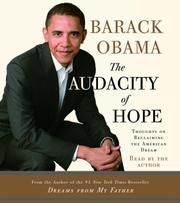
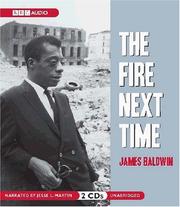
- If you liked Crossing the Threshold of Hope, try The Audacity of Hope (Barack Obama), The God Delusion (Richard Dawkins) and The Fire Next Time (James Baldwin).
A taste of the feed
The difference between being in the house and being present in it.
I reminded the men in the audience that being a father meant more than fathering a child; that even those of us who were physically present in the home are often emotionally absent; that precisely because many of us didn’t have fathers in the house we have to redouble our efforts to break the cycle; and that if we want to pass on high expectations to our children, we have to have higher expectations for ourselves.
The Audacity of Hope · Barack Obama
If you're only good because someone is watching, is it goodness?
Do you really mean to tell me the only reason you try to be good is to gain God’s approval and reward, or to avoid his disapproval and punishment? That’s not morality, that’s just sucking up, apple-polishing, looking over your shoulder at the great surveillance camera in the sky, or the still small wiretap inside your head, monitoring your every move, even your every base though.
The God Delusion · Richard Dawkins
The monuments we raise so we never have to look at death.
Perhaps the whole root of our trouble, the human trouble, is that we will sacrifice all the beauty of our lives, will imprison ourselves in totems, taboos, crosses, blood sacrifices, steeples, mosques, races, armies, flags, nations, in order to deny the fact of death, which is the only fact we have.
The Fire Next Time · James Baldwin
Read pages from books like this, one at a time
Keep reading in the feed