BookFeed Ελληνικά

Books like The Genealogy of Morals

If The Genealogy of Morals stayed with you, these share its feel: morality, unease and power. Each comes with a real page, so you can tell in a minute.

About The Genealogy of Morals · Friedrich Nietzsche

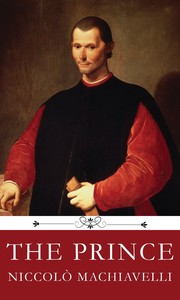
  1. 1.The Prince

    Niccolò Machiavelli, 1532

    Also power and curiosity. A short, cool manual on how power is won and kept, written by a man who watched it up close. Its blunt realism still unsettles, and it still explains how leaders behave.

    A prince, therefore, being compelled knowingly to adopt the beast, ought to choose the fox and the lion; because the lion cannot defend himself against snares and the fox cannot defend himself against wolves. Therefore, it is necessary to be a fox to discover the snares and a lion to terrify the wolves. Those who rely simply on the lion do not understand what they are about. Therefore a wise lord cannot, nor ought he to, keep faith when such observance may be turned against him, and when the reasons that caused him to pledge it exist no longer. If men were entirely good this precept would not hold, but because they are bad, and will not keep faith with you, you too are not bound to observe it with them. Nor will there ever be wanting to a prince legitimate reasons to excuse this non-observance.
  2. 2.The Essays or Counsels, Civil and Moral

    Francis Bacon, 1597

    Also curiosity and morality. Short, dense essays on revenge, friendship, wealth, ambition and fear, written like a clever advisor's notes. Each page packs a lifetime of worldly observation into a few sharp sentences.

    For as for the first wrong, it doth but offend the law; but the revenge of that wrong, putteth the law out of office. Certainly, in taking revenge, a man is but even with his enemy; but in passing it over, he is superior; for it is a prince’s part to pardon. And Solomon, I am sure, saith, It is the glory of a man, to pass by an offence. That which is past is gone, and irrevocable; and wise men have enough to do, with things present and to come; therefore they do but trifle with themselves, that labor in past matters. There is no man doth a wrong, for the wrong’s sake; but thereby to purchase himself profit, or pleasure, or honor, or the like. Therefore why should I be angry with a man, for loving himself better than me?
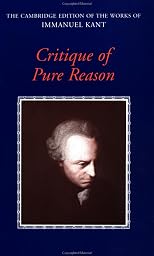
  3. 3.Kritik der reinen Vernunft

    Immanuel Kant, 1781

    Also curiosity and power. A map of what the mind can know, written in the confident, stormy prose of the Enlightenment, and still a bracing account of reason's limits.

    We have seen, therefore, that I am not allowed even to *assume*, for the sake of the necessary practical use of my reason *God, freedom, immortality*, unless at the same time *I deprive* speculative reason of its pretensions to transcendent insights. Reason, namely, in order to arrive at these, must employ principles which extend only to objects of possible experience, and which, if in spite of this they are applied also to what cannot be an object of experience, actually always change this into an appearance, thus rendering all practical *expansion* of pure reason impossible. Hence I had to suspend *knowledge* in order to make room for *belief*. For the dogmatism of metaphysics without a preceding critique of pure reason, is the source of all that disbelief which opposes morality and which is always very dogmatic.
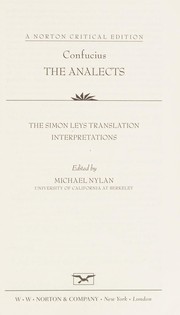
  4. 4.Analects

    Confucius

    Also morality and power. A collection of small, sharp conversations on how to live with other people, mostly remembered because they refuse to be simple rules.

    Last of all, the Master asked Tsǎng Hsî, “Tien, what are your wishes?” Tien, pausing as he was playing on his lute, while it was yet twanging, laid the instrument aside, and rose. “My wishes,” he said, “are different from the cherished purposes of these three gentlemen.” “What harm is there in that?” said the Master; “do you also, as well as they, speak out your wishes.” Tien then said, “In this, the last month of spring, with the dress of the season all complete, along with five or six young men who have assumed the cap, and six or seven boys, I would wash in the Î, enjoy the breeze among the rain altars, and return home singing.” The Master heaved a sigh and said, “I give my approval to Tien.”
  5. 5.Sapiens

    Yuval Noah Harari, 2011

    Also curiosity and power. A historian retells the whole human story as one argument: that we conquered the world by learning to believe in things that aren't there.

    One of history’s few iron laws is that luxuries tend to become necessities and to spawn new obligations. Once people get used to a certain luxury, they take it for granted. Then they begin to count on it. Finally, they reach a point where they can’t live without it.
    Excerpt from Sapiens, Yuval Noah Harari 2011. Quoted for discovery. Source Rights & removals
  6. 6.Aesop's Fables

    Aesop, -600

    Also morality and power. Eight-line stories that did the work of sermons, proverbs and parenting for two and a half thousand years, and still land in a single read.

    Jupiter issued a proclamation to all the beasts, and offered a prize to the one who, in his judgment, produced the most beautiful offspring. Among the rest came the Monkey, carrying a baby monkey in her arms, a hairless, flat-nosed little fright. When they saw it, the gods all burst into peal on peal of laughter; but the Monkey hugged her little one to her, and said, “Jupiter may give the prize to whomsoever he likes: but I shall always think my baby the most beautiful of them all.”
  7. 8.Dialogues

    Plato, -347

    Also morality and curiosity. A deep dive into the questions that define civilization: what is justice, what is wisdom, and what happens to the soul after death.

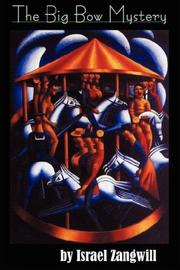
  8. 11.The Big Bow Mystery

    Israel Zangwill, 1899

    Also curiosity and morality. A satirical yet sharp debut in detective fiction that challenges assumptions about logic, genius, and the nature of truth. A whimsical and cerebral dive into the English mysteries.

Read pages from books like this, one at a time

BookFeed is a feed of real passages from real books. It learns what moves you and finds your next book.

Open BookFeed

Free, no sign-up.