BookFeed

Books like Macbeth

If Macbeth stayed with you, these share its feel: ambition, dread and power. Each comes with a real page, so you can tell in a minute.

About Macbeth · William Shakespeare

  1. 1.Beautiful Stories from Shakespeare

    E. Nesbit, 1907

    Also ambition and power. Shakespeare's plays retold as clear, quick stories, so you know the plot before you meet the poetry.

    She was frightened at first, but when she saw that it was Romeo himself, and no stranger, she too was glad, and, he standing in the garden below and she leaning from the window, they spoke long together, each one trying to find the sweetest words in the world, to make that pleasant talk that lovers use. And the tale of all they said, and the sweet music their voices made together, is all set down in a golden book, where you children may read it for yourselves some day.
  2. 2.Dracula

    Bram Stoker, 1897

    Also dread and power. A solicitor's business trip, a seaside storm and a doctor's case notes, told through diaries, letters and telegrams so that dread reads like found evidence.

    What I saw was the Count’s head coming out from the window. I did not see the face, but I knew the man by the neck and the movement of his back and arms. In any case I could not mistake the hands which I had had so many opportunities of studying. I was at first interested and somewhat amused, for it is wonderful how small a matter will interest and amuse a man when he is a prisoner. But my very feelings changed to repulsion and terror when I saw the whole man slowly emerge from the window and begin to crawl down the castle wall over that dreadful abyss, face down with his cloak spreading out around him like great wings. At first I could not believe my eyes.
  3. 3.Frankenstein

    Mary Shelley, 1818

    Also ambition and dread. A young scientist makes life and then cannot face what he has made. Told in nested voices, it asks who owes what to whom, and why ambition so often ends in solitude.

    “But where were my friends and relations? No father had watched my infant days, no mother had blessed me with smiles and caresses; or if they had, all my past life was now a blot, a blind vacancy in which I distinguished nothing. From my earliest remembrance I had been as I then was in height and proportion. I had never yet seen a being resembling me or who claimed any intercourse with me. What was I? The question again recurred, to be answered only with groans.
  4. 4.A Tale of Two Cities

    Charles Dickens, 1859

    Also dread and power. London and Paris on the edge of revolution: a man released from eighteen years in prison, a woman who knits a register of enemies, and a crowd nothing will stop.

    Releasing his arm, she laid her hand upon his shoulder. After looking doubtfully at it, two or three times, as if to be sure that it was really there, he laid down his work, put his hand to his neck, and took off a blackened string with a scrap of folded rag attached to it. He opened this, carefully, on his knee, and it contained a very little quantity of hair: not more than one or two long golden hairs, which he had, in some old day, wound off upon his finger.
  5. 5.The Invisible Man

    H. G. Wells, 1897

    Also dread and power. A stranger arrives at a country inn wrapped head to foot in bandages, and a small English village discovers that being unseen is not the same as being free.

    “The pain had passed. I thought I was killing myself and I did not care. I shall never forget that dawn, and the strange horror of seeing that my hands had become as clouded glass, and watching them grow clearer and thinner as the day went by, until at last I could see the sickly disorder of my room through them, though I closed my transparent eyelids. My limbs became glassy, the bones and arteries faded, vanished, and the little white nerves went last. I gritted my teeth and stayed there to the end. At last only the dead tips of the fingernails remained, pallid and white, and the brown stain of some acid upon my fingers.
  6. 6.Crime and Punishment

    Fyodor Dostoevsky, 1866

    Also power and dread. A broke student in St. Petersburg tests a theory that some people are above the law, and discovers the cost is not legal but psychological.

    And if only fate would have sent him repentance—burning repentance that would have torn his heart and robbed him of sleep, that repentance, the awful agony of which brings visions of hanging or drowning! Oh, he would have been glad of it! Tears and agonies would at least have been life. But he did not repent of his crime.
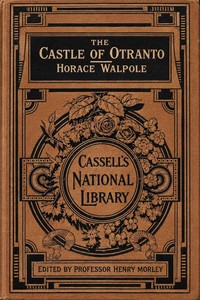
  7. 7.The Castle of Otranto

    Horace Walpole, 1764

    Also dread and power. A castle, an enormous helmet fallen from nowhere, and a tyrant with a guilty bloodline: the 1764 novel that invented gothic fiction and is still genuinely strange, funny and frightening.

  8. 9.Short Fiction

    Vsevolod Garshin, 1887

    Also dread and power. A soldier-writer's short stories: battlefield, hospital, madhouse, greenhouse. Precise, unsparing, often strange, and never sentimental about courage.

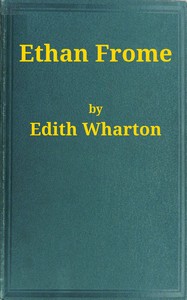
  9. 11.Ethan Frome

    Edith Wharton, 1911

    Also power and dread. A stranded engineer in a snowbound New England village pieces together the story of a poor farmer, his invalid wife, and the young cousin who comes to keep house.

Read pages from books like this, one at a time

BookFeed is a feed of real passages from real books. It learns what moves you and finds your next book.

Open BookFeed

Free, no sign-up.