
Short Fiction
Vsevolod Garshin (1855–1888), 1887
A soldier-writer's short stories: battlefield, hospital, madhouse, greenhouse. Precise, unsparing, often strange, and never sentimental about courage. The stories move with a plain, steady voice through war, dread, and madness, often strange and unsparing, with moments of sudden passion.
Feels like dread and passion. About war, madness and power.
Who it’s for
You may like this if you enjoy unsentimental 19th-century short fiction about soldiers, hospitals, and minds under pressure. Be aware that the mood is often bleak and the prose can be period-dense, especially in long sentences such as the battle passage.
Why read it
Garshin writes from inside the soldier’s experience, without sentiment, and his strange, exact stories give war and madness a human scale.
Pages from the book
The thing that keeps an army moving is not hatred or fear.
But we did not stop. An unknown, mysterious force was drawing us—the strongest force in human life. Each of us, taken separately, would have gone home, but the whole mass went forward in obedience to discipline, and not from any recognition of the justice of the cause, nor from any feeling of hatred towards an unknown enemy; not from any fear of punishment, but moved solely by that hidden and unconscious something which will, for many a long day yet, lead humanity to sanguinary slaughter—the most potent cause of every description of human ill and suffering. A battlefield seen from far enough away looks like weather.
Under a lowering sky lies a broad snow-covered field surrounded by white hills, on which are trees, also white with frost, although there is a touch of thaw in the air. Above the rattle of musketry comes the frequent boom of guns. One of the hills is almost enveloped in smoke, through which, as it slowly rolls down on to the field below, can be seen a dark, moving mass. Looking more attentively, it is seen that this mass is composed of little black spots. Many of these spots are already motionless, but others are ever moving forward, although their goal, indicated only by the extra density of the smoke, is still far away, and although their numbers become less every second. An old bear looks at his master and understands what is coming.
The youth freed the huge beast, and led him a short distance away from the wagon. The bear sat on his haunches, letting his front paws hang loosely, and swayed from side to side, breathing heavily and hoarsely. He was very old, his teeth were yellow, his coat had grown a reddish colour and was falling out. He gazed in a friendly but melancholy manner at his old master with his one small eye. All around was an absolute silence, broken only by the noise of the ramrods against the barrels of the rifles as the wads were pressed home. Vsevolod Garshin.Garshin volunteered for the Russo-Turkish War in 1877 and was wounded in Bulgaria; his first story, 'Four Days,' came out of that experience.
Books that feel like this



Where to get it
Some of these links earn us a small commission, at no cost to you. It keeps BookFeed free.
Questions readers ask
- Is Short Fiction for me?
- You may like this if you enjoy unsentimental 19th-century short fiction about soldiers, hospitals, and minds under pressure. Be aware that the mood is often bleak and the prose can be period-dense, especially in long sentences such as the battle passage.
- What is Short Fiction like?
- The stories move with a plain, steady voice through war, dread, and madness, often strange and unsparing, with moments of sudden passion. Feels like dread and passion. About war, madness and power.
- What should I read after Short Fiction?
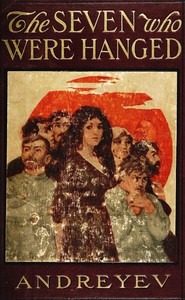
- If you liked Short Fiction, try Short Fiction (Leonid Andreyev), The Final Count (H. C. McNeile) and The Yellow Wallpaper (Charlotte Perkins Gilman).
A taste of the feed
The sound the earth makes when it has been at war too long.
How was it that we had not heard it before! From everywhere—the exact place could not be defined—a groan, unbroken and scraping, wonderfully calm in its breadth, and even indifferent, as it seemed, was borne upon us. We had heard many cries and groans, but this resembled none of those heard before. On the dim reddish surface our eyes could perceive nothing, and therefore the very earth and sky, lit up by a never-rising sun, seemed to be groaning.
Short Fiction · Leonid Andreyev
When a friend's idea is so strange you start diagnosing him.
I think it was at that moment that I first began to entertain doubts as to Robin’s sanity. Not that people dining near would have noticed anything amiss with him: his voice was low-pitched and quiet. But the whole idea was so utterly far-fetched and fantastic that I couldn’t help wondering if his brilliant brain hadn’t crossed that tiny bridge which separates genius from insanity. I knew the hideous loathing he had always felt for war: was it possible that continual brooding on the idea had unhinged him?
The Final Count · H. C. McNeile
A smell so insistent it can only be described as a colour.
It used to disturb me at first. I thought seriously of burning the house—to reach the smell. But now I am used to it. The only thing I can think of that it is like is the color of the paper! A yellow smell.
The Yellow Wallpaper · Charlotte Perkins Gilman
Read pages from books like this, one at a time
Keep reading in the feed