BookFeed Ελληνικά

10 novels about war

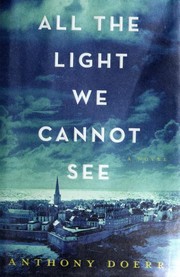
War looks different depending on who is left to tell it. In Marilou Oliva's «Η Ιλιάδα όπως την αφηγούνται οι θεές» the Trojan War comes through the goddesses who watched it, and in Anthony Doerr's All the Light We Cannot See it arrives as small, luminous things — a radio, a blind girl's route through Paris, a German boy's gift. These novels stay close to the people caught inside the fighting rather than the maps and the speeches, which is why they're worth your time if you want the human cost and not just the history.

  1. 1.Η Ιλιάδα όπως την αφηγούνται οι θεές

    Μαριλου Ολιβα, 2023

    The Trojan War as told by the goddesses who watched it: power, sacrifice and the price of being mortal.

    Ο θείος τοξότης έχει δει τη σκηνή από τον Όλυμπο. Είναι εξοργισμένος, πρέπει να ξεπλύνει αυτή την ντροπή. Περνά στον ώμο το τόξο και την ασημένια φαρέτρα του, σε κάθε κίνησή του κροταλίζουν τα βέλη, ενώ κατεβαίνει σκεπτόμενος την τιμωρία του, σκοτεινός σαν αδίκημα, ίδιος με τη νύχτα.
    Excerpt from Η Ιλιάδα όπως την αφηγούνται οι θεές, Μαριλου Ολιβα, Κέδρος 2023. Quoted for discovery. Source Rights & removals
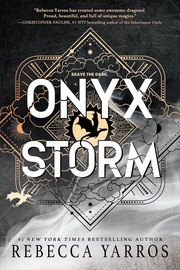
  2. 3.Onyx Storm

    Rebecca Yarros, 2025

    Dragons, a war college, and a rider who plans to outthink everyone. Violet leaves the wards to find allies — and a secret big enough to break them.

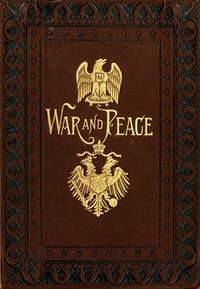
  3. 5.War and Peace

    Leo Tolstoy, 1869

    Five families, one invasion, and the small domestic hours that turn out to matter more than the battles. Read it for the people, not the history.

    She did not know and would not have believed it, but beneath the layer of slime that covered her soul and seemed to her impenetrable, delicate young shoots of grass were already sprouting, which taking root would so cover with their living verdure the grief that weighed her down that it would soon no longer be seen or noticed. The wound had begun to heal from within.
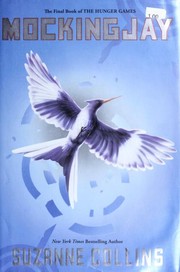
  4. 6.Mockingjay

    Suzanne Collins, 2010

    The final Hunger Games volume: the girl who survived the state's televised death match is now the face of a war she never wanted to lead.

    I no longer feel any allegiance to these monsters called human beings, despite being one myself. I think that Peeta was onto something about us destroying one another and letting some decent species take over. Because something is significantly wrong with a creature that sacrifices its children’s lives to settle its differences.
    Excerpt from Mockingjay, Suzanne Collins, Scholastic Press 2010. Quoted for discovery. Source Rights & removals
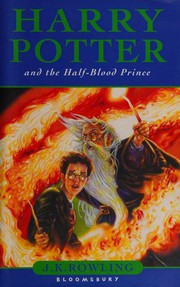
  5. 7.Harry Potter and the Half-Blood Prince

    J. K. Rowling, 2005

    A school year of potions, memory-lanes and quiet dread, where the worst thing waiting is a choice you have to make alone.

    It was, he thought, the difference between being dragged into the arena to face a battle to the death and walking into the arena with your head held high. Some people, perhaps, would say that there was little to choose between the two ways, but Dumbledore knew — and so do I, thought Harry, with a rush of fierce pride, and so did my parents — that there was all the difference in the world.
    Excerpt from Harry Potter and the Half-Blood Prince, J. K. Rowling, Bloomsbury Children's Books 2005. Quoted for discovery. Source Rights & removals
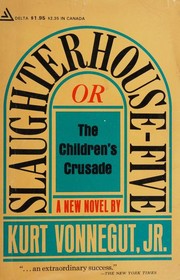
  6. 9.Slaughterhouse-Five

    Kurt Vonnegut, 1969

    Vonnegut survived the Dresden firebombing and spent twenty-three years failing to write it straight — so he wrote it as science fiction, jokes and all.

    “You know what I say to people when I hear they’re writing anti-war books?”“No. What do you say, Harrison Starr?”“I say, ‘Why don’t you write an anti-glacier book instead?’”What he meant, of course, was that there would always be wars, that they were as easy to stop as glaciers. I believe that too.And even if wars didn’t keep coming like glaciers, there would still be plain old death.
    Excerpt from Slaughterhouse-Five, Kurt Vonnegut, Dial Press Trade Paperback 1969. Quoted for discovery. Source Rights & removals
  7. 10.Τον καιρό του Βουλγαροκτόνου

    Πηνελόπη Δέλτα, 1911

    A Byzantine emperor's border war seen through two boys: one a hostage learning to keep his Greek, one a spy learning what loyalty costs. Adventure with an ache underneath. During Bulgaria's wars, a Byzantine patrol guards a captured officer only to realize their captive is a child. The passage lingers on a small, pointed deed rather than a battle. A nuance of the game. The transaction is a game. Trust is the casualty. The stakes are not the city but the person. The story is about the war of the Byzantines. The passage is set in a real eleventh-century raid. The emperor is both a conqueror and a man. The pulse of the marchers. The wounded captive is forced to march. His fall is the image. The sentence is almost without ornament. The book is авантура. The book is a historical novel for young readers, set in the eleventh-century wars of Basil II in the Balkans, where two Greek boys are taken into Bulgarian captivity. A patriotic adventure that also knows what war does to the people fighting it.

Read pages from books like this, one at a time

BookFeed is a feed of real passages from real books. It learns what moves you and finds your next book.

Open BookFeed

Free, no sign-up.