Atomic Habits
James Clear, 2018
A practical guide to how tiny daily choices compound, and how to design the systems that make good habits automatic.
 BookFeed Ελληνικά
A page that shows it
A few degrees at takeoff, a different city entirely.
The impact created by a change in your habits is similar to the effect of shifting the route of an airplane by just a few degrees. Imagine you are flying from Los Angeles to New York City. If a pilot leaving from LAX adjusts the heading just 3.5 degrees south, you will land in Washington, D.C., instead of New York. Such a small change is barely noticeable at takeoff—the nose of the airplane moves just a few feet—but when magnified across the entire United States, you end up hundreds of miles apart. James Clear, 2018
A practical guide to how tiny daily choices compound, and how to design the systems that make good habits automatic.
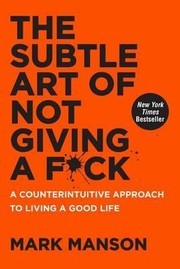
Mark Manson, 2016
A potty-mouthed argument that the cure for anxiety isn't caring more but choosing better what to care about — and paying the price of that choice.
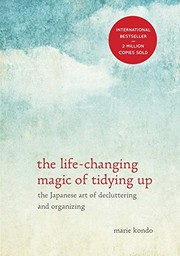
Marie Kondō, 2011
A Japanese organizing consultant's case that tidying is not housework but a decision about how you want to live, made one object at a time.
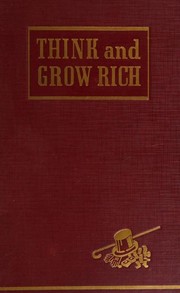
Napoleon Hill, 1937
Andrew Carnegie's fortune becomes a formula—desire, belief, persistence—in the 1937 self-help book that sold the secret of success.
Austin Kleon, 2012
A pocket manifesto for anyone who wants to make things: collect what you love, copy your heroes until you sound like yourself, and start before you feel ready.
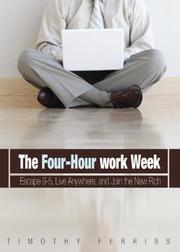
Timothy Ferriss, 2007
A manual for trading the forty-year deferred life for time, mobility and control—by cutting work to what actually matters.
Stephen R. Covey, 1989
A practical guide to changing yourself before trying to change your circumstances, built on habits of choice, empathy and integrity.
Jen Sincero, 2013
A profane, funny pep talk for anyone stuck: less affirmation, more rewiring of how you talk to yourself about fear, money and follow-through.
Ιτσίρο Κισίμι, 2013
A philosopher and a young man argue about freedom, responsibility, and whether the past has the power we give it.
Γ. Ελευθέριος Ελευθεριάδης, 2017
A compassionate guide to the thoughts and anxiety that can narrow everyday life, written for anyone trying to find room to breathe again.
Άννα Κανδαράκη, 2021
A psychologist’s stories from the therapy room invite you to look at yourself and the people closest to you with greater understanding.
Γρηγόρης Βασιλειάδης, 2026
A direct invitation to examine the habits that keep you stuck and decide what kind of life you want to choose.
Lorenza Bernardi, 2023
A capybara’s unhurried presence becomes an invitation to reconsider how you spend your days and share your space.
Janice Kaplan, 2018
A practical, curious case for paying attention to bodily signals—and questioning the numbers and habits that drown them out.
Hilary Jacobs Hendel, 2018
A practical guide to understanding difficult feelings, noticing the ways we avoid them, and finding a steadier connection with ourselves.
Ρόξι Ναφούσι, 2022
A practical guide to turning aspirations into action, built around seven steps and the author's account of changing her life.
Γ. Ελευθέριος Ελευθεριάδης, 2023
A practical reflection on marriage as the daily work of living with, understanding and loving another person.
The things you're dodging are already charging you rent.
Any attempt to escape the negative, to avoid it or quash it or silence it, only backfires. The avoidance of suffering is a form of suffering. The avoidance of struggle is a struggle. The denial of failure is a failure. Hiding what is shameful is itself a form of shame.The Subtle Art of Not Giving a F*ck · Mark Manson
Not usefulness, not guilt, not the price you paid. A feeling in the hand.
The best way to choose what to keep and what to throw away is to take each item in one’s hand and ask: “Does this spark joy?” If it does, keep it. If not, dispose of it. This is not only the simplest but also the most accurate yardstick by which to judge.The Life-Changing Magic of Tidying Up · Marie Kondō
The answer is repeated a hundred times and never once said aloud.
The secret to which I refer has been mentioned no fewer than a hundred times, throughout this book. It has not been directly named, for it seems to work more successfully when it is merely uncovered and left in sight, where THOSE WHO ARE READY, and SEARCHING FOR IT, may pick it up. That is why Mr. Carnegie tossed it to me so quietly, without giving me its specific name.Think and Grow Rich · Napoleon Hill
Read pages from books like this, one at a time
Keep reading in the feedRead pages from books like this, one at a time
BookFeed is a feed of real passages from real books. It learns what moves you and finds your next book.
Open BookFeedFree, no sign-up.