
The 4-Hour Workweek
Timothy Ferriss, 2007
Self-development Economics & business
A manual for trading the forty-year deferred life for time, mobility and control—by cutting work to what actually matters.
Feels like hope. About freedom.
A page from the book
The perfect moment is a story you keep telling yourself.
For all of the most important things, the timing always sucks. Waiting for a good time to quit your job? The stars will never align and the traffic lights of life will never all be green at the same time. The universe doesn’t conspire against you, but it doesn’t go out of its way to line up the pins either. Conditions are never perfect. “Someday” is a disease that will take your dreams to the grave with you. Pro and con lists are just as bad. If it’s important to you and you want to do it “eventually,” just do it and correct course along the way. Timothy Ferriss.Before writing, Ferriss founded a sports-nutrition company, BrainQUICKEN, which he ran from a laptop while traveling abroad.
Books that feel like this
Where to get it
Some of these links earn us a small commission, at no cost to you. It keeps BookFeed free.
Questions readers ask
- What is The 4-Hour Workweek like?
- Feels like hope. About freedom.
- What should I read after The 4-Hour Workweek?
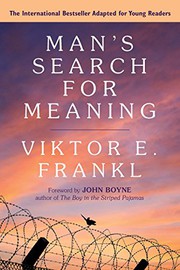
- If you liked The 4-Hour Workweek, try The Purpose Driven Life (Rick Warren), Man's Search for Meaning (Viktor E. Frankl) and The 7 Habits of Highly Effective People (Stephen R. Covey).
A taste of the feed
The people who hold the world together are never the majority.
You may of course ask whether we really need to refer to “saints.” Wouldn’t it suffice just to refer to decent people? It is true that they form a minority. More than that, they always will remain a minority. And yet I see therein the very challenge to join the minority. For the world is in a bad state, but everything will become still worse unless each of us does his best. So, let us be alert — alert in a twofold sense: Since Auschwitz we know what man is capable of. And since Hiroshima we know what is at stake.
Man's Search for Meaning · Viktor E. Frankl
The nothing-to-lose freedom of being robbed in a foreign country.
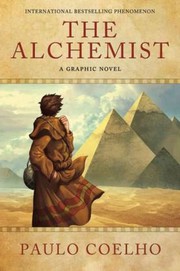
He looked around at the empty plaza again, feeling less desperate than before. This wasn’t a strange place; it was a new one…he had already traveled farther than any shepherd he knew. Oh, if they only knew how different things are just two hours by ship from where they are, he thought….As he mused about these things, he realized that he had to choose between thinking of himself as the poor victim of a thief and as an adventurer in quest of his treasure. “I’m an adventurer, looking for treasure,” he said to himself.
The Alchemist · Paulo Coelho
We think friendship grows from shared beliefs; the data says shared calendars.
A study at the University of Utah found that if you ask someone why he is friendly with someone else, he’ll say it is because he and his friend share similar attitudes. But if you actually quiz the two of them on their attitudes, you’ll find out that what they actually share is similar activities. We’re friends with the people we do things with, as much as we are with the people we resemble. We don’t seek out friends, in other words. We associate with the people who occupy the same small, physical spaces that we do.
The Tipping Point · Malcolm Gladwell
Read pages from books like this, one at a time
Keep reading in the feed