
The Lorax
Dr. Seuss, 1971
Poetry Contemporary fictionLiterary fictionYoung adult
A ruined inventor tells a child how his greed stripped a forest bare, and hands him the last seed. A rhyming fable about caring before it's too late. A rhyming fable with a plain, singsong voice that turns rueful and urgent as a bright forest disappears.
Feels like hope and unease. About death, nature and memory.
Who it’s for
You may like it if you enjoy picture-book verse with an environmental edge and a moral told through one inventor's memory. The destruction takes up most of the story, so it can feel bleak for very young or sensitive readers.
Why read it
Its short rhyming tale makes an old environmental warning feel immediate, and the final seed leaves you with something to do with the worry.
A page from the book
The last seed in the world, handed to someone who didn't ask.
Catch! calls the Once-ler.He lets something fall.It’s a Truffula Seed.It’s the last one of all!You’re in charge of the last of the Truffula Seeds.And Truffula Trees are what everyone needs.Plant a new Truffula. Treat it with care.Give it clean water. And feed it fresh air.Grow a forest. Protect it from axes that hack.Then the Loraxand all of his friendsmay come back. Dr. Seuss.Dr. Seuss's real name was Theodor Geisel, and The Lorax was challenged in a California school in 1989 for casting loggers as villains.
Books that feel like this
More by Dr. Seuss
Green Eggs and Ham
Dr. Seuss, 1960
A stubborn refusal, a relentless host, and fifty words that drum a whole argument into your head.
Where to get it
Some of these links earn us a small commission, at no cost to you. It keeps BookFeed free.
Questions readers ask
- Is The Lorax for me?
- You may like it if you enjoy picture-book verse with an environmental edge and a moral told through one inventor's memory. The destruction takes up most of the story, so it can feel bleak for very young or sensitive readers.
- What is The Lorax like?
- A rhyming fable with a plain, singsong voice that turns rueful and urgent as a bright forest disappears. Feels like hope and unease. About death, nature and memory.
- What should I read after The Lorax?
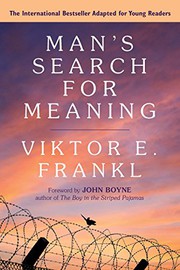
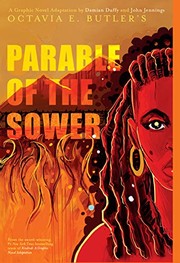
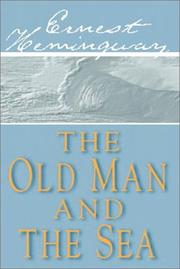
- If you liked The Lorax, try Man's Search for Meaning (Viktor E. Frankl), Parable of the Sower (Octavia E. Butler) and The Old Man and the Sea (Ernest Hemingway).
A taste of the feed
The people who hold the world together are never the majority.
You may of course ask whether we really need to refer to “saints.” Wouldn’t it suffice just to refer to decent people? It is true that they form a minority. More than that, they always will remain a minority. And yet I see therein the very challenge to join the minority. For the world is in a bad state, but everything will become still worse unless each of us does his best. So, let us be alert — alert in a twofold sense: Since Auschwitz we know what man is capable of. And since Hiroshima we know what is at stake.
Man's Search for Meaning · Viktor E. Frankl
The quiet radicalism of admitting you don’t know enough.
I realize I don’t know very much. None of us knows very much. But we can all learn more. Then we can teach one another. We can stop denying reality or hoping it will go away by magic.
Parable of the Sower · Octavia E. Butler
The gift of remembering we are all just people.
It reminded me, that when we know about suffering, when we are proximal to it, we are capable of extraordinary generosity. We can do and be so much for each other. But only when we see one another in our full humanity. Not as statistics or problems, but as people who deserve to be alive in the world.
Everything Is Tuberculosis · John Green
Read pages from books like this, one at a time
Keep reading in the feed