
Man's Search for Meaning
Viktor E. Frankl, 1946
Psychology PhilosophyHistorySelf-development
A psychiatrist who survived Auschwitz argues that meaning — not pleasure or power — is what keeps a person alive, and that it can be found even in suffering. A plain, hopeful voice moves through unease and death toward a philosophical argument about meaning.
Feels like hope and unease. About death and society.
Who it’s for
You may like it if you want a short, sober account of how people endure extreme suffering and still find reasons to live. The Auschwitz sections are harrowing and the later philosophical discussion can feel abstract, so it may not suit you if you want a purely narrative memoir.
Why read it
It offers a compact, unsentimental way to think about purpose when circumstances are bad, and a historical witness to what people can do to one another.
A page from the book
The people who hold the world together are never the majority.
You may of course ask whether we really need to refer to “saints.” Wouldn’t it suffice just to refer to decent people? It is true that they form a minority. More than that, they always will remain a minority. And yet I see therein the very challenge to join the minority. For the world is in a bad state, but everything will become still worse unless each of us does his best.So, let us be alert — alert in a twofold sense:Since Auschwitz we know what man is capable of.And since Hiroshima we know what is at stake. Viktor E. Frankl.Already a neurologist with a visa to America in 1941, Frankl let it expire to stay near his elderly parents; they were deported together the following year.
Books that feel like this

Where to get it
Some of these links earn us a small commission, at no cost to you. It keeps BookFeed free.
Questions readers ask
- Is Man's Search for Meaning for me?
- You may like it if you want a short, sober account of how people endure extreme suffering and still find reasons to live. The Auschwitz sections are harrowing and the later philosophical discussion can feel abstract, so it may not suit you if you want a purely narrative memoir.
- What is Man's Search for Meaning like?
- A plain, hopeful voice moves through unease and death toward a philosophical argument about meaning. Feels like hope and unease. About death and society.
- What should I read after Man's Search for Meaning?
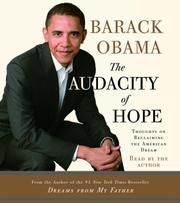
- If you liked Man's Search for Meaning, try The Body Keeps the Score (Bessel van der Kolk), The Audacity of Hope (Barack Obama) and Atomic Habits (James Clear).
A taste of the feed
The look on a parent's face is a child's first mirror.
If your parents’ faces never lit up when they looked at you, it’s hard to know what it feels like to be loved and cherished. If you come from an incomprehensible world filled with secrecy and fear, it’s almost impossible to find the words to express what you have endured. If you grew up unwanted and ignored, it is a major challenge to develop a visceral sense of agency and self-worth.
The Body Keeps the Score · Bessel van der Kolk
The difference between being in the house and being present in it.
I reminded the men in the audience that being a father meant more than fathering a child; that even those of us who were physically present in the home are often emotionally absent; that precisely because many of us didn’t have fathers in the house we have to redouble our efforts to break the cycle; and that if we want to pass on high expectations to our children, we have to have higher expectations for ourselves.
The Audacity of Hope · Barack Obama
A few degrees at takeoff, a different city entirely.
The impact created by a change in your habits is similar to the effect of shifting the route of an airplane by just a few degrees. Imagine you are flying from Los Angeles to New York City. If a pilot leaving from LAX adjusts the heading just 3.5 degrees south, you will land in Washington, D.C., instead of New York. Such a small change is barely noticeable at takeoff—the nose of the airplane moves just a few feet—but when magnified across the entire United States, you end up hundreds of miles apart.
Atomic Habits · James Clear
Read pages from books like this, one at a time
Keep reading in the feed