
The Final Count
H. C. McNeile (1888–1937), 1926
A legendary poison that kills by touch, a scientist who may be mad, and Hugh Drummond's amateur gang trying to stop a very modern apocalypse. A tense, uneasy thriller driven by dread and curiosity, with wartime shadows and a scientist's sanity fraying under the strain.
Feels like dread, curiosity and unease. About war, madness and power.
Who it’s for
You may like it if you enjoy period thrillers about amateur investigators facing a strange, modern menace. Published in 1926, it carries the dialogue and attitudes of its time, which some readers find dated.
Why read it
A 1926 thriller about a poison that kills by touch and a brilliant mind near madness; it gives you dread, moral unease and stubborn amateur courage.
Pages from the book
When a friend's idea is so strange you start diagnosing him.
I think it was at that moment that I first began to entertain doubts as to Robin’s sanity. Not that people dining near would have noticed anything amiss with him: his voice was low-pitched and quiet. But the whole idea was so utterly far-fetched and fantastic that I couldn’t help wondering if his brilliant brain hadn’t crossed that tiny bridge which separates genius from insanity. I knew the hideous loathing he had always felt for war: was it possible that continual brooding on the idea had unhinged him? The sound old houses make when you are listening for something worse.
It was an eerie sort of noise, such as you may hear sometimes in old houses in the country when the wind is blowing. Creak, shuffle, thud—creak, shuffle, thud, and every now and then a sort of drumming noise such as a man’s heels might make against woodwork. For a while we stood listening, and once it seemed to me that the blind bulged outwards with the pressure of something behind it. The poison that needs no needle, and the expert who doubts it exists.
“Now there is another tiny class of poisons—it is really a subdivision of the second class—of which, frankly, we know very little. Some expert toxicologists are even inclined to dismiss them as legendary. I’m not sure that I myself didn’t belong to their number until this morning. Evidence is in existence—but it is not reliable—of the use of these poisons by the Borgias, and by the Aztecs of Mexico. They were reputed to kill by mere external application, without the necessity of a puncture in the skin. They were supposed to generate some strange shattering force, which killed the victim by shock. Now that is absurd: no poison can kill unless it reacts point-blank on the heart. In other words, a puncture is necessary, and this class supplies its own punctures. H. C. McNeile.McNeile served with the Royal Engineers in the First World War and took the pen name 'Sapper' from the army term for a field engineer.
Books that feel like this


Where to get it
Some of these links earn us a small commission, at no cost to you. It keeps BookFeed free.
Questions readers ask
- Is The Final Count for me?
- You may like it if you enjoy period thrillers about amateur investigators facing a strange, modern menace. Published in 1926, it carries the dialogue and attitudes of its time, which some readers find dated.
- What is The Final Count like?
- A tense, uneasy thriller driven by dread and curiosity, with wartime shadows and a scientist's sanity fraying under the strain. Feels like dread, curiosity and unease. About war, madness and power.
- What should I read after The Final Count?
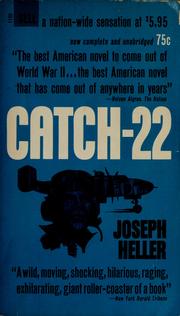
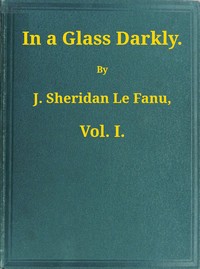
- If you liked The Final Count, try Catch-22 (Joseph Heller), Dracula's Guest (Bram Stoker) and In a Glass Darkly, v. 1/3 (Joseph Sheridan Le Fanu).
A taste of the feed
You walk toward your own double across a quicksand.
One night his dream was so vivid that when he awoke he could not believe that it had only been a dream. He shut his eyes again and again, but each time the vision, if it was a vision, or the reality, if it was a reality, would rise before him. The moon was shining full and yellow over the quicksand as he approached it; he could see the expanse of light shaken and disturbed and full of black shadows as the liquid sand quivered and trembled and wrinkled and eddied as was its wont between its pauses of marble calm. As he drew close to it another figure came towards it from the opposite side with equal footsteps.
Dracula's Guest · Bram Stoker
Every name we give a thing is a small act of surrender.
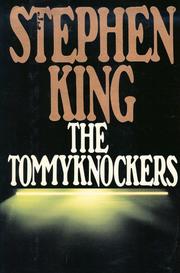
“There really isn’t an Altair-4, just as there aren’t really any Tommyknockers. There aren’t any nouns for some things - they just are. Somebody pastes one name on those things in one place, somebody pastes on another someplace else. It’s never a very good name, but it doesn’t matter. You came back from New Hampshire talking about Tommyknockers, so here that’s what we are. We’ve been called other things in other places. Altair-4 has, too. It’s just a place where things get stored. Usually not live things. Attics can be cold, dark places.”
The Tommyknockers · Stephen King
The grief that turns a mathematics teacher into something else.
It was his eyes that were old. The Afghans are a handsome people whose forthright features and fair skin suffer quickly from wind and sun and dust, too often making them older than their years. For the Archer, the damage had not been done by wind. A teacher of mathematics until three years before, a college graduate in a country where most deemed it enough to be able to read the holy Koran, he’d married young, as was the custom in his land, and fathered two children. But his wife and daughter were dead, killed by rockets fired from a Sukhoi-24 attack-fighter. His son was gone. Kidnapped.
The Cardinal of the Kremlin · Tom Clancy
Read pages from books like this, one at a time
Keep reading in the feed