
Poland
James Michener, 1983
★ 4.06 from 12.4k ratings on Goodreads
A thousand years of Poland seen through one village, its castle, its palace and the ordinary families who outlast every occupying power. This book moves with a sweeping, serene pace, weaving a sense of wonder and historical awe through the lives of ordinary families.
Feels like awe, serenity and wonder. About adventure, war and freedom.
Who it’s for
You may like it if you enjoy detailed historical narratives and the story of a people's resilience through invasion. However, be prepared for prose and dialogue that some readers found to be dry or weak.
Why read it
It gives you a comprehensive look at a thousand years of Polish history, viewed through the enduring lens of one village and its citizens.
A page from the book
A barber risks one question too many about the state of Poland.
Leonid Brezhnev needed a haircut, so he went down to the ground floor of the Kremlin and plopped into the chair. It was understood that at such times the barber was to say not a word, just cut hair. But this morning, after a few snips he said: “Comrade Brezhnev what are you going to do about Poland?” No reply. Some minutes later: “Comrade Brezhnev, what about Poland?” Again no reply. Then, pretty soon: “Comrade Brezhnev, you’ve got to do something about Poland.” At this Brezhnev jumps out of the chair and tears away the cloth: “What’s all this about Poland?” and the barber says: “It makes my job so much easier,” and Brezhnev screams: “What do you mean?” and the barber says: “Every time I mention Poland your hair stands straight up on end.” What readers say
Readers often found the sweeping history fascinating and educational, and many admired the Polish people’s resilience through repeated invasions and oppression. Others were frustrated by dry prose, stilted dialogue, and weak characters, though some formed a strong affection for Poland.
James Michener.Michener won the 1948 Pulitzer for Tales of the South Pacific; Rodgers and Hammerstein turned it into the musical South Pacific two years later.
Books that feel like this


More by James Michener

Hawaii
James Michener, 1959
Michener follows Hawaii from undersea geology to plantation politics, asking who gets to call the islands home.

Centennial
James Michener, 1956
A scholar’s journey through the massive changes of a rapidly modernizing America, tracking ambition, history, and the sheer scale of cultural transformation.

The Covenant
James Michener, 1980
A sweeping novel of South Africa, from a prehistoric clan beside a dying lake to the modern state, told through the people who claimed the land.
Where to get it
Some of these links earn us a small commission, at no cost to you. It keeps BookFeed free.
Questions readers ask
- Is Poland for me?
- You may like it if you enjoy detailed historical narratives and the story of a people's resilience through invasion. However, be prepared for prose and dialogue that some readers found to be dry or weak.
- What is Poland like?
- This book moves with a sweeping, serene pace, weaving a sense of wonder and historical awe through the lives of ordinary families. Feels like awe, serenity and wonder. About adventure, war and freedom.
- What should I read after Poland?
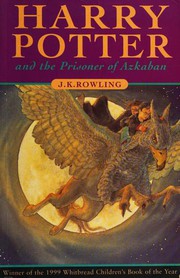
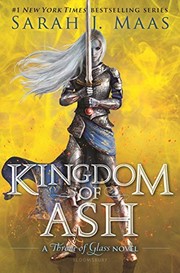
- If you liked Poland, try The Pillars of the Earth (Ken Follett), Harry Potter and the Prisoner of Azkaban (J. K. Rowling) and Kingdom of Ash (Sarah J. Maas).
A taste of the feed
The story we invent to keep friends from seeing what we are.
Now, my three friends could hardly fail to notice that I disappeared once a month. I made up all sorts of stories. I told them my mother was ill, and that I had to go home to see her... I was terrified they would desert me the moment they found out what I was. But of course, they, like you, Hermione, worked out the truth...
Harry Potter and the Prisoner of Azkaban · J. K. Rowling
What remains of a kingdom the world thought was gone for good.
Once upon a time, in a land long since burned to ash, there lived a young princess who loved her kingdom …
Kingdom of Ash · Sarah J. Maas
The mirror is honest even when your colleagues are kind.
Langdon had little doubt. His books on religious paintings and cult symbology had made him a reluctant celebrity in the art world, and last year Langdon’s visibility had increased a hundred-fold after his involvement in a widely publicized incident at the Vatican. Since then, the stream of self-important historians and art buffs arriving at his door had seemed never-ending.
The Da Vinci Code · Dan Brown
Read pages from books like this, one at a time
Keep reading in the feed