
The Covenant
James Michener, 1980
★ 4.22 from 22.3k ratings on Goodreads
A sweeping novel of South Africa, from a prehistoric clan beside a dying lake to the modern state, told through the people who claimed the land. A long, plain-spoken sweep through centuries, calm in voice and often awe-struck by the land, with dry wit and slow stretches.
Feels like awe, serenity and wonder. About home, love and death.
Who it’s for
You may like this if you enjoy family sagas and historical novels that teach through many generations and wide landscapes. Be ready for a very long book with slow stretches and later sections some readers find tedious, and for thin characters beside the history.
Why read it
It gives you a long view of South Africa through the people who claimed it, with the land itself as a steady presence.
A page from the book
What forty-three looks like when the land writes itself on a face.
Gumsto was typical of his clan, four feet ten inches high, yellowish brown in color, thin and extremely wrinkled. Indeed, there were few areas of his body that did not contain deep indentations, and sometimes within a square inch twelve lines would run up and down, with eight or nine crisscrossing them. His face looked like the map of a very old watershed, marked by the trails of a thousand animals, and when he smiled, showing small white teeth, these wrinkles cut deeper into his countenance, making him look as if he were well past ninety. He was forty-three and his wrinkles had been with him since the age of twenty-two; they were the mark of his people. What readers say
Readers say the novel is a sweeping, educational South African history that fascinates and moves many, though its length and slow stretches frustrate others. Some are angered or ashamed by the racism and apartheid depicted, while others find characters thin and later sections tedious.
James Michener.Michener was a foundling who never learned his biological parents' identities; he was raised by a widow in Doylestown, Pennsylvania.
Books that feel like this


More by James Michener

Hawaii
James Michener, 1959
Michener follows Hawaii from undersea geology to plantation politics, asking who gets to call the islands home.

Centennial
James Michener, 1956
A scholar’s journey through the massive changes of a rapidly modernizing America, tracking ambition, history, and the sheer scale of cultural transformation.
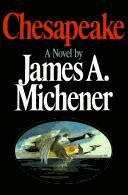
Chesapeake
James Michener, 1978
Four centuries on Maryland's Eastern Shore, told through the families, canoes, storms and wars that shaped the bay.
Where to get it
Some of these links earn us a small commission, at no cost to you. It keeps BookFeed free.
Questions readers ask
- Is The Covenant for me?
- You may like this if you enjoy family sagas and historical novels that teach through many generations and wide landscapes. Be ready for a very long book with slow stretches and later sections some readers find tedious, and for thin characters beside the history.
- What is The Covenant like?
- A long, plain-spoken sweep through centuries, calm in voice and often awe-struck by the land, with dry wit and slow stretches. Feels like awe, serenity and wonder. About home, love and death.
- What should I read after The Covenant?
- If you liked The Covenant, try A Time to Kill (John Grisham), The Hobbit (J.R.R. Tolkien) and The Old Man and the Sea (Ernest Hemingway).
A taste of the feed
A creature speaks in magnificent, terrible grandeur, asserting a dominion that defies all reason.
“The King under the Mountain is dead, and where are his kin that dare seek revenge? Girion Lord of Dale is dead, and I have eaten his people like a wolf among sheep, and where are his sons’ sons that dare approach me? I kill where I wish, and none dare resist. I laid low the warriors of old and their like is not in the world today. Then I was but young and tender. Now I am old and strong, strong, strong, Thief in the Shadows!” he gloated. “My armour is like tenfold shields, my teeth are swords, my claws spears, the shock of my tail a thunderbolt, my wings a hurricane, and my breath death!”
The Hobbit · J.R.R. Tolkien
Somewhere, someone was the first to touch a wild animal on purpose.
People knew animals. All the people they had met on their Journey hunted them, and most honored or paid homage to them or their spirits in one way or another. Animals had been observed carefully for as long as anyone could remember. People knew the environments they favored and the foods they liked, their migration patterns and seasonal movements, their birthing periods and rutting schedules. But no one had ever tried to touch a living, breathing animal in a friendly way. No one had ever tried to tie a rope around the head of any animal and lead it around. No one had ever tried to tame an animal, or even imagined that it could be done.
The Shelters of Stone · Jean M. Auel
The moment a suit breach becomes a race against your own escaping air.
Our main communications dish, which relayed signals from the Hab to Hermes, acted like a parachute, getting torn from its foundation and carried with the torrent. Along the way, it crashed through the reception antenna array. Then one of those long thin antennae slammed into me end-first. It tore through my suit like a bullet through butter, and I felt the worst pain of my life as it ripped open my side. I vaguely remember having the wind knocked out of me (pulled out of me, really) and my ears popping painfully as the pressure of my suit escaped.
The Martian · Andy Weir
Read pages from books like this, one at a time
Keep reading in the feed