BookFeed Ελληνικά

Books like The Consolation of Philosophy

If The Consolation of Philosophy stayed with you, these share its feel: home, freedom and melancholy. Each comes with a real page, so you can tell in a minute.

About The Consolation of Philosophy · Boethius

  1. 1.The Tempest

    William Shakespeare, 1611

    Also power and wonder. An exiled duke with a library of magic, a daughter who has met almost no one, and an island's furious native wait for a shipwreck to bring his enemies ashore.

    Be not afeard; the isle is full of noises,Sounds and sweet airs, that give delight and hurt not.Sometimes a thousand twangling instrumentsWill hum about mine ears, and sometime voicesThat, if I then had waked after long sleep,Will make me sleep again: and then, in dreaming,The clouds methought would open and show richesReady to drop upon me, that, when I waked,I cried to dream again.
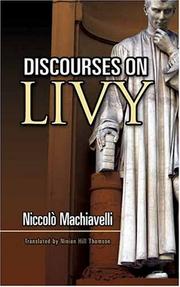
  2. 2.Discourses on Livy

    Niccolò Machiavelli, 1531

    Also power and freedom. Machiavelli reads Rome's history to ask how republics win, corrupt, and fall—and why the same appetites keep returning in every city.

    As to why such changes are impossible, two reasons may be given. One is that we cannot act in opposition to the bent of our nature. The other, that when a man has been very successful while following a particular method, he can never be convinced that it is for his advantage to try some other. And hence it results that a man’s fortunes vary, because times change and he does not change with them. So, too, with commonwealths, which, as we have already shown at length, are ruined from not altering their institutions to suit the times. And commonwealths are slower to change than princes are, changes costing them more effort; because occasions must be waited for which shall stir the whole community, and it is not enough that a single citizen alters his method of acting.
  3. 3.The Odyssey

    Homer, -800

    Also home and wonder. The first great story about a journey home — and every stop along the way is a good reason to give up.

    “I spake; Achilles quickly answered me:—‘Noble Ulysses, speak not thus of death,As if thou couldst console me. I would beA laborer on earth, and serve for hireSome man of mean estate, who makes scant cheer,Rather than reign o’er all who have gone downTo death. Speak rather of my noble son,Whether or not he yet has joined the warsTo fight among the foremost of the host.
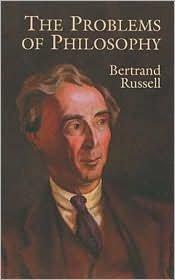
  4. 4.The Problems of Philosophy

    Bertrand Russell, 1912

    Also wonder and freedom. A short, clear tour of the questions underneath everything: whether the table is really there, why the sun should rise tomorrow, what we can know. Written for readers with no philosophy background.

    Everything, in contemplation, that is personal or private, everything that depends upon habit, self-interest, or desire, distorts the object, and hence impairs the union which the intellect seeks. By thus making a barrier between subject and object, such personal and private things become a prison to the intellect. The free intellect will see as God might see, without a here and now, without hopes and fears, without the trammels of customary beliefs and traditional prejudices, calmly, dispassionately, in the sole and exclusive desire of knowledge—knowledge as impersonal, as purely contemplative, as it is possible for man to attain.
  5. 5.Tusculan Disputations

    Cicero, -45

    Also home. Out of power, Cicero argues himself out of the fear of death and grief — five afternoons of Roman argument at its wittiest and most consoling.

    But because there is nothing beyond old age, we call that long. All these things are said to be long or short, according to the proportion of time they were given us for. Artistotle says there is a kind of insect near the river Hypanis, which runs from a certain part of Europe into the Pontus, whose life consists but of one day. Those that die at the eighth hour die in full age; those who die when the sun sets are very old, especially when the days are at the longest. Compare our longest life with eternity, and we shall be found almost as short-lived as those little animals.
  6. 6.Homo Deus

    Yuval Noah Harari, 2016

    Also freedom and power. Harari turns from the history of Homo sapiens to its next century: algorithms, data and the godlike powers we are about to invent.

    In the past there were many things only humans could do. But now robots and computers are catching up, and may soon outperform humans in most tasks. True, computers function very differently from humans, and it seems unlikely that computers will become humanlike any time soon. In particular, it doesn’t seem that computers are about to gain consciousness and start experiencing emotions and sensations. Over the past half century there has been an immense advance in computer intelligence, but there has been exactly zero advance in computer consciousness. As far as we know, computers in 2016 are no more conscious than their prototypes in the 1950s. However, we are on the brink of a momentous revolution. Humans are in danger of losing their economic value because intelligence is decoupling from consciousness.
    Excerpt from Homo Deus, Yuval Noah Harari 2016. Quoted for discovery. Source Rights & removals
  7. 7.Niels Lyhne

    J. P. Jacobsen, 1880

    Also melancholy and wonder. A young Dane tries to live without God, without illusions, and without turning his own life into literature—and keeps failing in ways that feel embarrassingly familiar.

  8. 8.Antigone

    Sophocles, -441

    Also freedom. A young woman defies a new king to bury her brother, and discovers how much a city will sacrifice to enforce its own order.

  9. 11.Madame Bovary

    Gustave Flaubert, 1856

    Also melancholy and wonder. A provincial doctor's wife reads too many novels and then marries one; the most exact book ever written about wanting a life bigger than the one you've got.

  10. 12.Short Fiction

    Mary Shelley, 1829

    Also melancholy and freedom. Mary Shelley's short stories: revenge, shipwrecks, immortals and social climbers—gothic invention in miniature, with the same fierce eye for guilt and longing as Frankenstein.

Read pages from books like this, one at a time

BookFeed is a feed of real passages from real books. It learns what moves you and finds your next book.

Open BookFeed

Free, no sign-up.