BookFeed Ελληνικά

Books like The Confessions of Jean Jacques Rousseau

If The Confessions of Jean Jacques Rousseau stayed with you, these share its feel: nostalgia, memory and identity. Each comes with a real page, so you can tell in a minute.

About The Confessions of Jean Jacques Rousseau · Jean-Jacques Rousseau

  1. 1.My Reminiscences

    Rabindranath Tagore, 1912

    Also memory and nostalgia. A boy in a vast Calcutta house, a school he hated, a first snowfall, a mother's death: Tagore's own account of how a poet's mind is made.

    The terrible darkness which was disclosed to me through this rent, continued to attract me night and day as time went on. I would ever and anon return to take my stand there and gaze upon it, wondering what there was left in place of what had gone. Emptiness is a thing man cannot bring himself to believe in; that which is not, is untrue; that which is untrue, is not. So our efforts to find something, where we see nothing, are unceasing.
  2. 2.David Copperfield

    Charles Dickens, 1850

    Also memory and nostalgia. A boy survives debt, school and unreliable adults, and learns how memory turns a life into a story.

    We have all some experience of a feeling, that comes over us occasionally, of what we are saying and doing having been said and done before, in a remote time—of our having been surrounded, dim ages ago, by the same faces, objects, and circumstances—of our knowing perfectly what will be said next, as if we suddenly remembered it! I never had this mysterious impression more strongly in my life, than before he uttered those words.
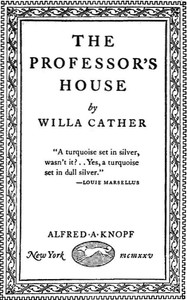
  3. 3.The Professor’s House

    Willa Cather, 1925

    Also identity and memory. A Midwestern professor looks back on two romances—one of the heart, one of the mind—and wonders which life was really his.

    But the fact is, the human mind, the individual mind, has always been made more interesting by dwelling on the old riddles, even if it makes nothing of them. Science hasn’t given us any new amazements, except of the superficial kind we get from witnessing dexterity and sleight-of-hand. It hasn’t given us any richer pleasures, as the Renaissance did, nor any new sins—not one! Indeed, it takes our old ones away. It’s the laboratory, not the Lamb of God, that taketh away the sins of the world. You’ll agree there is not much thrill about a physiological sin. We were better off when even the prosaic matter of taking nourishment could have the magnificence of a sin.
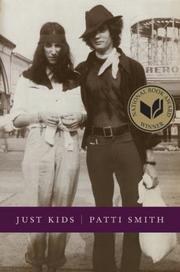
  4. 4.Just Kids

    Patti Smith, 2010

    Also nostalgia and tenderness. A rock poet's coming-of-age in New York with Robert Mapplethorpe: cheap rooms, sacred art, and the making of two artists.

    Yet you could feel a vibration in the air, a sense of hastening. It had started with the moon, inaccessible poem that it was. Now men had walked upon it, rubber treads on a pearl of the gods. Perhaps it was an awareness of time passing, the last summer of the decade. Sometimes I just wanted to raise my hands and stop. But stop what? Maybe just growing up.
    Excerpt from Just Kids, Patti Smith 2010. Quoted for discovery. Source Rights & removals
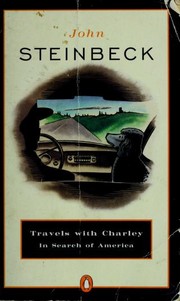
  5. 5.Travels with Charley

    John Steinbeck, 1962

    Also nostalgia and memory. At fifty-eight, Steinbeck loads a camper with a poodle and drives across America, looking for the country he remembers and testing his own restlessness.

    Even while I protest the assembly-line production of our food, our songs, our language, and eventually our souls, I know that it was a rare home that baked good bread in the old days. Mother’s cooking was with rare exceptions poor, that good unpasteurized milk touched only by flies and bits of manure crawled with bacteria, the healthy old-time life was riddled with aches, sudden death from unknown causes, and that sweet local speech I mourn was the child of illiteracy and ignorance. It is the nature of a man as he grows older, a small bridge in time, to protest against change, particularly change for the better.
    Excerpt from Travels with Charley, John Steinbeck, Everbind 1962. Quoted for discovery. Source Rights & removals
  6. 6.Jacob’s Room

    Virginia Woolf, 1925

    Also identity and nostalgia. An intimate dive into the fractured consciousness of modern life, exploring how a single glance, a passing thought, or a shared moment can alter our understanding of existence.

    It seems then that men and women are equally at fault. It seems that a profound, impartial, and absolutely just opinion of our fellow-creatures is utterly unknown. Either we are men, or we are women. Either we are cold, or we are sentimental. Either we are young, or growing old. In any case life is but a procession of shadows, and God knows why it is that we embrace them so eagerly, and see them depart with such anguish, being shadows. And why, if this—and much more than this is true, why are we yet surprised in the window corner by a sudden vision that the young man in the chair is of all things in the world the most real, the most solid, the best known to us—why indeed?

Read pages from books like this, one at a time

BookFeed is a feed of real passages from real books. It learns what moves you and finds your next book.

Open BookFeed

Free, no sign-up.