BookFeed Ελληνικά

Books like Πάρεργα (πρόλογος)

If Πάρεργα (πρόλογος) stayed with you, these share its feel: humor, power and wonder. Each comes with a real page, so you can tell in a minute.

About Πάρεργα (πρόλογος) · Εμμανουήλ Ροΐδης

  1. 1.Ulysses

    James Joyce, 1922

    Also art and humor. One Dublin day in 1904, followed through two men's minds — an ad-canvasser and a young writer — with every joke, smell and stray thought left in.

    Their dog ambled about a bank of dwindling sand, trotting, sniffing on all sides. Looking for something lost in a past life. Suddenly he made off like a bounding hare, ears flung back, chasing the shadow of a lowskimming gull. The man’s shrieked whistle struck his limp ears. He turned, bounded back, came nearer, trotted on twinkling shanks. On a field tenney a buck, trippant, proper, unattired. At the lacefringe of the tide he halted with stiff forehoofs, seawardpointed ears. His snout lifted barked at the wavenoise, herds of seamorse. They serpented towards his feet, curling, unfurling many crests, every ninth, breaking, plashing, from far, from farther out, waves and waves.
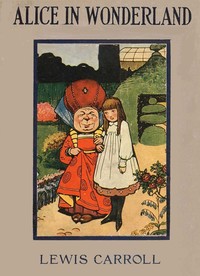
  2. 2.Alice's Adventures in Wonderland

    Lewis Carroll, 1865

    Also wonder and identity. A girl falls down a rabbit hole into a world where nothing keeps its size, its manners or its temper, and keeps asking the questions everyone else stopped asking.

    “Come, there’s no use in crying like that!” said Alice to herself, rather sharply; “I advise you to leave off this minute!” She generally gave herself very good advice, (though she very seldom followed it), and sometimes she scolded herself so severely as to bring tears into her eyes; and once she remembered trying to box her own ears for having cheated herself in a game of croquet she was playing against herself, for this curious child was very fond of pretending to be two people. “But it’s no use now,” thought poor Alice, “to pretend to be two people! Why, there’s hardly enough of me left to make one respectable person!”
  3. 3.The Taming of the Shrew

    William Shakespeare, 1623

    Also power and humor. A broke fortune-hunter marries the town's most notorious scold and sets about taming her — a comedy that doubles as a fight over who gets to speak.

    The more my wrong, the more his spite appears:What, did he marry me to famish me?Beggars, that come unto my father’s door,Upon entreaty have a present aims;If not, elsewhere they meet with charity:But I, who never knew how to entreat,Nor never needed that I should entreat,Am starved for meat, giddy for lack of sleep,With oaths kept waking and with brawling fed:And that which spites me more than all these wants,He does it under name of perfect love;As who should say, if I should sleep or eat,’Twere deadly sickness or else present death.
  4. 4.The Book of Tea

    Kakuzo Okakura, 1906

    Also wonder and art. A Japanese art critic explains why tea—its room, its flowers, its humility—is a philosophy for living, written to correct the West's picture of Asia.

    Rikiu was watching his son Shoan as he swept and watered the garden path. “Not clean enough,” said Rikiu, when Shoan had finished his task, and bade him try again. After a weary hour the son turned to Rikiu: “Father, there is nothing more to be done. The steps have been washed for the third time, the stone lanterns and the trees are well sprinkled with water, moss and lichens are shining with a fresh verdure; not a twig, not a leaf have I left on the ground.” “Young fool,” chided the tea-master, “that is not the way a garden path should be swept.” Saying this, Rikiu stepped into the garden, shook a tree and scattered over the garden gold and crimson leaves, scraps of the brocade of autumn! What Rikiu demanded was not cleanliness alone, but the beautiful and the natural also.
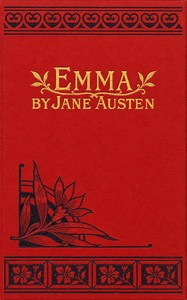
  5. 5.Emma

    Jane Austen, 1815

    Also humor and identity. A clever, rich, bored young woman decides to arrange her neighbours' love lives, and gets nearly everything wrong. Austen's funniest, most merciless book about self-knowledge.

    Seldom, very seldom, does complete truth belong to any human disclosure; seldom can it happen that something is not a little disguised, or a little mistaken; but where, as in this case, though the conduct is mistaken, the feelings are not, it may not be very material.—Mr. Knightley could not impute to Emma a more relenting heart than she possessed, or a heart more disposed to accept of his.
  6. 6.Kusamakura

    Natsume Sōseki, 1906

    Also wonder and art. A painter escapes to a mountain inn to see the world as art, and finds a village, a strange woman, and a war that will not stay outside the frame.

    My old host volunteered in his nephew’s place to let me understand that the youth was destined to leave for Manchuria in a day or two. I had thought that there was only feathered songsters to listen to, only flowers to see fall, only hot spring to warble forth in this dreamy land of poetry in a mountain bosom, in peaceful Spring. Alas, the living world had come crossing the sea and mountain and oozing into this home of a forgotten tribe, and the time may come when a small fraction of blood making a crimson sea of bleak Manchuria may flow from this youth’s arteries. This very youth is sitting next to an artist who sees nothing worth seeing in human life but dreaming. He sits so near that the artist may hear his heart throb.

Read pages from books like this, one at a time

BookFeed is a feed of real passages from real books. It learns what moves you and finds your next book.

Open BookFeed

Free, no sign-up.