BookFeed Ελληνικά

Books like Λόγια της Πλώρης

If Λόγια της Πλώρης stayed with you, these share its feel: awe, nature and death. Each comes with a real page, so you can tell in a minute.

About Λόγια της Πλώρης · Ανδρέας Καρκαβίτσας

  1. 1.Toilers of the Sea

    Victor Hugo, 1866

    Also nature and dread. A solitary Guernsey fisherman sets out to salvage a steamship's engine from a rock in open sea, to win a girl who barely notices him.

    The year advanced; the time came when the trellises were heavy with roses, and haunted by the butterflies. By little and little, he had come to conceal himself for hours behind her wall, motionless and silent, seen by no one, and holding his breath as Déruchette passed in and out of her garden. Men grow accustomed to poison by degrees.

  2. 2.Kwaidan

    Lafcadio Hearn, 1904

    Also death and dread. Ghost stories and insect essays from a Greek-born Irishman who became Japanese: a stranger's report on a country of hungry ghosts and cherry trees.

    Then Hōïchi lifted up his voice, and chanted the chant of the fight on the bitter sea,—wonderfully making his biwa to sound like the straining of oars and the rushing of ships, the whirr and the hissing of arrows, the shouting and trampling of men, the crashing of steel upon helmets, the plunging of slain in the flood. And to left and right of him, in the pauses of his playing, he could hear voices murmuring praise: “How marvelous an artist!”—“Never in our own province was playing heard like this!”—“Not in all the empire is there another singer like Hōïchi!” Then fresh courage came to him, and he played and sang yet better than before; and a hush of wonder deepened about him.
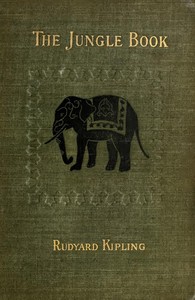
  3. 3.The Jungle Book

    Rudyard Kipling, 1894

    Also nature and awe. A boy raised by wolves, a mongoose at war with cobras, a seal hunting for a beach with no men — India's animals, and the laws they keep.

    He set his teeth and said nothing, but went with the shouting monkeys to a terrace above the red sandstone reservoirs that were half full of rainwater. There was a ruined summerhouse of white marble in the center of the terrace, built for queens dead a hundred years ago. The domed roof had half fallen in and blocked up the underground passage from the palace by which the queens used to enter; but the walls were made of screens of marble tracery—beautiful, milk-white fretwork, set with agates and cornelians and jasper and lapis lazuli, and as the moon came up behind the hill it shone through the openwork, casting shadows on the ground like black-velvet embroidery.
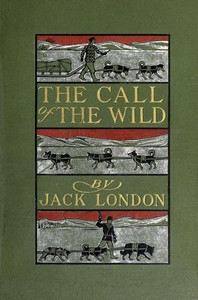
  4. 4.The Call of the Wild

    Jack London, 1903

    Also awe and nature. A pampered dog is stolen, sold to the Klondike gold rush, and taught the club before he learns the sled — then something older starts calling.

    There is an ecstasy that marks the summit of life, and beyond which life cannot rise. And such is the paradox of living, this ecstasy comes when one is most alive, and it comes as a complete forgetfulness that one is alive. This ecstasy, this forgetfulness of living, comes to the artist, caught up and out of himself in a sheet of flame; it comes to the soldier, war-mad on a stricken field and refusing quarter; and it came to Buck, leading the pack, sounding the old wolf-cry, straining after the food that was alive and that fled swiftly before him through the moonlight. He was sounding the deeps of his nature, and of the parts of his nature that were deeper than he, going back into the womb of Time.
  5. 5.My First Summer in the Sierra

    John Muir, 1911

    Also nature and awe. A young Scot joins a sheep drive into the high Sierra in 1869 and writes daily, ecstatic journal entries about granite, light and water, as if seeing mountains for the first time.

    No Sierra landscape that I have seen holds anything truly dead or dull, or any trace of what in manufactories is called rubbish or waste; everything is perfectly clean and pure and full of divine lessons. This quick, inevitable interest attaching to everything seems marvelous until the hand of God becomes visible; then it seems reasonable that what interests Him may well interest us. When we try to pick out anything by itself, we find it hitched to everything else in the universe. One fancies a heart like our own must be beating in every crystal and cell, and we feel like stopping to speak to the plants and animals as friendly fellow mountaineers.
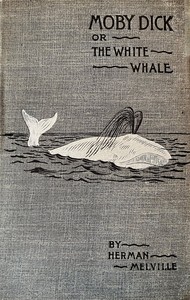
  6. 6.Moby Dick

    Herman Melville, 1851

    Also awe and nature. A sea story that keeps stopping to joke, lecture on whales, and stare into the abyss, led by a captain who has turned grief into a single, ruinous purpose.

    Consider all this; and then turn to this green, gentle, and most docile earth; consider them both, the sea and the land; and do you not find a strange analogy to something in yourself? For as this appalling ocean surrounds the verdant land, so in the soul of man there lies one insular Tahiti, full of peace and joy, but encompassed by all the horrors of the half known life. God keep thee! Push not off from that isle, thou canst never return!

Read pages from books like this, one at a time

BookFeed is a feed of real passages from real books. It learns what moves you and finds your next book.

Open BookFeed

Free, no sign-up.