BookFeed

Books like Journey to the Center of the Earth

If Journey to the Center of the Earth stayed with you, these share its feel: wonder, society and awe. Each comes with a real page, so you can tell in a minute.

About Journey to the Center of the Earth · Jules Verne

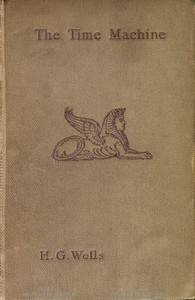
  1. 1.The Time Machine

    H. G. Wells, 1895

    Also wonder and society. A dinner-party tale of a man who returns from the far future with a warning about class, comfort and where the human species is heading.

    “So I travelled, stopping ever and again, in great strides of a thousand years or more, drawn on by the mystery of the earth’s fate, watching with a strange fascination the sun grow larger and duller in the westward sky, and the life of the old earth ebb away. At last, more than thirty million years hence, the huge red-hot dome of the sun had come to obscure nearly a tenth part of the darkling heavens. Then I stopped once more, for the crawling multitude of crabs had disappeared, and the red beach, save for its livid green liverworts and lichens, seemed lifeless. And now it was flecked with white. A bitter cold assailed me. Rare white flakes ever and again came eddying down. To the north-eastward, the glare of snow lay under the starlight of the sable sky, and I could see an undulating crest of hillocks pinkish white.
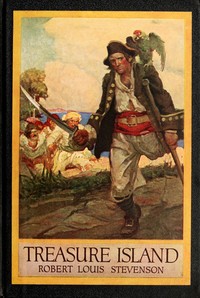
  2. 2.Treasure Island

    Robert Louis Stevenson, 1883

    Also wonder and dread. A boy finds a dead sailor's map and ends up aboard a ship where the friendliest man may be the most dangerous. Fast, funny, and the template for pirate stories.

    The doctor opened the seals with great care, and there fell out the map of an island, with latitude and longitude, soundings, names of hills and bays and inlets, and every particular that would be needed to bring a ship to a safe anchorage upon its shores. It was about nine miles long and five across, shaped, you might say, like a fat dragon standing up, and had two fine land-locked harbours, and a hill in the centre part marked “The Spy-glass.” There were several additions of a later date, but above all, three crosses of red ink—two on the north part of the island, one in the southwest—and beside this last, in the same red ink, and in a small, neat hand, very different from the captain’s tottery characters, these words: “Bulk of treasure here.”
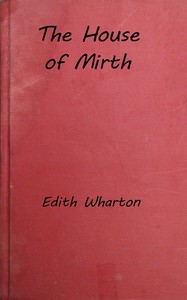
  3. 3.The House of Mirth

    Edith Wharton, 1905

    Also society and wonder. A beautiful woman with no money navigates New York drawing rooms where charm is capital and every kindness arrives with an invoice. Wharton's sharpest, saddest social novel.

    That was the secret of his way of readjusting her vision. Lily, turning her eyes from him, found herself scanning her little world through his retina: it was as though the pink lamps had been shut off and the dusty daylight let in. She looked down the long table, studying its occupants one by one, from Gus Trenor, with his heavy carnivorous head sunk between his shoulders, as he preyed on a jellied plover, to his wife, at the opposite end of the long bank of orchids, suggestive, with her glaring good-looks, of a jeweller’s window lit by electricity. And between the two, what a long stretch of vacuity! How dreary and trivial these people were!
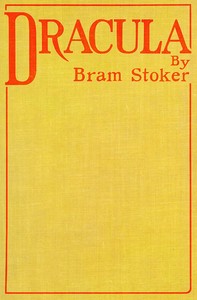
  4. 4.Dracula

    Bram Stoker, 1897

    Also dread. A solicitor's business trip, a seaside storm and a doctor's case notes, told through diaries, letters and telegrams so that dread reads like found evidence.

    What I saw was the Count’s head coming out from the window. I did not see the face, but I knew the man by the neck and the movement of his back and arms. In any case I could not mistake the hands which I had had so many opportunities of studying. I was at first interested and somewhat amused, for it is wonderful how small a matter will interest and amuse a man when he is a prisoner. But my very feelings changed to repulsion and terror when I saw the whole man slowly emerge from the window and begin to crawl down the castle wall over that dreadful abyss, face down with his cloak spreading out around him like great wings. At first I could not believe my eyes.
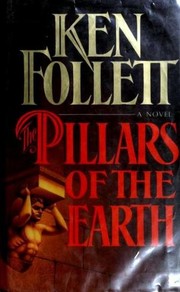
  5. 5.The Pillars of the Earth

    Ken Follett, 1989

    Also awe and society. A master mason risks his family’s safety to chase the building of a cathedral in 12th-century England, where faith and power collide.

    For an instant Tom stood still in a sick panic. Then he leaped forward, shouting and waving his arms; but this was a war-horse, trained to charge at yelling hordes, and it did not flinch. Martha stood in the middle of the narrow path, staring as if transfixed by the huge beast bearing down on her. There was a moment when Tom realized desperately that he could not get to her before the horse did. He swerved to one side, his arm touching the standing wheat; and at the last instant the horse swerved to the other side. The rise’s stirrup brushed Martha’s fine hair; a hoof stamped a hole in the ground beside her bare foot; then the horse had gone by, spraying them both with dirt, and Tom snatched her up in his arms and held her tight to his pounding heart.
    Excerpt from The Pillars of the Earth, Ken Follett, Penguin Books 1989. Quoted for discovery. Source Rights & removals
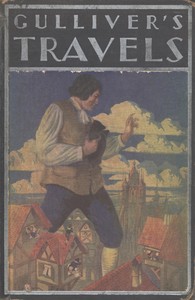
  6. 6.Gulliver's Travels

    Jonathan Swift, 1726

    Also society and wonder. A ship’s surgeon washes up among tiny people, giants, flying scholars and talking horses, and discovers how strange his own country looks from outside.

    Which two mighty powers have, as I was going to tell you, been engaged in a most obstinate war for six-and-thirty moons past. It began upon the following occasion: It is allowed on all hands, that the primitive way of breaking eggs, before we eat them, was upon the larger end; but his present majesty’s grandfather, while he was a boy, going to eat an egg, and breaking it according to the ancient practice, happened to cut one of his fingers; whereupon the emperor, his father, published an edict, commanding all his subjects, upon great penalties, to break the smaller end of their eggs. The people so highly resented this law, that our histories tell us there have been six rebellions raised on that account; wherein one emperor lost his life, and another his crown.
  7. 7.Frankenstein

    Mary Shelley, 1818

    Also dread and wonder. A young scientist makes life and then cannot face what he has made. Told in nested voices, it asks who owes what to whom, and why ambition so often ends in solitude.

  8. 8.Space

    James Michener, 1982

    Also awe and wonder. Michener turns the race to space into a sprawling human story of rockets, war, ambition and the people who risk everything to leave Earth.

  9. 11.Short Fiction

    Saki, 1904

    Also society and wonder. Edwardian England seen from the side: a talking cat, a private childhood god, and a socialist who enjoys her money. Saki’s wit is a scalpel with a smile.

Read pages from books like this, one at a time

BookFeed is a feed of real passages from real books. It learns what moves you and finds your next book.

Open BookFeed

Free, no sign-up.