BookFeed Ελληνικά

Books like Breakfast of Champions

If Breakfast of Champions stayed with you, these share its feel: humor, society and melancholy. Each comes with a real page, so you can tell in a minute.

About Breakfast of Champions · Kurt Vonnegut

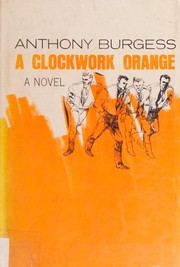
  1. 1.A Clockwork Orange

    Anthony Burgess, 1962

    Also unease and society. A teenage gang leader who loves violence and Beethoven tells his story in his own invented slang, until the state offers to cure him of choosing.

    "The four of us were dressed in the height of fashion, which in those days was a pair of black very tight tights with the old jelly mould, as we called it, fitting on the crotch underneath the tights, this being to protect and also a sort of a design you could viddy clear enough in a certain light, so that I had one in the shape of a spider. Pete had a rooker (a hand, that is), Georgie had a very fancy one of a flower, and poor old Dim had a very hound-and-horny one of a clown’s litso (face, that is). Dim not ever having much of an idea of things and being, beyond all shadow of a Doubting Thomas, the dimmest of we four.
    Excerpt from A Clockwork Orange, Anthony Burgess, Penguin UK 1962. Quoted for discovery. Source Rights & removals
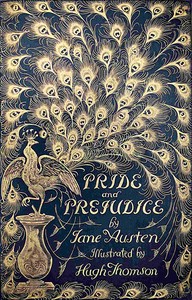
  2. 2.Pride and Prejudice

    Jane Austen, 1813

    Also humor and society. A sharp-eyed comedy about money, manners and misjudgment, in which a quick-witted woman and a proud man keep being wrong about each other. Funnier and more cutting than its reputation suggests.

    Having now a good house and a very sufficient income, he intended to marry; and in seeking a reconciliation with the Longbourn family he had a wife in view, as he meant to choose one of the daughters, if he found them as handsome and amiable as they were represented by common report. This was his plan of amends—of atonement—for inheriting their father’s estate; and he thought it an excellent one, full of eligibility and suitableness, and excessively generous and disinterested on his own part.
  3. 3.Ulysses

    James Joyce, 1922

    Also art and humor. One Dublin day in 1904, followed through two men's minds — an ad-canvasser and a young writer — with every joke, smell and stray thought left in.

    Their dog ambled about a bank of dwindling sand, trotting, sniffing on all sides. Looking for something lost in a past life. Suddenly he made off like a bounding hare, ears flung back, chasing the shadow of a lowskimming gull. The man’s shrieked whistle struck his limp ears. He turned, bounded back, came nearer, trotted on twinkling shanks. On a field tenney a buck, trippant, proper, unattired. At the lacefringe of the tide he halted with stiff forehoofs, seawardpointed ears. His snout lifted barked at the wavenoise, herds of seamorse. They serpented towards his feet, curling, unfurling many crests, every ninth, breaking, plashing, from far, from farther out, waves and waves.
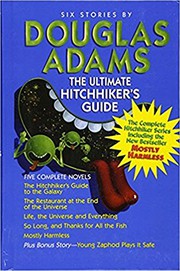
  4. 4.The Ultimate Hitchhiker’s Guide to the Galaxy

    Douglas Adams, 1979

    Also humor and society. A hapless Englishman is swept off a doomed planet by an alien researcher, armed only with a towel and a very unreliable guide.

    In the beginning the Universe was created. This has made a lot of people very angry and been widely regarded as a bad move.
    Excerpt from The Ultimate Hitchhiker’s Guide to the Galaxy, Douglas Adams, Del Rey 1979. Quoted for discovery. Source Rights & removals
  5. 5.Candide

    Voltaire, 1759

    Also humor and society. A sweet-natured young man is told this is the best of all possible worlds, then sent across it to test the claim. Short, fast, savagely funny, and still aimed at our comforting ideas.

    There was never anything so gallant, so spruce, so brilliant, and so well disposed as the two armies. Trumpets, fifes, hautboys, drums, and cannon made music such as Hell itself had never heard. The cannons first of all laid flat about six thousand men on each side; the muskets swept away from this best of worlds nine or ten thousand ruffians who infested its surface. The bayonet was also a sufficient reason for the death of several thousands. The whole might amount to thirty thousand souls. Candide, who trembled like a philosopher, hid himself as well as he could during this heroic butchery.
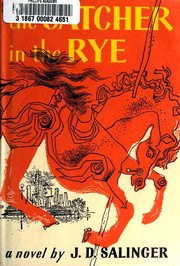
  6. 6.The Catcher in the Rye

    J. D. Salinger, 1951

    Also identity and melancholy. A prep-school dropout drifts through New York for a few days, allergic to phonies and desperate to protect someone younger.

    Anyway, I keep picturing all these little kids playing some game in this big field of rye and all. Thousands of little kids, and nobody’s around — nobody big, I mean — except me. And I’m standing on the edge of some crazy cliff. What I have to do, I have to catch everybody if they start to go over the cliff — I mean if they’re running and they don’t look where they’re going I have to come out from somewhere and catch them. That’s all I’d do all day. I’d just be the catcher in the rye, and all. I know it’s crazy, but that’s the only thing I’d really like to be. I know it’s crazy.
    Excerpt from The Catcher in the Rye, J. D. Salinger 1951. Quoted for discovery. Source Rights & removals
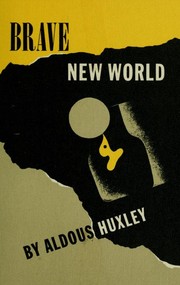
  7. 8.Brave New World

    Aldous Huxley, 1932

    Also society and unease. An engineered future where comfort is compulsory and happiness is manufactured—and one outsider asks what was sacrificed to get it.

  8. 11.Vanity Fair

    William Makepeace Thackeray, 1848

    Also melancholy. A penniless governess with endless nerve climbs through Regency society, and the narrator cheerfully informs you that everyone is a fool — including you.

Read pages from books like this, one at a time

BookFeed is a feed of real passages from real books. It learns what moves you and finds your next book.

Open BookFeed

Free, no sign-up.