
Vanity Fair
William Makepeace Thackeray (1811–1863), 1848
A penniless governess with endless nerve climbs through Regency society, and the narrator cheerfully informs you that everyone is a fool — including you. Thackeray's narrator is a witty, needling guide through Regency ambition, with melancholy under the satire and a gossipy, episodic pace.
Feels like melancholy and wonder. About ambition, love and freedom.
Who it’s for
You may enjoy this if you like sharp social comedy, unreliable charm, and a narrator who keeps nudging you. The 1848 prose and crowded cast of characters can make some chapters slow going.
Why read it
It gives you a funny, clear-eyed look at how people justify ambition and vanity, and the narrator's company is worth the long haul.
Pages from the book
Every family portrait is a small, smiling lie.
There was a picture of the family over the mantelpiece, removed thither from the front room after Mrs. Osborne’s death—George was on a pony, the elder sister holding him up a bunch of flowers; the younger led by her mother’s hand; all with red cheeks and large red mouths, simpering on each other in the approved family-portrait manner. The mother lay underground now, long since forgotten—the sisters and brother had a hundred different interests of their own, and, familiar still, were utterly estranged from each other. Some few score of years afterwards, when all the parties represented are grown old, what bitter satire there is in those flaunting childish family-portraits, with their farce of sentiment and smiling lies, and innocence so self-conscious and self-satisfied. Osborne’s own state portrait, with that of his great silver inkstand and armchair, had taken the place of honour in the dining-room, vacated by the family-piece. A housemaid, a spider, and the true scale of human ambition.
And so—guiltless very likely—she was writhing and pushing onward towards what they call “a position in society,” and the servants were pointing at her as lost and ruined. So you see Molly, the housemaid, of a morning, watching a spider in the doorpost lay his thread and laboriously crawl up it, until, tired of the sport, she raises her broom and sweeps away the thread and the artificer. What the surface of a respectable life is quietly hiding.
Those who like may peep down under waves that are pretty transparent and see it writhing and twirling, diabolically hideous and slimy, flapping amongst bones, or curling round corpses; but above the waterline, I ask, has not everything been proper, agreeable, and decorous, and has any the most squeamish immoralist in Vanity Fair a right to cry fie? When, however, the Siren disappears and dives below, down among the dead men, the water of course grows turbid over her, and it is labour lost to look into it ever so curiously. William Makepeace Thackeray.Thackeray lost his inheritance in his twenties to gambling and the collapse of Indian banks, which turned a gentleman into a journalist who had to sell every instalment.
Books that feel like this



Where to get it
Some of these links earn us a small commission, at no cost to you. It keeps BookFeed free.
Questions readers ask
- Is Vanity Fair for me?
- You may enjoy this if you like sharp social comedy, unreliable charm, and a narrator who keeps nudging you. The 1848 prose and crowded cast of characters can make some chapters slow going.
- What is Vanity Fair like?
- Thackeray's narrator is a witty, needling guide through Regency ambition, with melancholy under the satire and a gossipy, episodic pace. Feels like melancholy and wonder. About ambition, love and freedom.
- What should I read after Vanity Fair?
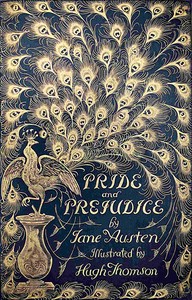
- If you liked Vanity Fair, try Pride and Prejudice (Jane Austen), Yesteryear (Caro Claire Burke) and A Man in Full (Tom Wolfe).
A taste of the feed
A man reframes his self-interest as an act of atonement.
Having now a good house and a very sufficient income, he intended to marry; and in seeking a reconciliation with the Longbourn family he had a wife in view, as he meant to choose one of the daughters, if he found them as handsome and amiable as they were represented by common report. This was his plan of amends—of atonement—for inheriting their father’s estate; and he thought it an excellent one, full of eligibility and suitableness, and excessively generous and disinterested on his own part.
Pride and Prejudice · Jane Austen
The voice policing a woman's anger often wears her own face.
A voice in my head, echoing softly: America hates angry women. The Lord hates angry women. You hate angry women. Do not be an angry woman.
Yesteryear · Caro Claire Burke
A demon's professional failing is liking the people he's meant to ruin.
He rather liked people. It was a major failing in a demon. Oh, he did his best to make their short lives miserable, because that was his job, but nothing he could think up was half as bad as the stuff they thought up themselves. They seemed to have a talent for it. It was built into the design, somehow. They were born into a world that was against them in a thousand little ways, and then devoted most of their energies to making it worse.
Good Omens · Terry Pratchett
Read pages from books like this, one at a time
Keep reading in the feed