BookFeed Ελληνικά

Books like All I Really Need to Know I Learned in Kindergarten

If All I Really Need to Know I Learned in Kindergarten stayed with you, these share its feel: love, wonder and hope. Each comes with a real page, so you can tell in a minute.

About All I Really Need to Know I Learned in Kindergarten · Robert Fulghum

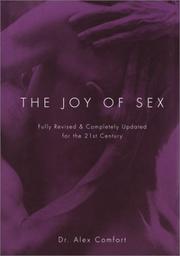
  1. 1.The Joy of Sex

    Alex Comfort, 1972

    Also love and wonder. A physician’s witty, cookbook-style guide to lovemaking that treats sex as a skill, a menu, and a form of play.

    There are, after all, only two “rules” in good sex, apart from the obvious one of not doing things that are silly, antisocial, or dangerous. One is: “Don’t do anything you don’t really enjoy,” and the other is: “Find out your partner’s needs and don’t balk at them if you can help it.” In other words, a good giving and taking relationship depends on a compromise (so does going to a show — if you both want the same thing, fine; if not, take turns and don’t let one partner always dictate). This can be easier than it sounds, because unless their partner wants something they find actively off-putting, real lovers get a reward not only from their own satisfaction but also from seeing the other respond and become satisfied.
    Excerpt from The Joy of Sex, Alex Comfort, Harmony 1972. Quoted for discovery. Source Rights & removals
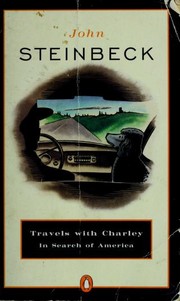
  2. 2.Travels with Charley

    John Steinbeck, 1962

    Also memory and wonder. At fifty-eight, Steinbeck loads a camper with a poodle and drives across America, looking for the country he remembers and testing his own restlessness.

    Even while I protest the assembly-line production of our food, our songs, our language, and eventually our souls, I know that it was a rare home that baked good bread in the old days. Mother’s cooking was with rare exceptions poor, that good unpasteurized milk touched only by flies and bits of manure crawled with bacteria, the healthy old-time life was riddled with aches, sudden death from unknown causes, and that sweet local speech I mourn was the child of illiteracy and ignorance. It is the nature of a man as he grows older, a small bridge in time, to protest against change, particularly change for the better.
    Excerpt from Travels with Charley, John Steinbeck, Everbind 1962. Quoted for discovery. Source Rights & removals
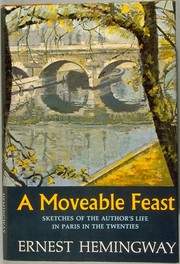
  3. 3.A Moveable Feast

    Ernest Hemingway, 1964

    Also wonder and memory. Hemingway's posthumous memoir of 1920s Paris: cheap oysters, cold wine, Cézanne in the Luxembourg, and the making of a writer.

    His talent was as natural as the pattern that was made by the dust on a butterfly’s wings. At one time he understood it no more than the butterfly did and he did not know when it was brushed or marred. Later he became conscious of his damaged wings and of their construction and he learned to think and could not fly any more because the love of flight was gone and he could only remember when it had been effortless.
    Excerpt from A Moveable Feast, Ernest Hemingway, Jiu ge chu ban she you xian gong si 1964. Quoted for discovery. Source Rights & removals
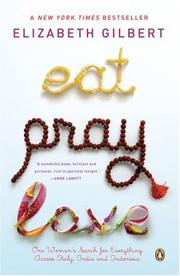
  4. 4.Eat, Pray, Love

    Elizabeth Gilbert, 2006

    Also hope and wonder. A woman walks out of a marriage and a script she never wrote, and spends a year in Italy, India and Indonesia finding out what she actually wants.

    Everything else about the three-years-ago scene was different, though. That time, I was not in Rome but in the upstairs bathroom of the big house in the suburbs of New York which I’d recently purchased with my husband. It was a cold November, around three o’clock in the morning. My husband was sleeping in our bed. I was hiding in the bathroom for something like the forty-seventh consecutive night, and—just as during all those nights before—I was sobbing. Sobbing so hard, in fact, that a great lake of tears and snot was spreading before me on the bathroom tiles, a veritable Lake Inferior (if you will) of all my shame and fear and confusion and grief.
    Excerpt from Eat, Pray, Love, Elizabeth Gilbert, Riverhead Books 2006. Quoted for discovery. Source Rights & removals
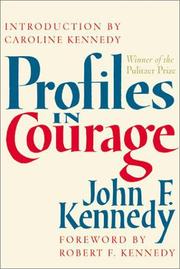
  5. 5.Profiles in Courage

    John F. Kennedy, 1956

    Also wonder and love. Kennedy’s 1956 study of senators who risked their careers for principle—and what it costs to vote your conscience when party and voters disagree.

    For without belittling the courage with which men have died, we should not forget those acts of courage with which men — such as the subjects of this book — have lived. The courage of life is often a less dramatic spectacle than the courage of a final moment; but it is no less a magnificent mixture of triumph and tragedy. A man does what he must — in spite of personal consequences, in spite of obstacles and dangers, and pressures — and that is the basis of all human morality. In whatever area in life one may meet the challenges of courage, whatever may be the sacrifices he faces if he follows his conscience — the loss of his friends, his fortune, his contentment, even the esteem of his fellow men — each man must decide for himself the course he will follow.
    Excerpt from Profiles in Courage, John F. Kennedy, Perennial Library 1956. Quoted for discovery. Source Rights & removals
  6. 6.Seabiscuit

    Laura Hillenbrand, 2001

    Also hope and joy. A true Depression-era story about a discarded racehorse, a damaged jockey and the salesman who bet on both.

    For good reason. The automobile, so sleekly efficient on paper, was in practice a civic menace, belching out exhaust, kicking up storms of dust, becoming hopelessly mired in the most innocuous-looking puddles, tying up horse traffic, and raising an earsplitting cacophony that sent buggy horses fleeing. Incensed local lawmakers responded with monuments to legislative creativity. The laws of at least one town required automobile drivers to stop, get out, and fire off Roman candles every time horse-drawn vehicles came into view. Massachusetts tried and, fortunately, failed to mandate that cars be equipped with bells that would ring with each revo- lution of the wheels. In some towns police were authorized to disable passing cars with ropes, chains, wires, and even bullets, so long as they took reasonable care to avoid gunning down the drivers. San Francisco didn’t escape the legislative wave.
    Excerpt from Seabiscuit, Laura Hillenbrand, Ballantine Books 2001. Quoted for discovery. Source Rights & removals
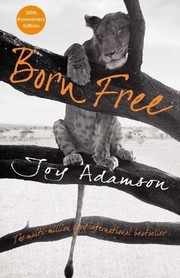
  7. 7.Born Free

    Joy Adamson, 1960

    Also wonder. A lioness raised by hand, then taught to hunt and live wild: the true story that changed how people looked at animals.

Read pages from books like this, one at a time

BookFeed is a feed of real passages from real books. It learns what moves you and finds your next book.

Open BookFeed

Free, no sign-up.