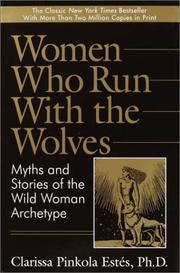
Women Who Run with the Wolves
Clarissa Pinkola Estes, 1992
A Jungian analyst and storyteller reads old myths as maps of women’s instinctual life, arguing that wildness is not disorder but a buried inheritance.
 BookFeed Ελληνικά
Estés is a cantadora—a keeper of Latina oral tales—and a Jungian analyst; the book’s title grew from her study of wildlife biology, especially wolves.
Feels like hope, identity and wonder.
The places that felt holier than any room with a roof.
Although I did not call her by that name then, my love for Wild Woman began when I was a little child. I was an aesthete rather than an athlete, and my only wish was to be an ecstatic wanderer. Rather than chairs and tables, I preferred the ground, trees, and caves, for in those places I felt I could lean against the cheek of God. Clarissa Pinkola Estes, 1992
A Jungian analyst and storyteller reads old myths as maps of women’s instinctual life, arguing that wildness is not disorder but a buried inheritance.
Read pages from books like this, one at a time
BookFeed is a feed of real passages from real books. It learns what moves you and finds your next book.
Open BookFeedFree, no sign-up.