
The Cardinal of the Kremlin
Tom Clancy, 1988
★ 4.11 from 62.8k ratings on Goodreads
Two intelligence services hunt the same mole, while a secret laser site in the mountains may decide which empire blinks first. A tense, talky Cold War procedural, with technical detail and shifting loyalties that keep the mood wary and the pace uneven.
Feels like curiosity, unease and dread. About war, power and morality.
Who it’s for
You may like it if you enjoy Cold War spycraft, bureaucratic power struggles, and technical detail woven into a hunt for a mole. Be warned that some readers find it slow and overlong, with a large cast that can be hard to track.
Why read it
It offers a grounded look at how intelligence work, ambition, and fear collide, and the mountain laser site gives the story a concrete stake beyond the mole hunt.
A page from the book
The grief that turns a mathematics teacher into something else.
It was his eyes that were old. The Afghans are a handsome people whose forthright features and fair skin suffer quickly from wind and sun and dust, too often making them older than their years. For the Archer, the damage had not been done by wind. A teacher of mathematics until three years before, a college graduate in a country where most deemed it enough to be able to read the holy Koran, he’d married young, as was the custom in his land, and fathered two children. But his wife and daughter were dead, killed by rockets fired from a Sukhoi-24 attack-fighter. His son was gone. Kidnapped. What readers say
Readers split between finding it a gripping, entertaining Cold War spy thriller with strong technology and espionage detail and finding it slow, overlong, and crowded with characters; nostalgia and disappointment both surface.
Tom Clancy.An insurance broker with no military service, Clancy built his novels from unclassified sources and interviews, and later co-owned the Baltimore Orioles.
Books that feel like this


More by Tom Clancy
Red Storm Rising
Tom Clancy, 1986
A Soviet refinery burns, and the world slides toward a war nobody planned—told through the engineers, analysts and soldiers who see it coming.
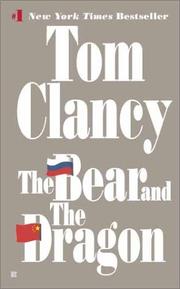
The Bear and the Dragon
Tom Clancy, 1991
A look inside the high-stakes world of post-Soviet intelligence, where political legacy crashes headlong into brutal, modern violence.
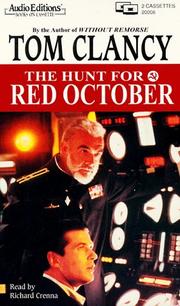
The Hunt for Red October
Tom Clancy, 1984
A Cold War thriller built from sonar, bureaucracy and nerve: a Soviet submarine commander takes his newest boat to sea, and no one knows what he intends.
Where to get it
Some of these links earn us a small commission, at no cost to you. It keeps BookFeed free.
Questions readers ask
- Is The Cardinal of the Kremlin for me?
- You may like it if you enjoy Cold War spycraft, bureaucratic power struggles, and technical detail woven into a hunt for a mole. Be warned that some readers find it slow and overlong, with a large cast that can be hard to track.
- What is The Cardinal of the Kremlin like?
- A tense, talky Cold War procedural, with technical detail and shifting loyalties that keep the mood wary and the pace uneven. Feels like curiosity, unease and dread. About war, power and morality.
- What should I read after The Cardinal of the Kremlin?
- If you liked The Cardinal of the Kremlin, try Seven Days in May (Fletcher Knebel), The Final Count (H. C. McNeile) and The Aquitaine Progression (Robert Ludlum).
A taste of the feed
A handful of men can stop the government from falling off a monument.
All you’ve got to know is this: right now the government of the United States is sitting on top of the Washington Monument, right on the very point, tilting right and left and ready to fall off and break up on the pavement. There are just a handful of men that can prevent it. And you’re one of them.
Seven Days in May · Fletcher Knebel
When a friend's idea is so strange you start diagnosing him.
I think it was at that moment that I first began to entertain doubts as to Robin’s sanity. Not that people dining near would have noticed anything amiss with him: his voice was low-pitched and quiet. But the whole idea was so utterly far-fetched and fantastic that I couldn’t help wondering if his brilliant brain hadn’t crossed that tiny bridge which separates genius from insanity. I knew the hideous loathing he had always felt for war: was it possible that continual brooding on the idea had unhinged him?
The Final Count · H. C. McNeile
When the lights go out, what is the first thing you see in the dark?
Cracks of thunder follow; the skies grow dark and the rains come. A deluge, pounding the angry waters taken by surprise, distorting vision, crashing down on the giant spray, Geneva’s trademark on the lake, the jet d’eau, that geyser designed by man to dazzle man. When sudden revelations come, the gigantic fountain dies. All the fountains die and without the sunlight the flowers wither. The bright reflections are gone and the mind is frozen.
The Aquitaine Progression · Robert Ludlum
Read pages from books like this, one at a time
Keep reading in the feed