
Middlesex
Jeffrey Eugenides, 2002
Historical fiction Contemporary fictionYoung adult
A Greek-American family's secret history runs from a burning city to Detroit's factories, told by a narrator who is both inside and outside his own story.
Feels like wonder and melancholy. About identity, family and memory.
A page from the book
The words we have for feeling are too simple for what we feel.
Emotions, in my experience, aren’t covered by single words. I don’t believe in “sadness,” “joy,” or “regret.” Maybe the best proof that the language is patriarchal is that it oversimplifies feeling. I’d like to have at my disposal complicated hybrid emotions, Germanic train-car constructions like, say, “the happiness that attends disaster.” Or: “the disappointment of sleeping with one’s fantasy.” I’d like to show how “intimations of mortality brought on by aging family members” connects with “the hatred of mirrors that begins in middle age.” I’d like to have a word for “the sadness inspired by failing restaurants” as well as for “the excitement of getting a room with a minibar.” I’ve never had the right words to describe my life, and now that I’ve entered my story, I need them more than ever. Jeffrey Eugenides.Jeffrey Eugenides was born in Detroit in 1960 to Greek-American parents; Middlesex won the 2003 Pulitzer Prize for Fiction.
Books that feel like this
Where to get it
Some of these links earn us a small commission, at no cost to you. It keeps BookFeed free.
Questions readers ask
- What is Middlesex like?
- Feels like wonder and melancholy. About identity, family and memory.
- What should I read after Middlesex?
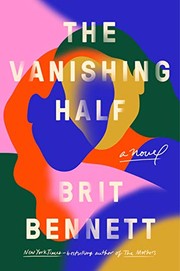
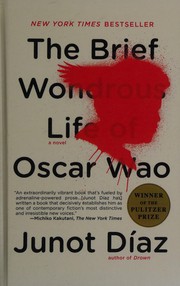
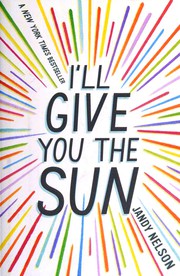
- If you liked Middlesex, try The Vanishing Half (Brit Bennett), The Brief Wondrous Life of Oscar Wao (Junot Díaz) and I'll Give You the Sun (Jandy Nelson).
A taste of the feed
What if a curse arrived in the Caribbean on the screams of the enslaved?
They say it came first from Africa, carried on the screams of the enslaved; that it was the death bane of the Tainos, uttered just as one world perished and another began; that it was a demon drawn into Creation through the nightmare door that was cracked open in the Antilles.
The Brief Wondrous Life of Oscar Wao · Junot Díaz
Maybe a life is not one self but a crowd you keep adding to.
Or maybe a person is just made up of a lot of people,” I say. “Maybe we’re accumulating these new selves all the time.” Hauling them in as we make choices, good and bad, as we screw up, step up, lose our minds, find our minds, fall apart, fall in love, as we grieve, grow, retreat from the world, dive into the world, as we make things, as we break things.
I'll Give You the Sun · Jandy Nelson
What parents quietly pack away, and never mention afterward.
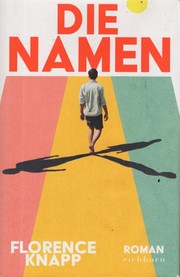
She suspects that, to be a good parent, she must pack away the mothering part of herself into a box and gently close the lid on it. She had not realised this is what would be required of her, had not seen it coming. And yet she will do so willingly. Would you lay down your life for your child? the world silently asks. Yes, she’s done this. But she hadn’t known there would be a second reckoning, where this would eventually mean laying down the arms of motherhood: caution, foreseeing, checking, reminding, nurturing, openly caring.
The Names · Florence Knapp
Read pages from books like this, one at a time
Keep reading in the feed